
Sub-Total: $0.00
What is a coach-led sound bath? Your guide

What is a coach-led sound bath? Your guide
A coach-led sound bath is a structured wellness session that combines intentional sound healing with guided reflective coaching to produce deep relaxation and mental clarity. Unlike a standard sound bath, where participants simply lie still and absorb ambient sound, a coach-led sound healing session adds a purposeful coaching element before or during the sound immersion. This hybrid format uses instruments such as crystal singing bowls, gongs, chimes, and tuning forks to create an immersive soundscape. The coaching component helps you set clear intentions, process thoughts, and arrive at the sound experience in a more receptive, focused state.
What is a coach-led sound bath and how does it work?
A coach-led sound bath is defined as a guided wellness session in which a trained facilitator combines sound therapy with structured coaching to support mental and emotional wellbeing. The session typically opens with a reflective coaching segment, lasting 15 to 30 minutes, during which the coach helps participants clarify their thoughts, identify what they need from the session, and set a personal intention. This preparation is not incidental. It directly shapes how deeply you engage with the sound immersion that follows.
The sound immersion phase then uses instruments played live by the facilitator to create layered, resonant frequencies. Sound acts as a guide for meditation, bypassing verbal prompts and drawing attention immediately to the present moment. This means the coaching and the sound work together rather than in sequence. The coaching grounds your mind; the sound carries it deeper.

How does a coach-led sound bath differ from a standard sound bath?
A standard sound bath is a passive, ambient experience. You arrive, lie down, and absorb sound. A coach-led session adds structure, intention, and dialogue. Typical group sound baths last around 60 minutes and take place in small groups at yoga studios or wellness centres. Coach-led formats often run longer to accommodate the reflective segment, and the group size tends to be smaller to allow meaningful coaching interaction.
The table below shows the core differences at a glance.
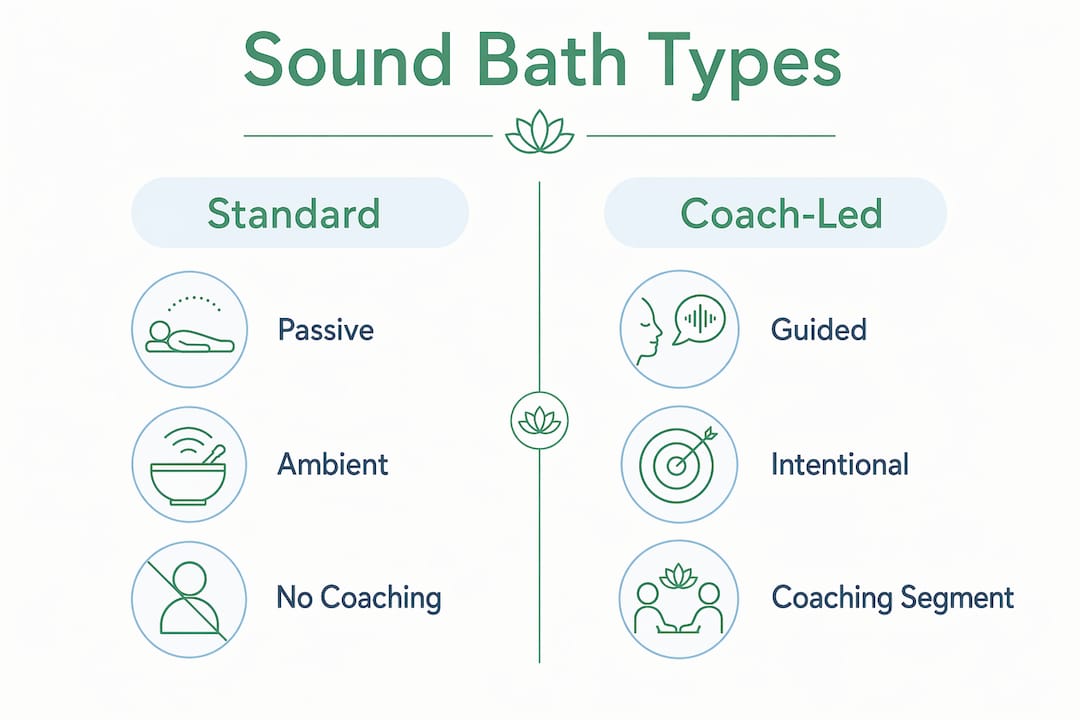
| Feature | Standard sound bath | Coach-led sound bath |
|---|---|---|
| Coaching element | None | 15 to 30 minutes of guided reflection |
| Session length | Approximately 60 minutes | 75 to 90 minutes |
| Group size | Small to medium | Small, often 6 to 12 participants |
| Intention setting | Informal or self-directed | Structured and facilitated |
| Mental engagement | Passive listening | Active reflection followed by immersion |
The practical implication is significant. Participants who arrive at a sound bath with a clear intention tend to experience more focused relaxation and greater post-session clarity. The coaching segment removes the mental clutter that often prevents people from fully surrendering to the sound. This is what separates a coach-led session from simply lying in a room with a gong.
What are the benefits of coach-led sound baths?
Sound therapy influences the autonomic nervous system, shifting the body from the sympathetic fight-or-flight state to the parasympathetic rest-and-digest state through the resonance of specific frequencies. This physiological shift is the foundation of most sound bath benefits. The coaching layer amplifies these effects by reducing the mental resistance that can delay relaxation.
Research supports several specific outcomes:
- Mood improvement. A study of 62 participants showed significant reductions in tension, anger, fatigue, and depressed mood immediately after a singing bowl session. This suggests even a single session produces measurable emotional benefit.
- Rapid relaxation. Participants can reach theta or delta brainwave states within 7 to 8 minutes of sound immersion, particularly when they arrive prepared. These are the same brainwave states associated with deep sleep and creative insight.
- Nervous system regulation. The resonance of instruments like crystal singing bowls and gongs helps regulate stress responses, making sound baths a practical tool for managing chronic tension.
- Enhanced mindfulness. The coaching component builds on sound as an introduction to meditation, making coach-led sessions particularly effective for people who struggle with traditional silent meditation.
- Improved mental clarity. Setting a clear intention before the sound immersion gives the subconscious mind a focus point, which many participants report as a sense of resolution or renewed perspective after the session.
The combination of coaching and sound therapy produces benefits that neither approach achieves as effectively on its own. Coaching without sound can feel intellectually demanding. Sound without coaching can feel directionless. Together, they create a structured path to genuine rest and reflection.
What to expect and how to prepare for a session
A coach-led sound bath session follows a predictable structure, which makes preparation straightforward. Knowing what to expect removes the anxiety that can prevent first-timers from fully relaxing.
A typical session unfolds in this order:
- Welcome and grounding. The facilitator introduces the session, explains the instruments, and invites you to settle into your space.
- Reflective coaching segment. You are guided through a short coaching exercise, often involving journalling, breathwork, or a simple question to help you identify your intention for the session.
- Sound immersion. You lie down, close your eyes, and the facilitator plays live. Sessions use gentle, consistent sound transitions rather than loud spikes or complex musical narratives, which research confirms supports deeper meditative states.
- Integration. The sound fades gradually. You are given a few minutes of silence before the facilitator gently brings the group back to full awareness.
- Closing reflection. Some coaches invite brief sharing or journalling to anchor any insights from the session.
For preparation, bring what practitioners call a sound bath kit: a yoga mat, a blanket, a pillow or bolster, warm socks, and an eye pillow. These comfort items help your body settle quickly, which directly accelerates the shift into theta and delta brainwave states.
Pro Tip: Avoid heavy meals for at least two hours before a session. A full stomach activates the digestive system and can compete with the parasympathetic state you are trying to reach.
Wear loose, comfortable clothing in natural fabrics. Avoid anything restrictive around the waist or chest. Arrive a few minutes early so you can choose your spot and settle before the coaching segment begins.
One safety note: individuals with cardiac arrhythmia, epilepsy, or implanted medical devices should consult a physician before attending a sound bath. The frequencies used in these sessions are generally low risk, but specific conditions warrant professional guidance.
What instruments are used and how do they affect you?
The instruments in a coach-led sound bath are chosen for their ability to produce sustained, resonant tones that the body responds to physically as well as mentally. This is distinct from music, which carries melody and narrative. Sound bath instruments produce frequencies that the nervous system processes as sensation rather than story.
The table below summarises the most common instruments and their typical effects.
| Instrument | Frequency range | Typical effect |
|---|---|---|
| Crystal singing bowls | 432 to 528 Hz | Deep relaxation, nervous system regulation |
| Gongs | Broad spectrum | Full-body vibration, emotional release |
| Chimes | High frequency | Mental clarity, gentle alertness |
| Tuning forks | Precise single tones | Targeted relaxation, nervous system balance |
Crystal singing bowls are the most widely used instrument in coach-led sessions. Their pure, sustained tones are particularly effective at inducing theta brainwave states. Gongs produce a broader, more complex sound that many participants describe as physically felt rather than simply heard. Chimes are often used at the opening or close of a session to signal transitions without disrupting the meditative state.
It is worth understanding the distinction between ambient and vibroacoustic therapies. Ambient sound baths work through hearing. Vibroacoustic therapy involves direct physical contact with vibrating surfaces. Most coach-led sound baths are ambient, though some facilitators incorporate vibroacoustic elements using bowls placed near or on the body. Knowing which type you are attending helps you set appropriate expectations. You can also explore yoga sound bath sequences to understand how instruments are layered across a full session.
Key takeaways
A coach-led sound bath produces deeper relaxation and greater mental clarity than a standard sound bath because the coaching segment removes mental resistance before sound immersion begins.
| Point | Details |
|---|---|
| Defining feature | A 15 to 30 minute coaching segment precedes or accompanies sound immersion to set intention. |
| Core benefit | Mood, tension, and fatigue improve measurably after a single session involving singing bowls. |
| Preparation matters | A comfort kit and clear intention help participants reach theta brainwave states within 7 to 8 minutes. |
| Instrument choice | Crystal singing bowls, gongs, chimes, and tuning forks each produce distinct physiological effects. |
| Safety consideration | Those with cardiac arrhythmia, epilepsy, or implanted devices should seek medical advice before attending. |
Why coaching changes everything about a sound bath
I have observed something consistently across coach-led sessions that rarely gets discussed in wellness articles: the coaching segment is not a warm-up. It is the most technically demanding part of the facilitator’s role. Getting someone to genuinely articulate what they need from a session, in a group setting, in under 20 minutes, requires real skill. Done well, it produces a room full of people who are mentally ready to let go. Done poorly, it leaves participants in their heads, analysing rather than receiving.
The misconception I encounter most often is that sound baths are passive experiences where nothing is required of you. Coach-led sessions ask something different. They ask you to show up with a degree of self-awareness and willingness to reflect. That is not a barrier. For most people, it is precisely what makes the experience meaningful rather than merely pleasant.
I also think the sound meditation and spiritual growth dimension of these sessions is underestimated. Participants frequently report insights during the sound immersion that feel unrelated to the intention they set. The coaching creates a container; the sound fills it in ways the conscious mind does not control. That unpredictability is not a flaw. It is the point.
— Sarah
Start your sound bath journey with Soundbathtraining
If you are ready to experience a coach-led sound bath or want to learn how to facilitate one yourself, Soundbathtraining offers accredited courses built specifically for this purpose. No musical background is required. Every course is delivered in a tranquil studio environment with a high trainee-to-instructor ratio, so you receive genuine hands-on experience rather than theory alone.
Soundbathtraining’s accredited practitioner training covers all instruments across four days and includes 1:1 sound therapy sessions, making it one of the most thorough entry points into professional sound healing available in the UK. For those who want to specialise, a dedicated crystal singing bowl course is also available. Browse the full range of sound healing courses to find the format that suits your schedule and goals.
FAQ
What is the difference between a sound bath and sound therapy?
A sound bath is an immersive group experience using live instruments to induce relaxation. Sound therapy is a broader clinical term covering one-to-one sessions where specific frequencies are used to address particular physical or emotional conditions.
How long does a coach-led sound bath session last?
Most coach-led sessions run between 75 and 90 minutes, with 15 to 30 minutes allocated to the reflective coaching segment and the remainder devoted to sound immersion and integration.
Do I need any experience to attend a coach-led sound bath?
No prior experience with meditation or sound therapy is required. Coach-led sessions are designed to guide you through the process, making them particularly suitable for people who are new to mindfulness practices.
Can anyone attend a sound bath safely?
Most people can attend without concern. However, individuals with cardiac arrhythmia, epilepsy, or implanted medical devices should consult a physician before participating, as certain sound frequencies may interact with these conditions.
What should I bring to a coach-led sound bath?
Bring a yoga mat, blanket, pillow, warm socks, and an eye pillow. This comfort kit helps your body settle quickly and supports the shift into deeper brainwave states during the sound immersion phase.