
Sub-Total: $0.00
Restorative yoga sound bath planning: a practical guide
Restorative yoga sound bath planning: a practical guide
Restorative yoga sound bath planning is the structured process of combining gentle, supported yoga postures with intentional sound healing to guide participants into deep parasympathetic rest. Done well, it produces measurable physiological changes. 2026 pilot research confirms increased parasympathetic activation when breath and sound protocols are matched, which means the pairing is not simply atmospheric. This guide covers every planning layer you need: spatial setup, sequencing, sound management, and participant safety. Whether you are organising a private session or a small group restorative yoga workshop, the same principles apply.
What does restorative yoga sound bath planning actually involve?
Restorative yoga sound bath planning combines four interdependent elements: space preparation, prop logistics, session sequencing, and sound management. Miss any one of them and the experience fragments. The goal is a continuous arc of deepening relaxation, from the moment participants arrive to the moment they leave. Yoga and sound healing work together precisely because each reinforces the other. Supported postures slow the breath; intentional sound cues deepen the stillness those postures create.
The standard session structure follows an emotional arc of arrival, gentle restorative yoga, sound bath immersion, and a closing integration or reflection period. A well-paced example runs approximately 15 minutes of arrival, 60 to 75 minutes of gentle yoga, and 30 to 45 minutes of sound bath. That structure is not arbitrary. It mirrors the nervous system’s natural progression from alert to settled to deeply restored.
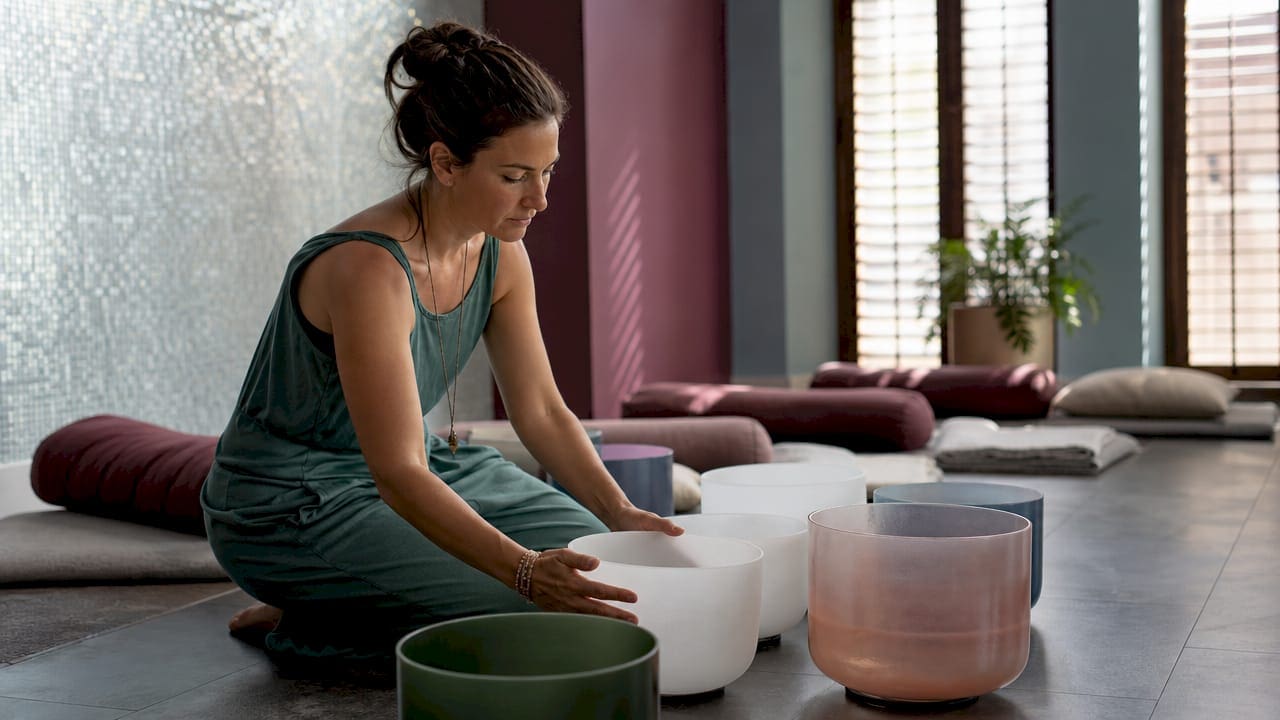
Named instruments central to this practice include crystal singing bowls, Tibetan singing bowls, gongs, and chimes. Each produces a different resonance profile, and your choice shapes the entire sensory experience. Planning which instruments to use, when to play them, and how loudly is as deliberate as planning the yoga sequence itself.
What space, props, and equipment do you need?
The physical environment is the first thing participants experience, and it sets every expectation that follows. Get this layer right before you think about sequencing.
Core props per participant
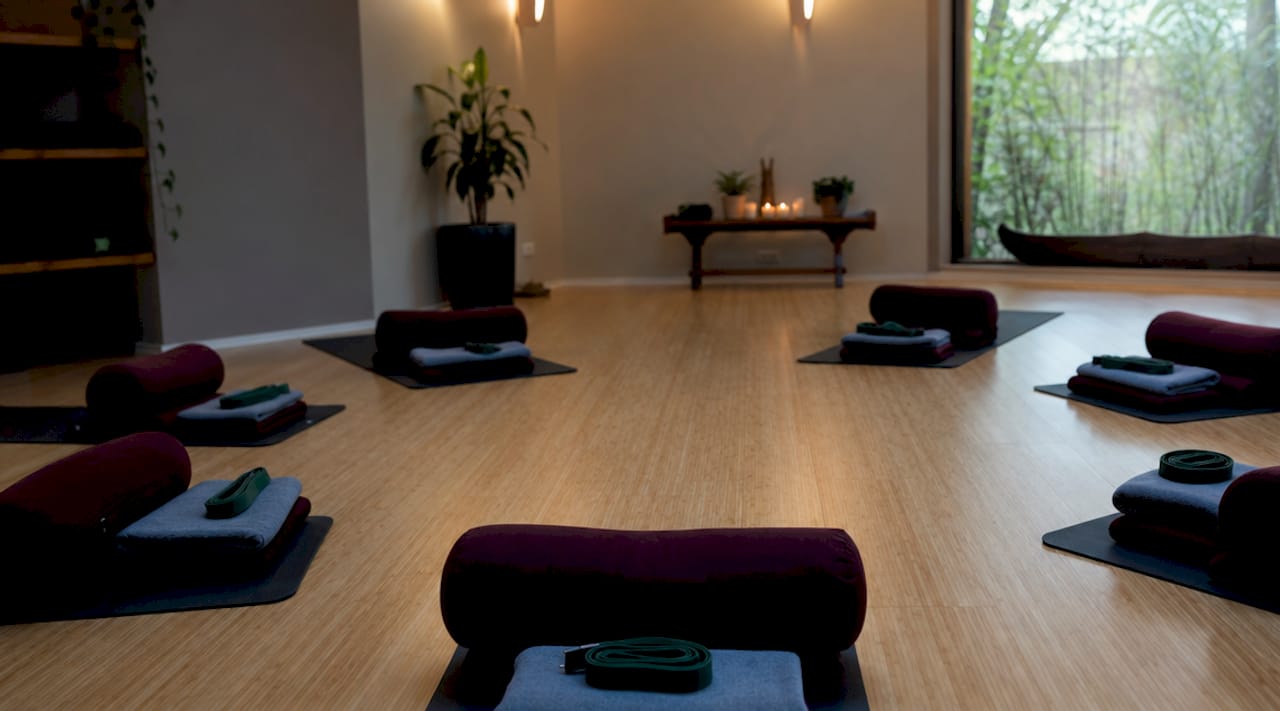
Each participant needs a yoga mat, at least one bolster, two folded blankets, and an eye pillow. These are not optional extras. Bolsters support reclined bound angle pose and legs-up-the-wall. Blankets provide warmth, which matters because body temperature drops during extended stillness. Eye pillows block light and apply gentle pressure that slows the oculocardiac reflex, deepening relaxation.
Standard spacing guidance recommends at least 45 to 60 centimetres between mats. That gap serves two purposes: it gives each person a sensory boundary and it prevents sound from one instrument overwhelming a participant at close range. For a room of eight people, map the layout on paper before anyone arrives.
| Prop | Primary function |
|---|---|
| Bolster | Supports hips and spine in reclined postures |
| Folded blanket | Provides warmth and cushioning during stillness |
| Eye pillow | Blocks light and encourages oculomotor relaxation |
| Yoga mat | Defines personal space and provides grip |
| Crystal singing bowl | Generates sustained resonant tones for sound immersion |
Audio and instrument setup
Crystal singing bowls and gongs are the most common instruments for sound bath therapy preparation. Place bowls at the perimeter of the room rather than directly beside any one participant’s head. A gong placed at the front of the room projects sound evenly across the space. If you are using recorded ambient tracks as a background layer, a Bluetooth speaker such as a Bose S1 Pro or a JBL Eon One Compact placed centrally gives even coverage without hot spots.
Pro Tip: Set room temperature between 19 and 21 degrees Celsius before participants arrive. Use warm, amber-toned lighting at around 10 to 20 per cent brightness. Both choices signal safety to the nervous system before a single sound is played.
For guidance on optimising your physical space, Soundbathtraining’s resource on creating a healing studio covers room acoustics, flooring, and instrument storage in practical detail.
How do you design an effective session sequence?
Sequencing is where most first-time facilitators make mistakes. They either rush the arrival phase or front-load too many postures, leaving no time for the sound bath to do its work. The sequence below is built around the nervous system’s actual timeline for downshifting.
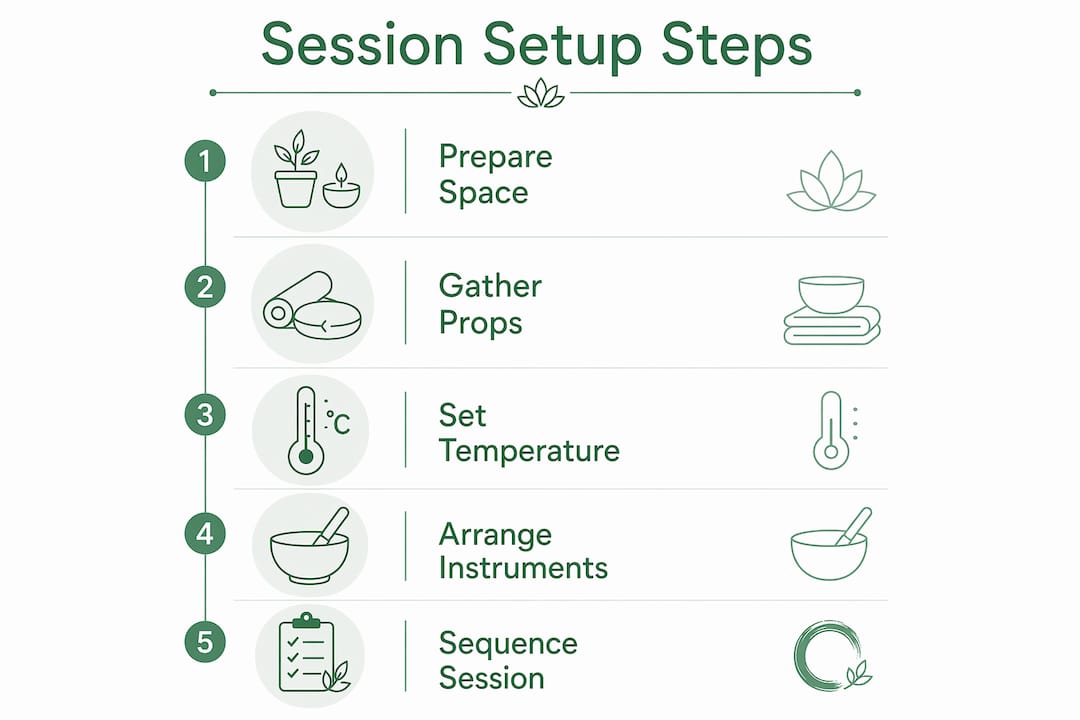
- Arrival (15 minutes). Play soft ambient music at low volume. Greet participants individually. Offer a brief verbal orientation covering what will happen, how long each phase lasts, and how to signal if they need anything. This removes uncertainty, which is the primary barrier to relaxation.
- Gentle restorative yoga (60 to 75 minutes). Begin with constructive rest pose, then move through supported child’s pose, reclined bound angle, and legs-up-the-wall. Hold each posture for five to ten minutes. Cue breath slowly and deliberately. Use the phrase “let the floor hold you” to encourage passive release rather than active effort.
- Sound bath immersion (30 to 45 minutes). Transition participants into savasana or a comfortable reclined position. Begin with a single, sustained crystal bowl tone. Allow full decay before the next sound. Sound cues placed at transitions rather than mid-movement maintain coherence and avoid startling participants out of stillness.
- Integration and reflection (10 minutes). Bring sound to near-silence. Guide participants back with slow breath cues. Allow two to three minutes of complete quiet before inviting gentle movement. Close with a brief verbal acknowledgement of the experience.
Pro Tip: Cue an exhale at the exact moment you strike a bowl. The physiological release of the breath and the onset of sound create a paired relaxation response that is noticeably deeper than sound alone.
For ready-made frameworks, Soundbathtraining’s yoga sound bath sequence examples offer practical lesson plans you can adapt immediately.
How should you manage sound during a restorative yoga session?
Sound management is the most technically demanding part of planning a sound meditation. The instinct of many new facilitators is to fill silence. That instinct works against you here.
Research on sound and yoga pairing recommends treating instrument placement and cue timing as a resonance map rather than a playlist. A stable, ambient sound field during lying poses is more effective than a sequence of varied tones. Think of sound as a container, not a performance.
Practical sound management principles:
- Limit sound cues to 6 to 10 per 60-minute session, placed at natural transitions between postures or phases.
- Avoid lyrics, abrupt tempo changes, or sudden crescendos. A beginner’s guide to sound baths confirms that calm, consistent volume is the single most cited factor in positive participant experience.
- Build in at least one period of near-silence lasting two to three minutes. Structured near-silence enables the nervous system to consolidate the relaxation response rather than simply react to ongoing stimulus.
- Position crystal bowls at least one metre from the nearest participant’s head to avoid overstimulation from direct resonance.
- Test your full sound sequence in the room before participants arrive. Acoustics vary significantly between spaces, and a bowl that sounds balanced in a carpeted studio can feel overwhelming in a tiled hall.
“Loud or jarring sound transitions undermine relaxation. Practitioners who maintain calm, consistent volume and simple instrument choice consistently produce better outcomes for participants.” — Sound bath practitioner research
How do you keep participants safe and included?
Safety is not a courtesy layer added on top of a session plan. A trauma-aware format with clear opt-outs and predictable structure is the core mechanism through which relaxation becomes possible. Participants cannot release into stillness if they feel uncertain or trapped.
“Safety is the prerequisite for relaxation, not a supplement to it. Autonomy and predictability are what allow the nervous system to let go.” — Theresa Perry, wellbeing educator
Before the session, send a brief intake form that asks about tinnitus, hyperacusis, or other sound sensitivities. Building an inclusion protocol with intake questions and a default modification plan allows you to act on documented needs without disrupting the session for others.
During the arrival briefing, cover these points clearly:
- Participants may leave at any time without explanation.
- Earplugs are available on request.
- Volume can be reduced for anyone who signals discomfort.
- Movement is permitted throughout. There is no requirement to remain still.
- The session structure and approximate timing will be explained before it begins.
Accessible spatial setup matters too. Leave a clear path to the door from every mat. For participants with limited mobility, offer chair-based alternatives to floor postures. A bolster placed under the knees in savasana removes lower back strain for most adults. These modifications take two minutes to plan and make the difference between a session someone returns to and one they leave early.
Key takeaways
Effective restorative yoga sound bath planning requires a structured sequence, deliberate sound management, and a safety-first approach that gives participants genuine autonomy throughout.
| Point | Details |
|---|---|
| Follow the emotional arc | Structure sessions as arrival, gentle yoga, sound immersion, then integration for optimal nervous system response. |
| Space and props are non-negotiable | Allow 45 to 60 cm between mats and provide bolsters, blankets, and eye pillows per participant. |
| Limit sound cues deliberately | Use 6 to 10 sound cues per session, placed at transitions rather than continuously throughout. |
| Safety enables relaxation | Intake forms, opt-out options, and a predictable structure are what allow participants to release into stillness. |
| Near-silence is part of the design | Build in two to three minutes of near-silence to let the nervous system consolidate the relaxation response. |
What I have learnt from planning these sessions
The single biggest shift in my own practice came when I stopped treating sound as entertainment and started treating it as architecture. A well-placed bowl strike at the end of a long exhale does more than ten minutes of continuous playing. The space between sounds is where the real work happens, and learning to trust that space takes time.
I have also found that facilitators new to how to lead a sound bath tend to underestimate the emotional weight of the arrival phase. Those first 15 minutes set the entire nervous system trajectory. A rushed or disorganised arrival means participants spend the first 20 minutes of the yoga phase mentally decompressing from the chaos of getting there. Slow that phase down deliberately, and everything that follows deepens.
Trauma-informed facilitation is not optional for this work. It is the foundation. I have seen sessions derailed not by poor sound choices but by a facilitator who did not explain what was about to happen. Uncertainty activates threat responses. Predictability dissolves them. If you take nothing else from this guide, take that.
Finally, collect feedback after every session. Not a formal survey. Just a quiet question as people roll up their mats: “Was there anything that pulled you out of the experience?” That single question has improved my sessions more than any training I have done. Iteration from live feedback is faster and more precise than any amount of theoretical preparation.
— Sarah
Take your sound bath facilitation further with Soundbathtraining
If this guide has clarified what restorative yoga sound bath planning involves, the next step is building the hands-on skills to deliver it with confidence. Soundbathtraining offers accredited, practical courses designed for people with no prior musical background, taught in small groups with a high trainee-to-instructor ratio.
The four-day accredited practitioner course covers crystal singing bowls, gongs, and a full range of sound healing instruments alongside sequencing, safety, and session design. For a focused introduction, the crystal bowl one-day course is an excellent starting point. Browse the full courses catalogue to find the format that fits your schedule and goals.
FAQ
What is the ideal length for a restorative yoga sound bath?
A well-structured session runs approximately two hours in total: 15 minutes arrival, 60 to 75 minutes of gentle restorative yoga, and 30 to 45 minutes of sound bath followed by a short integration period. Shorter sessions of 60 minutes can work but compress the nervous system downshift timeline significantly.
How many sound cues should I use per session?
Use 6 to 10 sound cues per 60-minute session, placed at posture transitions rather than continuously. Constant sound prevents the nervous system from settling into the deep rest that makes sound bath therapy preparation worthwhile.
Do participants need any prior yoga experience?
No prior experience is needed for restorative yoga sessions. The postures are fully supported with props and held passively, making them accessible to most adults regardless of flexibility or fitness level.
How do I handle participants with sound sensitivity?
Send an intake form before the session asking about tinnitus or hyperacusis. During the session, have earplugs available, offer a volume reduction option, and position sensitive participants furthest from the primary instruments. A clear opt-out briefing at the start removes anxiety before it arises.
What instruments work best for a beginner-led sound bath?
Crystal singing bowls are the most practical starting instrument for anyone learning how to lead a sound bath. They produce a sustained, controllable tone, require no musical training, and pair naturally with the breath cues used in restorative yoga. Chimes and a small gong can be added once you are comfortable with bowl timing and volume management.