
Sub-Total: $0.00
Choosing singing bowls for personal use: a practical guide

Choosing singing bowls for personal use: a practical guide
Choosing singing bowls for personal use means selecting a bowl whose sound quality, size, and resonance actively support your meditation or sound healing practice at home. The most common beginner mistake is choosing by appearance or price alone, which almost always leads to disappointment. The right bowl is one whose tone you can feel in your body and whose sustained ring you can produce reliably from the first session. This guide gives you clear benchmarks for size, material, sustain, and playing technique so you can make a confident, informed choice.
How to choose the right singing bowl size for your home practice
Size is the single most practical decision you will make when selecting a bowl, and it affects everything from the tone you hear to how easy the bowl is to play.
| Size range | Diameter | Best use |
|---|---|---|
| Small | 10–14 cm | Desk, travel, focused energy work |
| Medium | 15–18 cm | Versatile home meditation, yoga, clearing |
| Large | 18+ cm | Room clearing, group work, deep resonance |
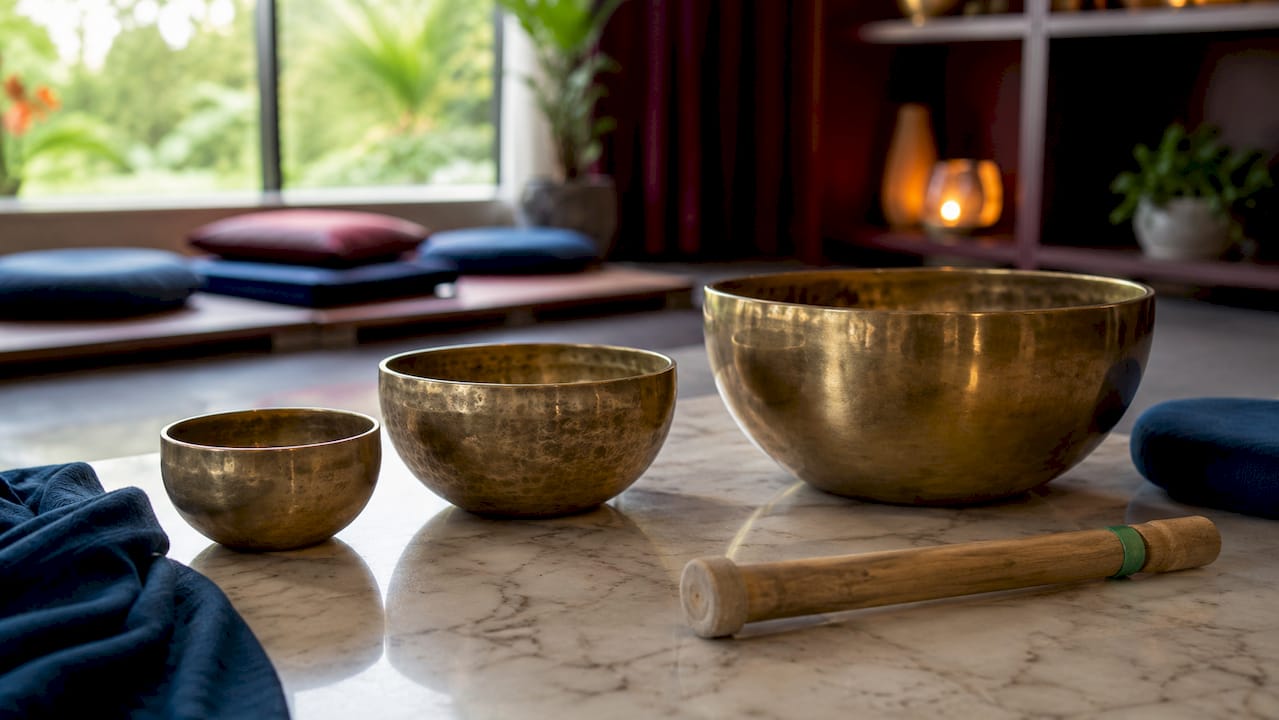
Small to medium bowls in the 10 to 18 cm range are the most practical choice for personal home use. Large bowls above 18 cm are better suited to practitioners working with groups or clearing larger spaces. The distinction matters because a very large bowl in a compact room can feel sonically overwhelming rather than grounding, which defeats the purpose of a personal practice.
Medium bowls in the 15 to 18 cm range are the most versatile starting point. They produce warm, mid-range tones with sustain of 20 to 60 seconds, making them suitable for seated meditation, yoga sessions, and home clearing. They are also light enough to hold comfortably in one hand while you rim with the other, which matters more than most beginners expect.
Small bowls in the 10 to 14 cm range are ideal if you want a portable option or a higher-pitched tone for focused energy work. Their sound dissipates more quickly in larger rooms, so they work best in compact, quiet spaces. Large bowls above 18 cm produce deep, resonant tones but require more surface area to rim effectively, which makes them harder for beginners to control.
Pro Tip: Start with a single medium bowl rather than buying multiple sizes at once. A well-chosen medium bowl covers meditation, mindfulness, and light space clearing, and you can add other sizes once your practice develops.
Does sound quality matter more than bowl material?
Sound quality is the defining factor in any bowl selection, and it comes down to three measurable qualities: sustain length, tonal clarity, and harmonic richness.
Sustain is the most reliable quality marker. A high-quality bowl sustains a clean tone for at least 30 to 60 seconds after striking. That duration tells you the metal or crystal has been formed with sufficient density and consistency to hold a vibration. A bowl that fades in under 15 seconds, or produces a buzzing, scratchy decay, is almost always a low-quality piece regardless of its appearance.
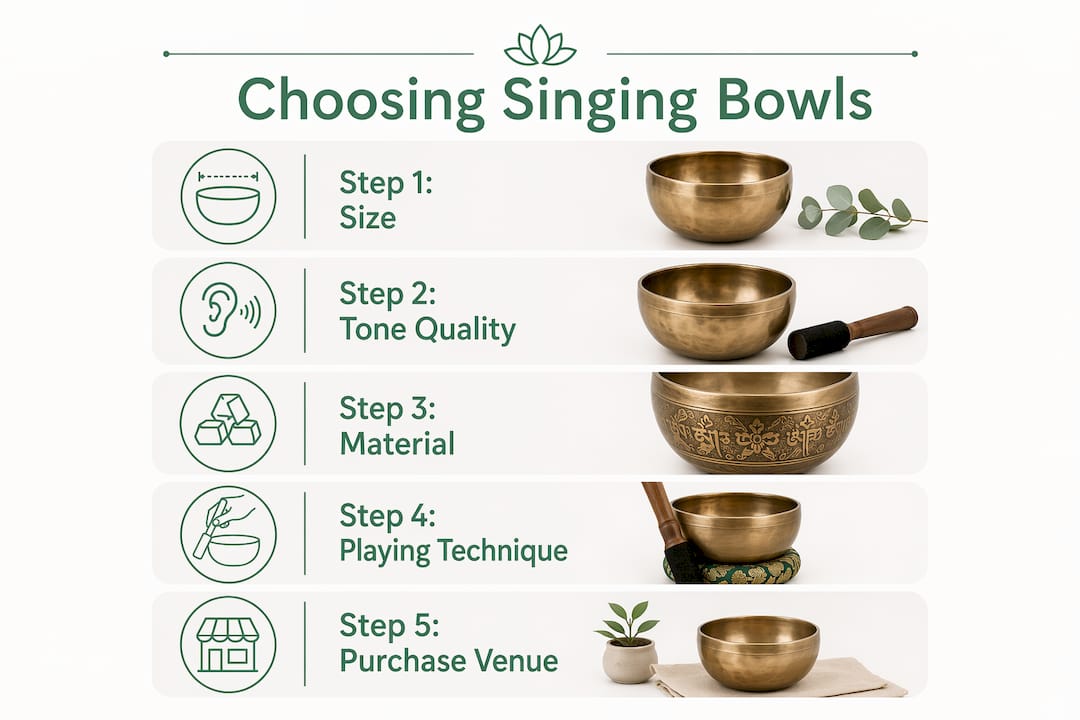
Tonal clarity means the note you hear is clean and singular rather than cluttered with competing overtones that clash. Hand-hammered metal bowls, particularly those made from a traditional seven-metal alloy, tend to produce richer, more complex harmonics than machine-pressed alternatives. Crystal bowls, typically made from quartz, produce a purer, more penetrating tone that many practitioners find ideal for focused meditation work. Neither material is objectively superior. The right choice depends on the quality of sound you respond to.
Here is what to listen and feel for when assessing a bowl:
- Strike the bowl gently and count the seconds until the tone fully fades. Aim for 30 seconds minimum, with 60 seconds indicating excellent quality.
- Listen through the entire decay, not just the initial strike. A clean tone throughout decay confirms consistent metal or crystal quality.
- Place your fingertips lightly on the outside of the bowl after striking. You should feel a steady, even vibration rather than an erratic buzz.
- Compare the same bowl struck three times in a row. Inconsistent tone between strikes suggests uneven construction.
- Notice whether the sound feels supportive or agitating in your body. This is not mystical. It is a real physiological response worth paying attention to.
Pro Tip: When buying in person, close your eyes while the bowl rings. Removing visual input makes it far easier to assess whether the tone genuinely resonates with you or whether you are being swayed by how the bowl looks.
How do you match a bowl to your meditation intentions?
The tone and size of a bowl should reflect what you actually want to achieve in your practice, not just what sounds impressive in a shop.
- For seated meditation and relaxation: Choose a medium bowl in the 15 to 18 cm range with a warm, mid-range tone. Deeper tones tend to slow mental activity and support the kind of inward focus that meditation requires. Theta frequency tones from singing bowls have been shown to increase theta and delta brainwave activity, which are the states associated with deep relaxation and light sleep.
- For chakra balancing: Many practitioners select bowls tuned to specific musical notes that correspond to each chakra. If this is your intention, prioritise tonal accuracy and clarity over size. A crystal bowl is often preferred here because its pure tone makes pitch identification more straightforward.
- For space clearing and energy work: Higher-pitched small bowls in the 10 to 14 cm range are traditionally used for this purpose. Their bright, penetrating tone carries through a room quickly and is associated with clearing and refreshing a space before or after practice.
- For general home relaxation: A medium bowl with a tone you find instinctively pleasant is sufficient. You do not need to match notes to chakras or follow a system. Selecting a tone that feels good to your body is a legitimate and effective approach.
For those developing a more advanced practice, full moon bowls, which are hand-hammered during specific lunar cycles, are valued for their particularly rich harmonic complexity. They are not a beginner priority, but worth knowing about as your collection grows. You can explore how sound supports spiritual growth to understand how bowl choice connects to deeper practice goals.
What technique should you use to test a bowl before buying?
Playing technique and mallet handling are as important as bowl selection for achieving a good sound, and testing a bowl properly before purchase requires knowing the basics.
The two standard methods are striking and rimming. Striking means tapping the bowl with the padded end of a mallet to produce an immediate tone. Rimming means pressing the mallet against the outer rim and moving it in a slow, steady circle to build a sustained, singing tone. Both methods reveal different qualities in the bowl.
To rim correctly, hold the mallet like a pen rather than gripping it tightly. Press the mallet against the outer wall at roughly a 45-degree angle and move it in a slow, continuous circle using your whole arm rather than just your wrist. Slow mallet speed and moderate pressure are the key variables. Moving too fast or pressing too hard produces a harsh screech rather than a sustained tone.
Common problems to watch for when testing a bowl:
- Screeching or squealing during rimming almost always means the mallet speed is too fast or the pressure is too heavy. Adjust before concluding the bowl is poor quality.
- A tone that starts well but collapses quickly suggests the bowl wall is too thin or the metal quality is low.
- Difficulty producing any sustained tone at all, even after adjusting technique, is a sign the bowl is not well suited to beginners. Medium bowls are easier to stabilise by hand for seated rimming and are the most forgiving choice if you are new to the practice.
- Always try the bowl with both striking and rimming before deciding. A bowl that sounds beautiful when struck but refuses to sustain a rim tone will limit your practice significantly.
Where should you buy a singing bowl, and what should you avoid?
The venue where you buy matters because it determines whether you can test the bowl properly before committing.
Specialist sound healing shops and dedicated online retailers with audio or video demonstrations are the most reliable options. Physical specialist shops allow you to test multiple bowls side by side, which is the single most effective way to identify the one that resonates with you. Markets and general gift shops often stock decorative bowls that look authentic but are machine-pressed and produce poor sustain. The price difference between a decorative bowl and a genuine practice bowl is often small, but the quality difference is significant.
When buying online, look for sellers who provide individual recordings of each bowl rather than generic product audio. A recording of the specific bowl you are purchasing lets you assess sustain and tonal clarity before buying. Avoid listings that describe bowls only by weight and appearance without any sound information.
| Buying venue | Advantage | Limitation |
|---|---|---|
| Specialist shop | Test multiple bowls in person | Limited stock, higher price |
| Online specialist | Wide selection, individual recordings | Cannot feel vibration before buying |
| Market or gift shop | Low price, immediate purchase | Mostly decorative quality |
Budget is a real consideration, but a well-crafted bowl is a long-term investment. A quality medium bowl from a reputable supplier will outlast dozens of cheap alternatives and support your practice far more effectively. Setting up a dedicated sound healing space at home also helps you get the most from whichever bowl you choose.
Key takeaways
The best bowl for personal use is one whose tone you can produce easily and whose sound actively supports your meditation or sound healing practice.
| Point | Details |
|---|---|
| Size determines usability | Medium bowls (15–18 cm) are the most versatile and beginner-friendly choice for home practice. |
| Sustain reveals quality | A clean tone lasting 30 to 60 seconds after striking is the clearest indicator of a well-made bowl. |
| Personal resonance is valid | Selecting by how a tone feels in your body is as reliable as any technical specification. |
| Technique affects sound | Slow mallet speed and a 45-degree angle produce sustained tone. Poor technique can make a good bowl sound poor. |
| Buy where you can test | In-person testing or individual bowl recordings online are the only reliable ways to assess quality before purchase. |
What I have learned from years of working with singing bowls
I spent a long time believing that the most expensive bowl in the room was automatically the best choice for a beginner. It is not. The bowl that serves you best at home is the one you can actually play well and whose sound you genuinely want to hear every day.
The most common regret I hear from people who have bought their first bowl is that they chose it because it looked beautiful or because someone else recommended a specific note or size. Neither of those things is wrong, but they are secondary. The primary question is always: can you produce a sustained tone from this bowl without frustration, and does that tone make you want to sit down and practise?
I also think the material debate, metal versus crystal, is overplayed for personal home use. Both can be excellent. Both can be poor. The quality of the individual bowl matters far more than the category it belongs to. I have heard machine-pressed metal bowls that outperformed expensive crystal bowls simply because the specific piece was better made.
My honest advice is to try at least five or six bowls before buying, even if that means visiting a specialist shop rather than ordering online for your first purchase. The difference between a bowl that feels right and one that merely looks right becomes obvious the moment you hear them both. Your practice will tell you which one it needs.
— Sarah
Deepen your practice with accredited sound healing training
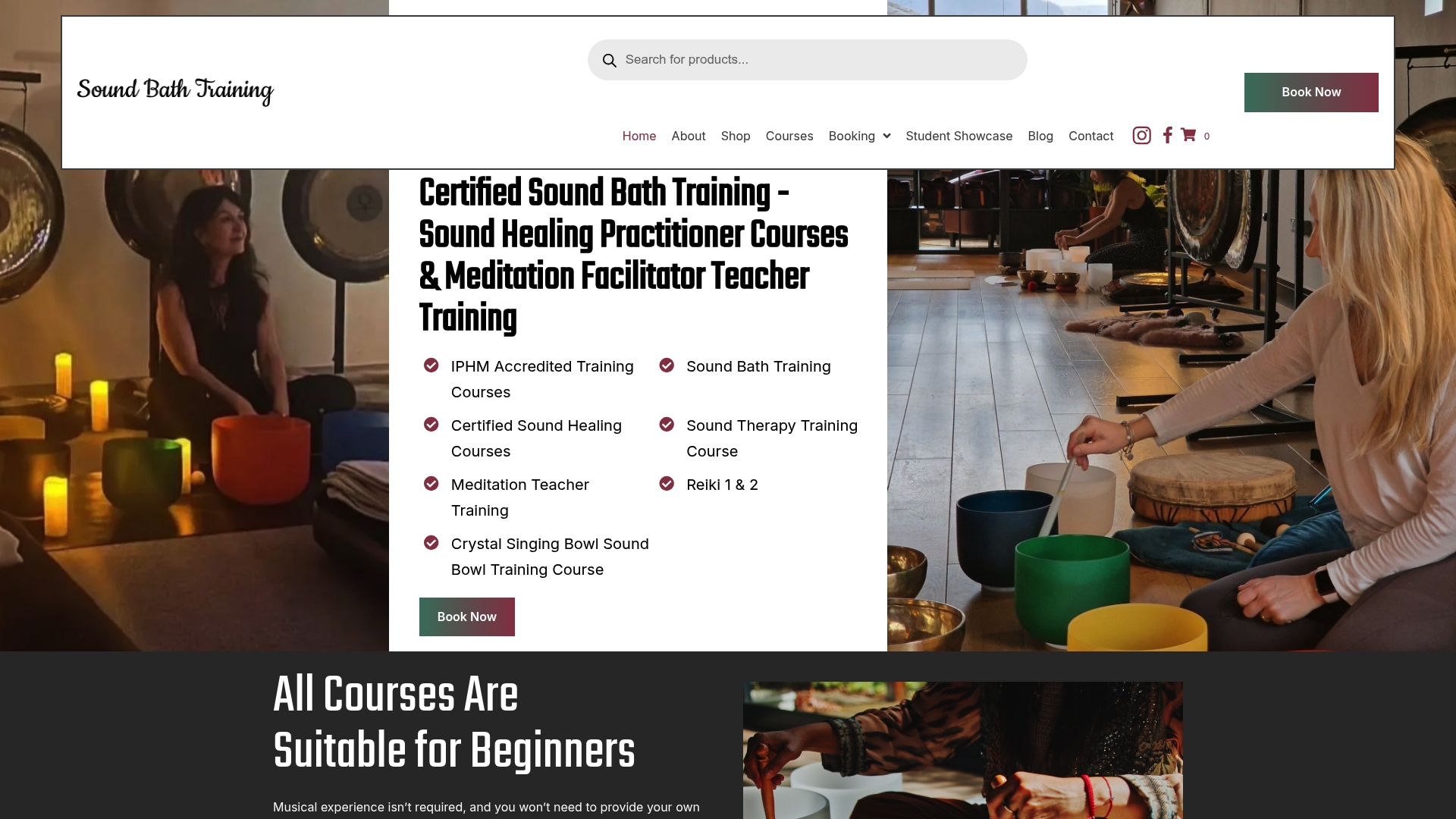
Owning the right bowl is the starting point. Knowing how to use it well is what transforms a purchase into a genuine practice. Soundbathtraining offers IPHM-accredited sound healing courses in small groups of no more than three people, meaning every participant works with a full set of crystal bowls from the first session rather than waiting for a turn. The 4-day practitioner training course covers bowl assessment, playing technique, sound journey design, and meditation facilitation in a dedicated studio environment. No prior musical background is required. If you want focused crystal bowl training specifically, the 1-day crystal bowl course is an excellent entry point that builds both confidence and skill quickly.
FAQ
What size singing bowl is best for beginners?
A medium bowl in the 15 to 18 cm range is the best starting point for beginners. It produces warm, mid-range tones, sustains well, and is easy to hold and rim in a seated position.
How long should a singing bowl sustain after striking?
A quality bowl sustains a clean tone for at least 30 to 60 seconds after striking. Sustain shorter than 20 seconds, or a tone that becomes scratchy during decay, indicates lower construction quality.
Should I choose a metal or crystal singing bowl for meditation?
Both metal and crystal bowls work well for meditation at home. Metal bowls produce richer, more complex harmonics, while crystal bowls offer a purer, more penetrating tone. Personal resonance with the specific bowl matters more than the material category.
Can I buy a good singing bowl online?
Yes, provided the seller offers individual recordings of each bowl rather than generic product audio. Listening to the specific bowl you intend to buy is the only way to assess sustain and tonal clarity when purchasing remotely.
Why does my singing bowl screech when I rim it?
Screeching during rimming is almost always caused by moving the mallet too fast or applying too much pressure. Slow the mallet to a steady, deliberate pace, reduce pressure, and keep the mallet at roughly a 45-degree angle against the outer wall.