
Sub-Total: $0.00
What is a therapeutic soundscape? A clear guide

What is a therapeutic soundscape? A clear guide
A therapeutic soundscape is an acoustic environment intentionally designed to promote healing, relaxation, stress reduction, and psychological or physiological restoration. These environments use natural sounds, specific musical elements, or controlled ambient noise to produce measurable beneficial responses in the people who experience them. The term sits within the broader field of sound therapy, though soundscape design therapy is a distinct discipline that considers the full spatial and contextual relationship between listener and sound. From hospital waiting rooms to personal meditation spaces, therapeutic soundscapes are applied wherever the quality of the acoustic environment directly affects human wellbeing.
What is a therapeutic soundscape and how is it defined?
Therapeutic soundscapes are not simply pleasant background music. They are purposefully constructed auditory environments that combine natural sounds such as birdsong and flowing water, musical features, and carefully managed ambient noise to shift a listener’s psychological and physiological state. The distinction matters: a radio playing softly in a waiting room is not a therapeutic soundscape. A 43-minute layered composition of bird recordings installed at Royal Victoria Regional Health Centre, designed specifically to reduce patient anxiety during uncertain waiting moments, is.
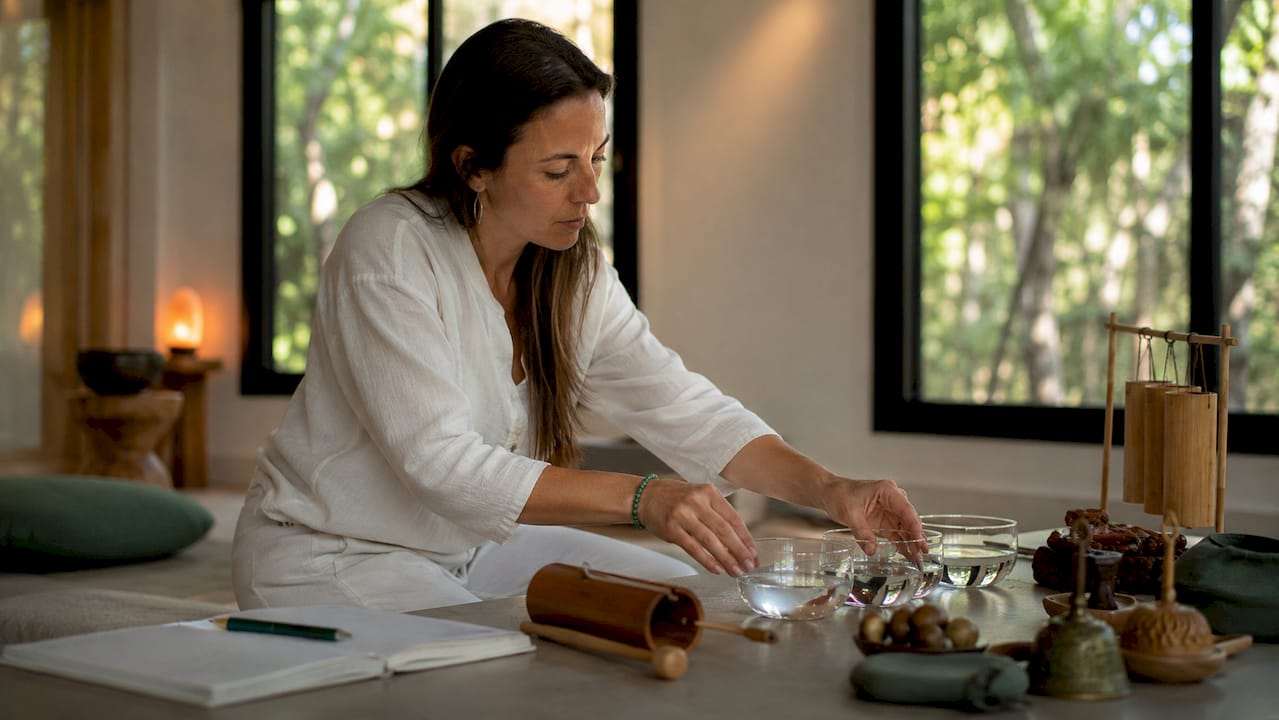
The field draws on psychoacoustics, environmental psychology, and sound therapy techniques to understand how humans perceive and respond to sound. Soundscape design therapy goes further than simply adding pleasant audio. It treats the acoustic environment as an integrated part of a space, shaped by architecture, purpose, and the emotional needs of the people within it.
Pro Tip: When exploring therapeutic soundscapes for the first time, distinguish between passive background sound and intentionally designed auditory experiences. The therapeutic effect depends almost entirely on that distinction.
How do therapeutic soundscapes work to promote wellbeing?
The core mechanism is perception. Soundscape quality depends heavily on perception and context, meaning two environments with identical physical sound profiles can be experienced very differently by different people. A recording of ocean waves may calm one person and unsettle another who associates that sound with a difficult memory. This is why effective soundscape design therapy always asks: improved for whom, and in what context?
Physiologically, therapeutic sound environments work by reducing the activation of the body’s stress response. Slow, predictable natural sounds lower cortisol levels and reduce heart rate variability in ways that abrupt or unpredictable sounds do not. The Healing Soundscapes approach, developed for clinical settings, frames sound interventions as space-related tools that counter auditory stressors impeding recovery. The approach recognises that hospital architecture frequently fails the psycho-emotional needs of patients and staff, making deliberate sound design a clinical priority rather than an aesthetic one.
“Therapeutic soundscapes are not about adding more sound to a space. They are about managing the full acoustic experience so that the sounds present support rather than undermine the people within it.”
Controlling negative auditory stressors is as important as introducing positive ones. The healing power of sound is partly the removal of harmful noise. A soundscape that masks the clatter of a busy corridor with layered birdsong achieves its effect through subtraction as much as addition.
What are the common types and components of therapeutic soundscapes?
Therapeutic soundscapes draw from a defined palette of sound types, each with different restorative properties.
- Natural sounds: Birdsong, flowing water, wind through trees, and rainfall are consistently associated with psychological restoration and reduced perceived stress.
- Musical elements: Slow-tempo instrumental music, drone tones, singing bowls, and binaural frequencies are used in sound therapy techniques to guide brainwave states and deepen relaxation.
- Controlled ambient noise: White noise, pink noise, and brown noise mask disruptive environmental sounds and create a stable acoustic backdrop.
- Spatial audio: Immersive, multi-channel sound design places different elements in different areas of a room, creating a three-dimensional acoustic experience.
Combined soundscapes using two or three sound types consistently offer greater restorative effects than single sound layers. A soundscape pairing birdsong with light flowing water outperforms either element alone. This finding has direct implications for practitioners designing therapeutic yoga soundscapes or sound healing sessions, where layering creates depth without overwhelming the listener.
Single versus combined soundscapes
| Type | Components | Restorative effect |
|---|---|---|
| Single layer | One sound type (e.g. birdsong only) | Moderate; effective for short sessions |
| Combined layer | Two to three sound types (e.g. water and birdsong) | Higher; supports longer attentional settling |
| Immersive spatial | Multi-channel, room-filling design | Strongest; used in clinical and dedicated wellness spaces |
Temporal design also matters. A soundscape intended for a 20-minute meditation session is structured differently from one designed to play across a full working day. Time-bounded experiences allow for intentional arc: a gradual deepening of calm, followed by a gentle return to alertness.
In what settings are therapeutic soundscapes applied?
Therapeutic sound environments appear across a wider range of contexts than most people realise.
- Clinical healthcare: Royal Victoria Regional Health Centre’s 43-minute immersive soundscape of layered bird recordings in a busy waiting area generated overwhelmingly positive feedback from patients and caregivers, demonstrating that even a single, well-designed installation can shift the emotional atmosphere of a clinical space.
- Urban green spaces: Parks and public gardens increasingly incorporate soundscape design to counter traffic noise and support the restorative value of natural environments. The presence of water features and bird-attracting planting is now understood as acoustic design, not just aesthetic landscaping.
- Personal wellness and meditation: Individuals use therapeutic soundscapes at home through curated playlists, sound bath recordings, and dedicated apps. The benefits of soundscapes in personal practice include reduced pre-sleep anxiety, improved focus during breathwork, and deeper meditative states.
- Therapeutic yoga and movement: A therapeutic yoga soundscape is designed to support specific physiological states across a session. Opening sequences use grounding, low-frequency tones. Restorative poses are held against slow natural sound layers. Savasana often incorporates silence or near-silence to allow integration.
- Sound healing practice: Practitioners trained in sound healing use instruments including crystal singing bowls, Tibetan bowls, gongs, and tuning forks to create live therapeutic soundscapes tailored to individual clients. This is the most personalised form of soundscape design therapy.
Pro Tip: If you are designing a therapeutic soundscape for a specific setting, visit the space at different times of day and listen to its existing acoustic character before adding anything. The baseline matters as much as what you introduce.
What are the benefits and challenges of therapeutic soundscapes?
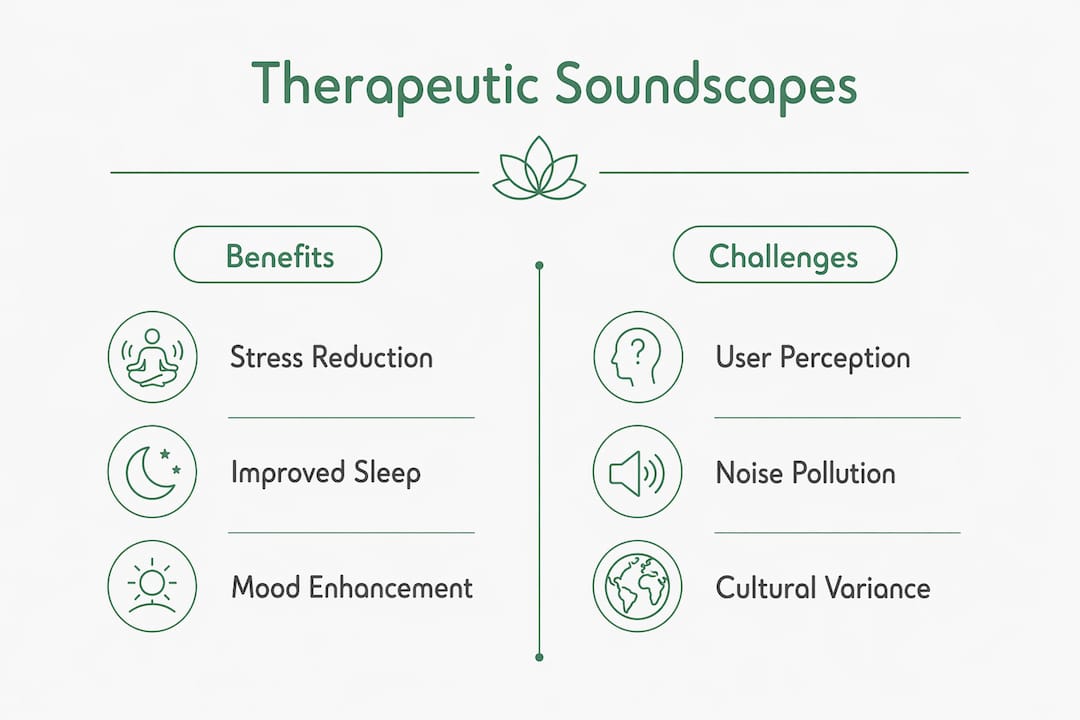
The evidence for therapeutic soundscapes is growing across multiple domains.
Noise pollution negatively impacts soundscape quality and public health, and well-designed soundscapes directly counter this by improving the social and psychological value of environments. This finding places soundscape design therapy within public health strategy, not just personal wellness.
Documented benefits
| Benefit | Context |
|---|---|
| Stress reduction | Consistent across clinical, urban, and personal wellness settings |
| Mood improvement | Linked to natural sound exposure and reduced auditory stressors |
| Attentional settling | Particularly effective in time-bounded immersive installations |
| Physiological relaxation | Reduced heart rate and cortisol associated with natural sound environments |
| Improved patient outcomes | Reported in clinical settings using the Healing Soundscapes model |
The challenges are equally real. Soundscape outcomes depend on user perception, which varies by age, cultural background, prior experience, and neurological profile. A soundscape designed for neurotypical adults may be distressing for someone with auditory hypersensitivity. Inclusivity in soundscape design requires consultation with the intended users, not assumptions about universal response.
Social and ecological challenges also apply. Soundscape quality improvements in urban areas can raise economic value of environments but carry a risk of contributing to gentrification, pricing out the communities the improvements were meant to serve. Practitioners and designers working at scale must hold both the therapeutic and the social dimensions of their work.
Key takeaways
Therapeutic soundscapes work because they combine intentional sound design with spatial context and user perception to produce measurable psychological and physiological restoration.
| Point | Details |
|---|---|
| Definition is precise | Therapeutic soundscapes are intentionally designed acoustic environments, not incidental background sound. |
| Perception shapes outcome | The same sound produces different effects in different people; design must account for this. |
| Combined layers outperform single ones | Two to three sound types together deliver greater restorative benefit than any single element. |
| Clinical applications are evidence-based | Hospitals like Royal Victoria Regional Health Centre use immersive soundscapes to reduce patient anxiety. |
| Challenges require attention | Individual variability, inclusivity, and social impact must be considered alongside therapeutic goals. |
Why context is everything in therapeutic soundscape design
I have worked with practitioners and individuals exploring sound healing long enough to notice a consistent mistake: the assumption that good sound equals therapeutic sound. People invest in high-quality recordings of Himalayan bowls or forest ambience, press play, and expect transformation. What they often get is pleasant distraction.
The research on the Healing Soundscapes approach confirms what experienced practitioners already know. Psycho-emotional needs and auditory stress affect recovery in ways that go far beyond the physical properties of the sound itself. The space matters. The timing matters. The relationship between the listener and the sound matters enormously.
The most effective therapeutic soundscapes I have encountered are time-bounded and purposeful. A 40-minute immersive experience designed for a specific moment, a pre-surgical wait, a restorative yoga class, a sound healing session, achieves far more than a continuous ambient track running in the background. Immersive, time-limited soundscapes enable repeated coping and attentional modulation in a way that indefinite background sound simply cannot.
My honest advice to anyone developing their practice: learn to listen to a space before you design for it. Understand what sounds are already present, which are harmful, and which can be retained. The healing power of sound is as much about what you remove as what you add. That is the insight most introductory resources miss entirely.
— Sarah
Build your skills in sound healing and soundscape design
If this article has clarified what therapeutic soundscapes are and you want to move from understanding to practice, Soundbathtraining offers the structured, hands-on training to get you there.
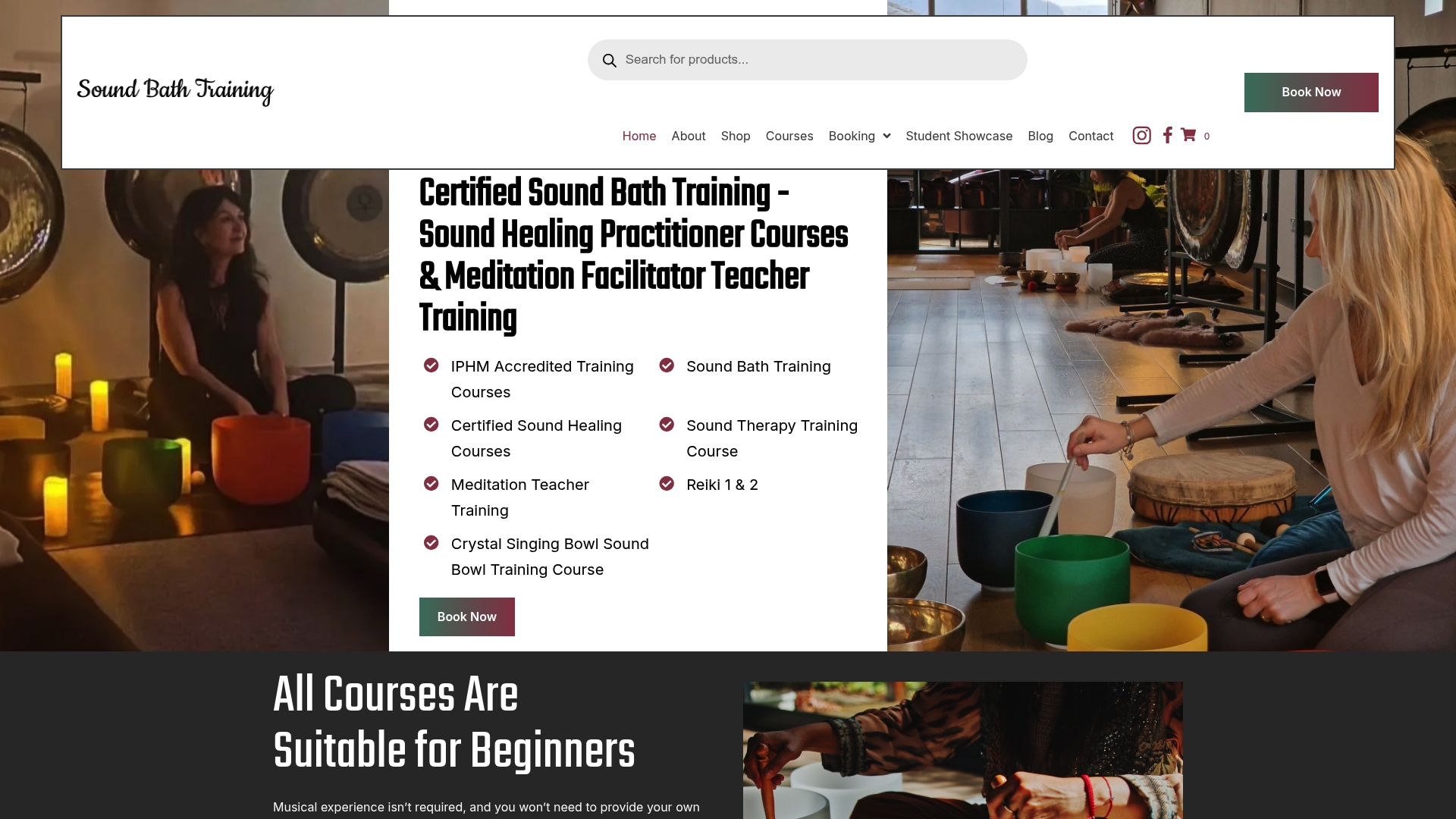
Soundbathtraining’s IPHM accredited practitioner course covers sound healing instruments, session design, and the principles of creating therapeutic sound environments from the ground up. Sessions run in small groups of no more than three participants, so every student works with a full set of crystal bowls and receives direct instructor feedback throughout. No musical background is required. If you are ready to explore the full range of available training courses, Soundbathtraining’s course archive is the place to start.
FAQ
What is a therapeutic soundscape in simple terms?
A therapeutic soundscape is an acoustic environment deliberately designed to support healing, relaxation, or stress reduction. It uses natural sounds, musical elements, or controlled ambient noise to shift a listener’s psychological and physiological state.
How does sound therapy differ from soundscape design therapy?
Sound therapy typically refers to direct therapeutic use of sound instruments with an individual client, such as singing bowls or tuning forks. Soundscape design therapy focuses on shaping the acoustic environment of a space to benefit everyone within it, whether in a hospital, studio, or public area.
What sounds are most effective in therapeutic soundscapes?
Bird sounds, flowing water, and light background music are consistently associated with restorative effects. Combined soundscapes using two or three of these elements produce greater benefit than any single sound type alone.
Can therapeutic soundscapes be used at home?
Yes. Individuals use curated playlists, sound bath recordings, and spatial audio to create personal therapeutic sound environments for meditation, sleep, and relaxation. The key is intentional design rather than incidental background noise.
Are therapeutic soundscapes suitable for everyone?
Not without adaptation. Soundscape outcomes depend on individual perception, cultural background, and neurological profile. People with auditory hypersensitivity or trauma associations with specific sounds require personalised approaches rather than standard designs.