
Sub-Total: $0.00
Sound meditation retreats examples: 7 inspiring formats
Sound meditation retreats examples: 7 inspiring formats
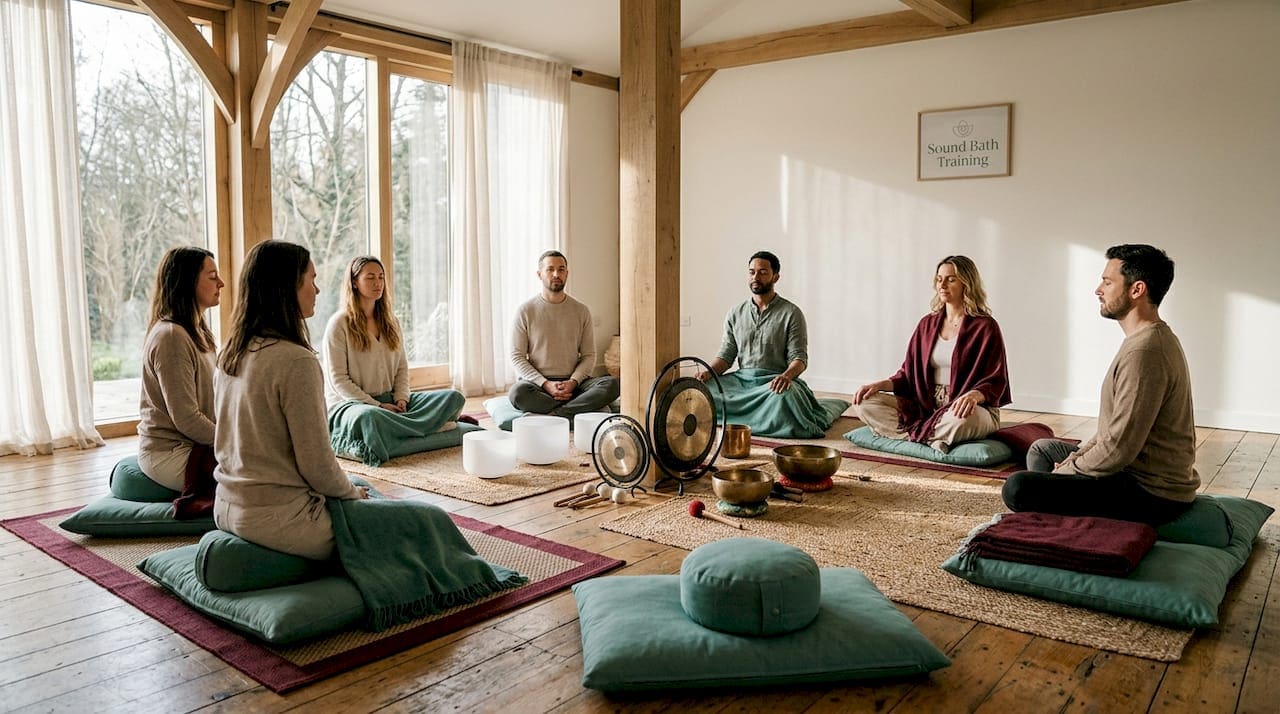
Sound meditation retreats are structured immersive experiences that use sound vibrations from instruments such as crystal singing bowls, gongs, and the human voice to deepen mindfulness and support personal growth. These retreats range from silent five-night intensives requiring prior experience to beginner-friendly afternoon sound baths costing under £30. The best sound meditation retreats examples demonstrate that format, duration, and instrument choice shape the entire experience. Whether you are drawn to Kundalini Yoga combined with healing gong baths, participatory chanting, or passive deep rest, there is a retreat format designed for your nervous system and your goals.
What makes an effective sound meditation retreat?
The most impactful sound healing retreats share a set of defining features that go well beyond simply playing instruments in a room. Understanding these features helps you evaluate any retreat before booking.
Environment and atmosphere set the container for everything else. Nature settings, monastery grounds, and purpose-built studios each create a different quality of silence and receptivity. The physical space directly influences how deeply participants can settle into the sound.
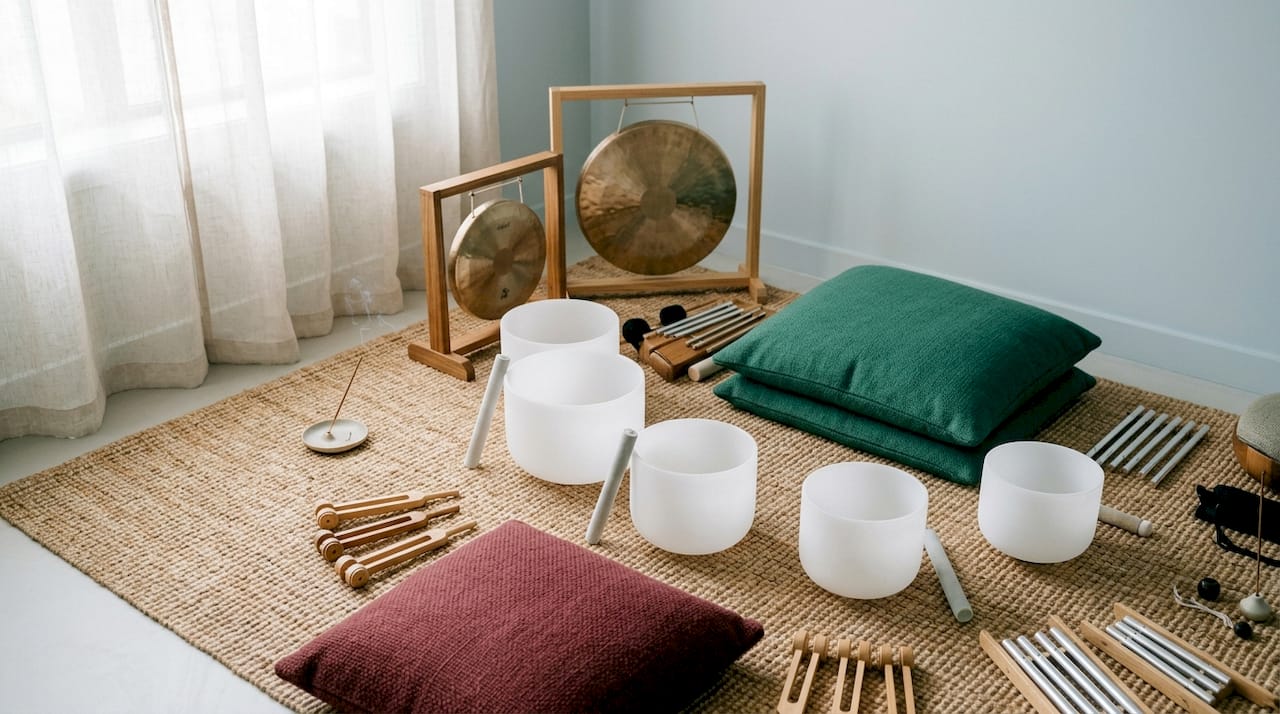
Instruments used determine the character of the experience:
- Crystal singing bowls produce sustained harmonic tones that support deep relaxation
- Gongs generate complex, layered frequencies that can feel physically immersive
- Voice and chanting invite active participation and self-expression
- Drums and percussion introduce rhythm as a grounding element
- Tongue drums and handpans offer melodic, meditative textures
Complementary practices such as yoga, breathwork, Yoga Nidra, and somatic movement are woven into most multi-day retreats. These practices prepare the nervous system to receive sound more fully and help integrate the experience afterwards.
Participant prerequisites vary widely. Some retreats welcome complete beginners with no prior meditation experience. Others, particularly those held in Noble Silence, require prior experience to meet the intensity of the container. Always check this before booking.
Pro Tip: Pack earplugs and an eye mask even if the retreat does not list them as required. Light, noise, and temperature inconsistencies can disrupt somatic rest even when the sound is gentle, and having these items gives you control over your sensory environment.
Seven inspiring sound meditation retreat examples
The following examples span continents, durations, and sound modalities. Together they illustrate the genuine breadth of what this practice looks like in 2026.
1. Spirit Rock: centering in the storm
Spirit Rock’s silent retreat in California combines qigong, somatic restoration, meditation, and sacred sound within a Noble Silence container. The programme runs five to seven nights and requires participants to have completed at least one prior weeklong silent residential retreat. This is not a retreat for first-timers. The sound elements serve as subtle guides within the silence rather than as the headline feature. Spirit Rock’s approach demonstrates that sound can deepen an already established contemplative practice rather than replace it.
“Noble Silence retreats pose friction mostly due to the silence itself. The key question to ask before booking is not which instruments are used, but whether teacher Q&A is permitted and whether you have the prior experience to meet the container.”
2. RA MA Mallorca: summer of sound 2026
RA MA Mallorca’s Summer of Sound runs 10–16 August 2026 at a 14th-century monastery near Palma airport. The programme blends Kundalini Yoga, meditation, and healing gong baths with eclipse-centred ceremonial timing. The monastery setting creates an atmosphere that is both historically grounded and acoustically rich. This retreat suits practitioners who want sound embedded within a broader spiritual and yogic framework rather than as a standalone modality.
3. KPBS San Diego: beginner-friendly sound bath
KPBS San Diego’s event on 27 May 2026 is one of the clearest examples of how sound sessions lower barriers for first-timers. Priced at $33.85 and requiring no prior experience, the event pairs guided breathwork with a crystal singing bowl sound bath. Participants receive yoga beds, pillows, water, and tea. The breathwork component prepares the nervous system before the sound begins, which is a deliberate sequencing choice that makes the experience more accessible and less overwhelming for newcomers.
4. Shambala Gatherings: deep rest sound healing
Shambala Gatherings’ Deep Rest retreat runs 30 June to 5 July 2026 and integrates Yoga Nidra with live sound healing across five days. The programme includes sauna access, three nourishing meals daily, and a packing list that specifically recommends earplugs and an eye mask. This is a retreat built around the premise that the nervous system needs active support to receive sound at depth. The combination of Yoga Nidra and live sound healing is particularly effective for participants recovering from burnout or chronic stress.
5. Clara Sophia: voice, sound, and creativity
Clara Sophia’s six-day residential retreat treats voice and sound as creative and healing tools rather than passive experiences. Participants engage in voice exercises, tongue drum workshops, evening rituals, and a live concert. This format suits people who feel drawn to sound but want to express rather than simply receive. The retreat demonstrates that active participation, including singing, toning, and playing instruments, integrates nervous system impact in ways that passive listening alone cannot achieve.
6. Yogaville: the sound of silence
Yogaville’s Sound of Silence retreat in Virginia holds an intentional silence container alongside gentle yoga, meditation, and sound baths using healing frequencies. Sound functions here as a subtle guide within silence, supporting the meditative state rather than driving it. The retreat also includes inspirational talks, which distinguishes it from purely silent formats. This is an excellent option for practitioners who want the depth of a silence retreat without the full intensity of Noble Silence.
7. Drala Mountain Center: singing into wholeness
Drala Mountain Center’s five-day chanting retreat is designed for all levels, from complete beginners to seasoned musicians. Daily sessions include vocal warm-ups, mantra practices, small-group music-making, and ecstatic chanting. The structured scaffolding means participants build confidence progressively rather than being thrown into full-group performance from day one. This retreat is the strongest example of how chanting and voice work can be made genuinely accessible without diluting the depth of the practice.
How do sound meditation retreats compare?
Choosing between retreat formats requires matching the experience to your current readiness, not your aspirational self.
| Format | Duration | Sound modality | Best suited for |
|---|---|---|---|
| Spirit Rock silent retreat | 5–7 nights | Sacred sound within Noble Silence | Experienced meditators with prior silent retreat history |
| RA MA Mallorca Summer of Sound | 7 nights | Gong baths and Kundalini Yoga | Yoga practitioners seeking spiritual depth |
| KPBS San Diego sound bath | Half day | Crystal singing bowls and breathwork | Absolute beginners, low cost entry point |
| Shambala Deep Rest | 5 nights | Live sound healing and Yoga Nidra | Those recovering from stress or burnout |
| Clara Sophia voice retreat | 6 nights | Voice, tongue drums, and creativity | People drawn to active sound expression |
| Yogaville Sound of Silence | Multi-day | Sound baths and gentle yoga | Intermediate practitioners wanting silence with support |
| Drala Mountain chanting | 5 nights | Chanting and mantra | All levels seeking participatory vocal practice |
Cost and location also shape the decision significantly. The KPBS San Diego event costs under $35, while Costa del Soul’s Wilderness and Sound Retreat in Spain is priced at €1,111 early bird for four nights of glamping, breathwork, Reiki, and sound healing in nature. Neither is objectively better. They serve different needs and budgets.
Pro Tip: If you are new to sound meditation, choose a retreat that sequences breathwork before the sound bath. Breathwork followed by sound prepares the nervous system and significantly reduces the chance of feeling overwhelmed or disconnected during the session.
What to expect at a sound meditation retreat
Most multi-day sound retreats follow a recognisable daily rhythm. Morning sessions typically open with gentle yoga or movement, followed by a guided meditation. The main sound healing session, whether a gong bath, crystal bowl journey, or chanting circle, usually takes place mid-morning or in the evening when the body is most receptive.
Afternoon time is often unstructured, allowing for rest, journalling, or nature walks. Some retreats include cacao ceremonies, sharing circles, or creative workshops in the late afternoon. Evening sessions tend to be quieter, using sound to guide participants into deep rest before sleep.
Practical preparation makes a real difference to your experience:
- Bring comfortable, layered clothing you can lie down in
- Pack earplugs and an eye mask regardless of whether they are listed
- Avoid caffeine on the morning of intensive sound sessions
- Bring a journal for post-session reflection
- Arrive with no fixed expectations about what the sound will do for you
Pro Tip: Approach voice work and chanting as experimentation rather than performance. Voice work as integration is most effective when you release the idea of sounding correct and focus instead on what the sound feels like in your body.
For practitioners interested in designing their own sound spaces, the guide on creating a sound healing studio covers the environmental and acoustic considerations that apply equally to retreat settings.
Key takeaways
Sound meditation retreats deliver the most value when the format, intensity, and sound modality are matched deliberately to the participant’s experience level and nervous system needs.
| Point | Details |
|---|---|
| Match format to experience level | Silent retreats like Spirit Rock require prior experience; beginners do better starting with breathwork and sound bath events. |
| Active versus passive sound | Voice work and chanting integrate nervous system impact more deeply than passive listening alone. |
| Comfort gear matters | Earplugs and eye masks support somatic rest even in gentle sound environments. |
| Sequencing is deliberate | Breathwork before sound reduces overwhelm and improves receptivity for first-time participants. |
| Cost range is wide | Retreat prices span from under $35 for a half-day event to over €1,200 for a multi-night immersive experience. |
Why I think most people choose the wrong retreat first
After working with sound healing for years, the pattern I see most often is this: someone attends an intensive silent retreat with sound as their very first experience, finds it overwhelming, and concludes that sound meditation is not for them. That conclusion is wrong. The retreat was simply the wrong entry point.
The retreats I return to recommending for newcomers are the ones that sequence the experience carefully. Breathwork first, then sound. Movement first, then stillness. Small group first, then full immersion. The KPBS San Diego model is underrated precisely because it looks modest. A half-day event with crystal bowls and guided breathwork teaches you more about your own nervous system response than a week of silence will, if you are not yet ready for that silence.
I also think voice work retreats like Clara Sophia’s are consistently underestimated. Most people assume they are for singers. They are not. They are for anyone who wants to understand how sound moves through the body from the inside out, which is a completely different and often more transformative experience than lying still while someone plays bowls near your head.
The retreat setting matters more than most booking pages acknowledge. A monastery in Mallorca and a glamping site in Spain will produce different internal states before a single note is played. Pay attention to the environment as much as the programme. Your nervous system responds to the whole context, not just the scheduled activities.
The sound meditation focus techniques that work in a retreat setting are the same ones worth practising at home between retreats. The gap between retreats is where the real integration happens.
— Sarah
Deepen your practice with accredited sound healing training
If attending a retreat has sparked an interest in facilitating sound healing yourself, Soundbathtraining offers accredited courses designed for beginners with no prior musical background required.
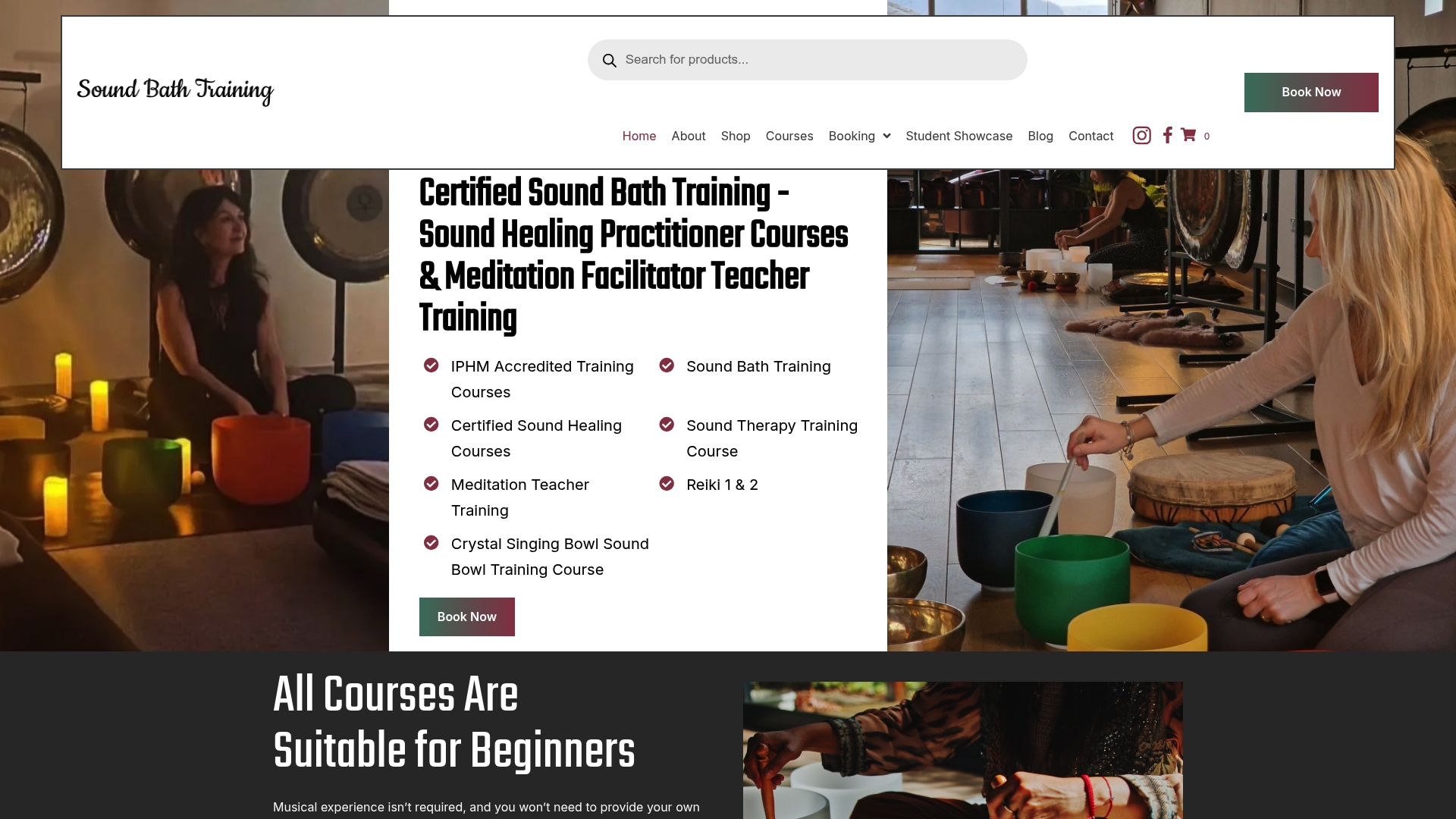
The four-day practitioner training covers crystal singing bowls, gongs, and sound therapy techniques in a hands-on studio environment with a high trainee-to-instructor ratio. For a more concentrated introduction, the three-day accredited course provides professional certification and practical skills for conducting sound baths and personalised sound journeys. Both programmes are built for people who want to move from participant to practitioner with genuine confidence and support.
FAQ
What are the best sound meditation retreats for beginners?
The KPBS San Diego sound bath and breathwork event is one of the most accessible examples, requiring no prior experience and costing under $35. Shambala Gatherings’ Deep Rest retreat is another strong option for beginners who want a multi-day immersive experience without the intensity of Noble Silence.
What should I expect at a sound meditation retreat?
Most retreats combine daily sound healing sessions with yoga, meditation, and periods of rest or silence. Practical items like earplugs, an eye mask, and comfortable clothing significantly improve the experience, particularly during longer immersive programmes.
Do sound meditation retreats require prior experience?
It depends entirely on the retreat. Spirit Rock’s silent retreat requires participants to have completed at least one prior weeklong silent residential retreat, while events like the KPBS San Diego sound bath welcome complete beginners with no prerequisites at all.
How do gong baths differ from crystal bowl sessions?
Gong baths produce complex, layered frequencies that feel physically immersive and can be intense for sensitive participants. Crystal singing bowls generate sustained harmonic tones that are generally gentler and more predictable, making them the more common choice for beginner-friendly events.
Can voice work retreats suit people who cannot sing?
Voice work retreats like Drala Mountain Center’s chanting programme are designed for all levels, including complete beginners. The focus is on experimentation and self-expression rather than musical ability, making them accessible to anyone regardless of prior vocal experience.