
Sub-Total: $0.00
Top 4 soundhealingindia.com Alternatives Providers 2026
Top 4 soundhealingindia.com Alternatives Providers 2026
Choosing a sound healing training provider that combines hands-on instrument practice with accredited certification is harder than it appears for beginners and wellness professionals. Many existing programmes either sacrifice practical skill-building for theory-led online modules or gate instrument time behind expensive, multi-day residencies with limited flexibility. This comparison details cohort size, accreditation, curriculum focus and post-course support so you can match the right provider to your professional or personal goals without the usual trial and error.
Table of Contents
- Sound Bath Training
- International Academy of Sound Healing (IASH)
- Five Elements
- Yogshri Healing
- Comparing Leading Sound Healing Training Providers
Sound Bath Training
At a Glance
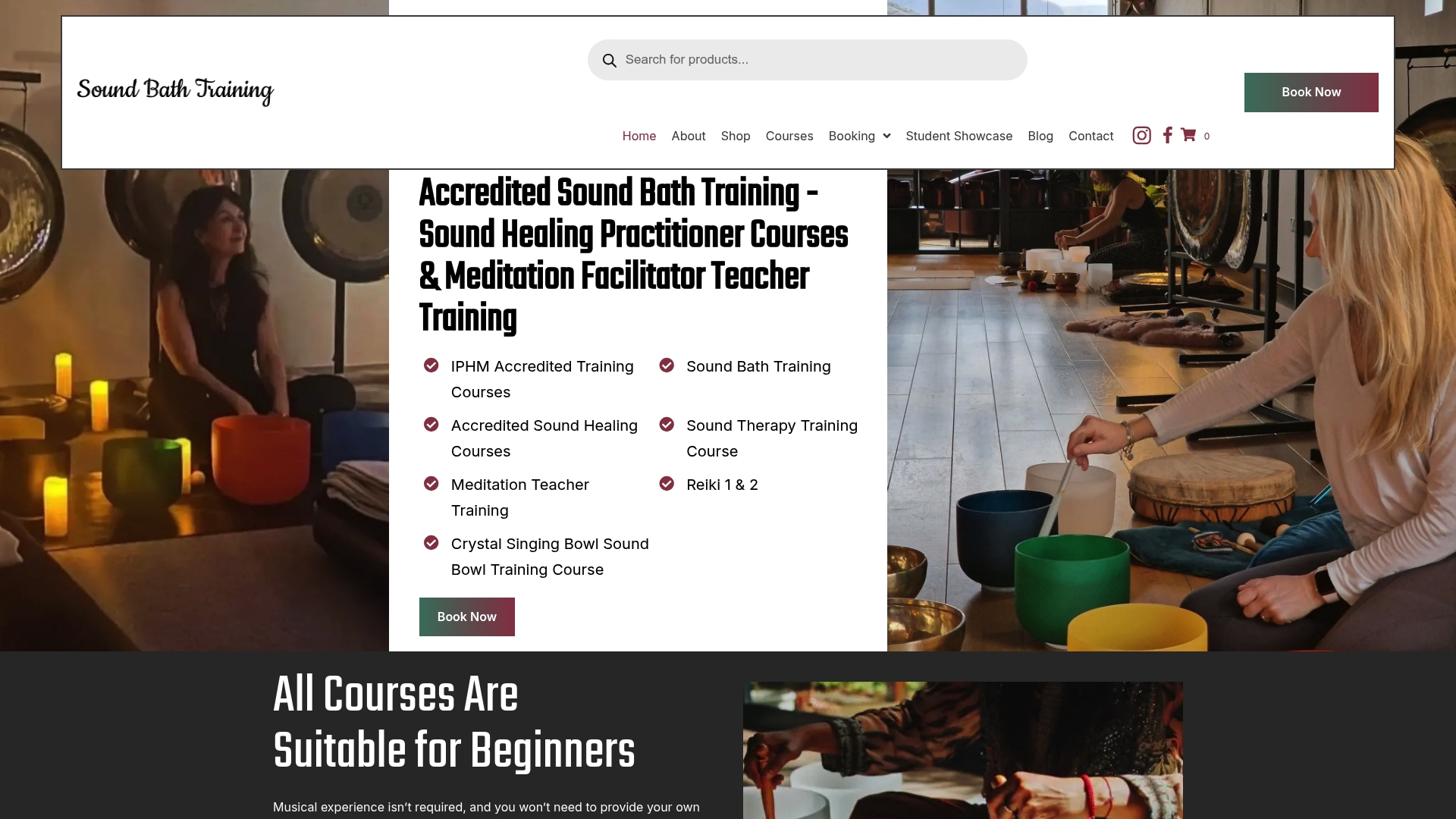
The vendor advertises accreditation from IPHM and delivers in-person, assessment-based sound healing courses in Horwich, Greater Manchester. Prices span a clear range from £275 for single-day workshops to £995 for multi-day practitioner training, which makes entry options explicit.
Core Features
- In-person, practical training focused on hands-on use of gongs, singing bowls, chimes and drums.
- Accredited courses with certificates from IPHM that are assessment based rather than purely attendance based.
- Flexible scheduling with weekday and weekend options to fit professional timetables.
- Post-course community support and ongoing mentorship to help graduates run sessions and events.
Key Differentiator
The training pairs instrument practice with a science-informed curriculum and formal assessment, so competence is demonstrable at course end. That combination positions the offering as practice-heavy rather than theory-heavy, which matters if you want to facilitate sound baths confidently.
Pros
-
Accredited certification. The course structure and certificate from IPHM give a clear credential to cite on CVs and client pages, supporting professional credibility.
-
Practical focus for beginners. The programme teaches instrument handling and facilitation from first principles, so you do not need prior musical experience to run a sound bath.
-
In-person immersion. Learning in a studio setting accelerates tactile skills like mallet technique and spatial arrangement of instruments that online formats struggle to replicate.
-
Scheduling flexibility. Weekday and weekend cohorts reduce the friction for practitioners who juggle classes, client work or part time roles.
-
Community and mentorship. Ongoing support after the course helps with first events and client sessions rather than leaving students to work alone.
Cons
- Limited remote access. The programme requires physical attendance, which restricts participation for those outside the UK or unable to travel.
Who It’s For
Beginners keen to train as sound healing practitioners, yoga teachers wanting to add vibrational work, and holistic professionals seeking a credentialed, hands-on route into running sound baths and therapy sessions.
Unique Value Proposition
Assessment-led, instrument-focused training plus post-course mentorship changes the early-career equation. Instead of a certificate that simply records attendance, you leave with assessed skills and a support network to help you book and lead your first paid sessions.
Real World Use Case
A UK yoga instructor attends a weekend practitioner course. They gain practical gong and bowl technique, complete a taught facilitation assessment and return to classes with two short sound sequences to integrate into weekly classes.
Pricing
Course pricing ranges from £275 for single-day workshops to £995 for multi-day practitioner training. Many students choose shorter workshops as a practical stepping stone before committing to the full practitioner course.
Website: https://soundbathtraining.co.uk
International Academy of Sound Healing (IASH)
At a Glance
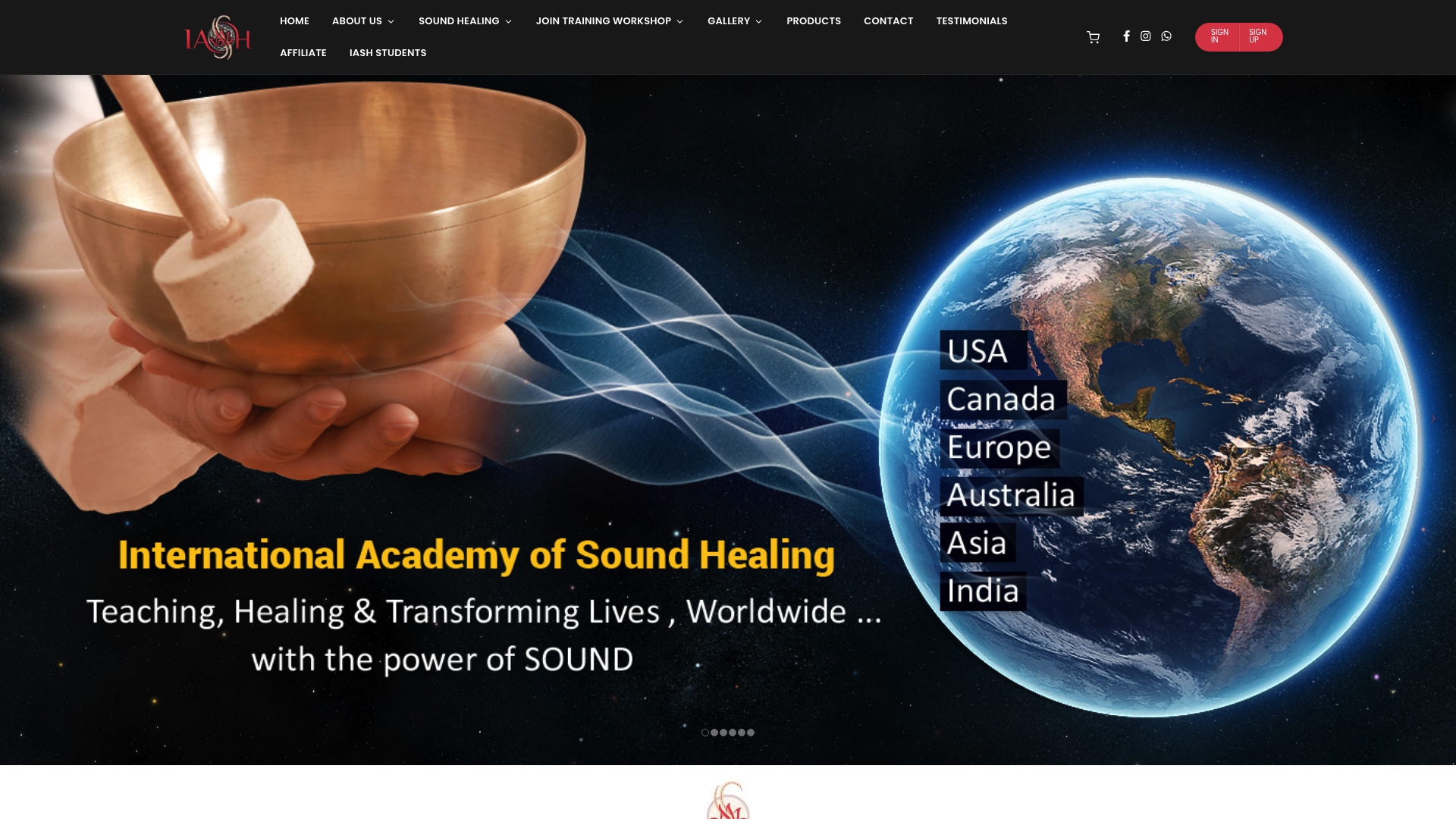
The vendor states programmes are conducted across India, North America, Europe and Asia, and advertises a mix of training, concerts and corporate wellbeing offerings.
IASH presents itself as combining ancient sound traditions with scientific perspectives and runs certification pathways alongside experiential events.
Core Features
IASH lists several distinct offerings that a comparison reader will want to weigh.
- Professional sound healing training from foundation to advanced levels, with certificates listed on course pages.
- A range of sound therapy sessions using singing bowls, gongs and diagnostic instruments.
- Experiential sound healing events including concerts, group meditations and corporate programmes.
- Courses aimed at deepening knowledge of sound effects on body, mind and spirit.
- International faculty and certified trainers who are described as emphasising ethics and responsible practice.
Key Differentiator
According to the organisation, the academy deliberately frames its curriculum around both tradition and science, claiming an integrated approach to sound and vibration.
That positioning contrasts with Soundbathtraining, which focuses on hands on, small cohort learning and high trainee to instructor ratios rather than broad international reach.
Pros
- Offers tiered training that lets a practitioner move from introductory workshops to professional certification, useful for career planning.
- The mix of live concerts and clinical style sessions helps practitioners see both public and therapeutic applications in one provider.
- International presence gives access to programmes in multiple regions, which matters if you travel for continuing education.
- Emphasis on ethics and responsibility appears repeatedly in course descriptions and faculty notes, which supports professional use.
- Course formats include classroom style workshops and experiential group work, so you can choose study modes that suit your learning preference.
Cons
- Some user reviews report dissatisfaction with the professionalism and accuracy of sessions; these are presented as user feedback rather than verified facts.
- The product data records allegations of misleading advertising about equipment quantities and session effectiveness, which may affect trust for prospective trainees.
- There is criticism that parts of the offering feel commercialised, with some reviewers describing the presentation as unprofessional or borderline fraudulent.
- Feedback on authenticity and quality control of sessions and instruments is mixed, so outcomes may vary significantly by trainer.
When It May Not Fit
- If you want strict, hands on mentorship with a high instructor to trainee ratio, this provider’s international scale may not deliver that intimacy.
- If you demand rigorous, independently verified scientific evidence for therapeutic claims, the mix of tradition and science here might not meet that threshold.
- If local credibility matters, reported inconsistencies in quality control and advertising could complicate using certification for regulated settings.
Who It’s For
Practitioners and educators looking to add sound modalities to their offering who value exposure to both performance and clinical styles.
Also suited to corporate wellness coordinators seeking off the shelf programmes and to trainees who prioritise certification from an organisation with international activity.
Real World Use Case
A wellness practitioner in the United States completes a professional certification with IASH, then integrates singing bowls and gongs into group meditations and individual therapy.
They promote sound sessions locally and run one off workshops for community groups using materials and protocols learned on the course.
Website: https://iash.in
Five Elements
At a Glance
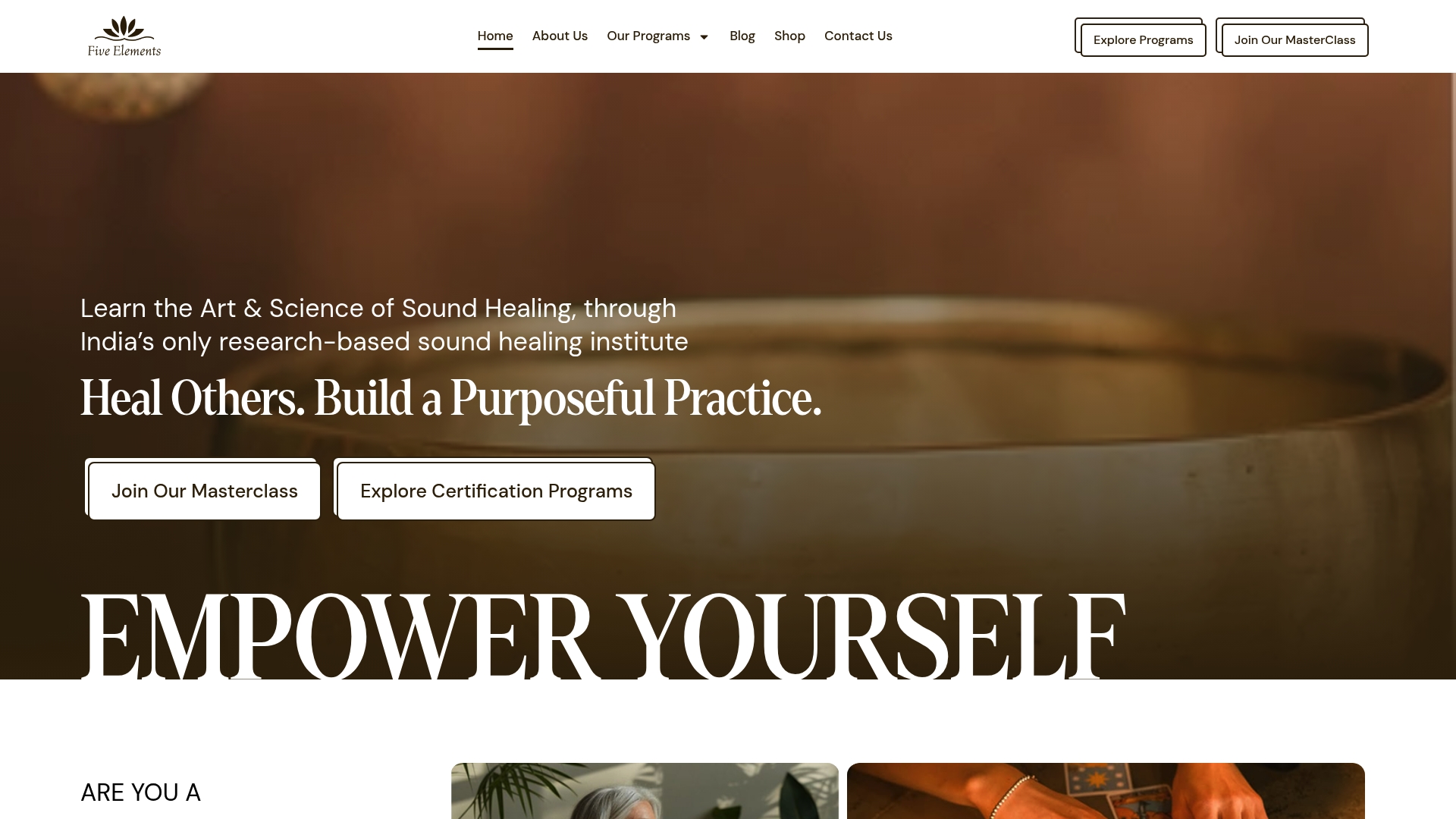
The vendor advertises India’s only research-driven, community-led sound healing institute, a claim that crops up across its marketing materials. Five Elements pairs research-based certification pathways with a practitioner community and a small catalogue of handcrafted instruments for people building a career in vibrational therapy.
Core Features
- Research-backed training and certification pathways that progress from beginner workshops to practitioner levels.
- A community-driven platform that supports peer mentorship, cohort cohorts, and ongoing practitioner support.
- A broad workshop menu including Chakra balancing, rhythm work, and advanced practitioner modules.
- Production and sale of authentic instruments such as singing bowls and tuning forks along with corporate wellness offerings.
Key Differentiator
That claim above gives Five Elements a distinct positioning within the Indian market: it frames its courses as both experiential and informed by academic or field research. The community element is tightly coupled with training so graduates can continue as active members, not just certificate holders.
Pros
- Strong training progression. The structured certification pathways let a newcomer follow clear, staged learning from basic sound meditation to practitioner work.
- Community and mentorship focus. Cohort support and member forums reduce the isolation many solo healers face when starting a practice.
- Instrument quality and accessibility. Handcrafted instruments sold through the institute mean trainees can learn on tools the school endorses.
- Practical integration with other modalities. The curriculum emphasises applying sound within yoga, meditation, and therapeutic sessions rather than teaching sound in isolation.
- Corporate-ready workshops. Programmes for teams are designed to translate well into workplace stress reduction sessions.
Cons
- Independent reviews are limited, so buyers reliant on third-party validation may find the evidence base sparse.
- Public pricing is not consistently listed; costs vary by location and customisation which makes upfront budgeting harder.
- Specialisation in sound healing may require additional accreditation for practitioners aiming for broader clinical roles.
When It May Not Fit
If you need a training provider with a wide catalogue of independent third-party reviews, this may not be the best match. The same applies if you prefer fixed public pricing and packaged options rather than bespoke course quotes.
If your career aims are strictly clinical or require nationally recognised allied health credentials, the programme’s niche focus on sound healing means you will likely need supplementary qualifications.
Who It’s For
Wellness practitioners, yoga teachers, therapists, psychologists, and anyone seeking to add validated sound healing skills to their offering will find value here. It is particularly apt for people who want cohort learning, mentorship, and access to instruments endorsed by their trainers.
Real World Use Case
A yoga teacher completes a practitioner-level certification, buys a set of singing bowls from the institute, and begins offering weekly sound bath classes. The teacher uses cohort forums to refine session scripts and sources peer feedback on client outcomes, then adapts the material for corporate lunchtime workshops.
Website: https://thefiveelements.in
Yogshri Healing
At a Glance
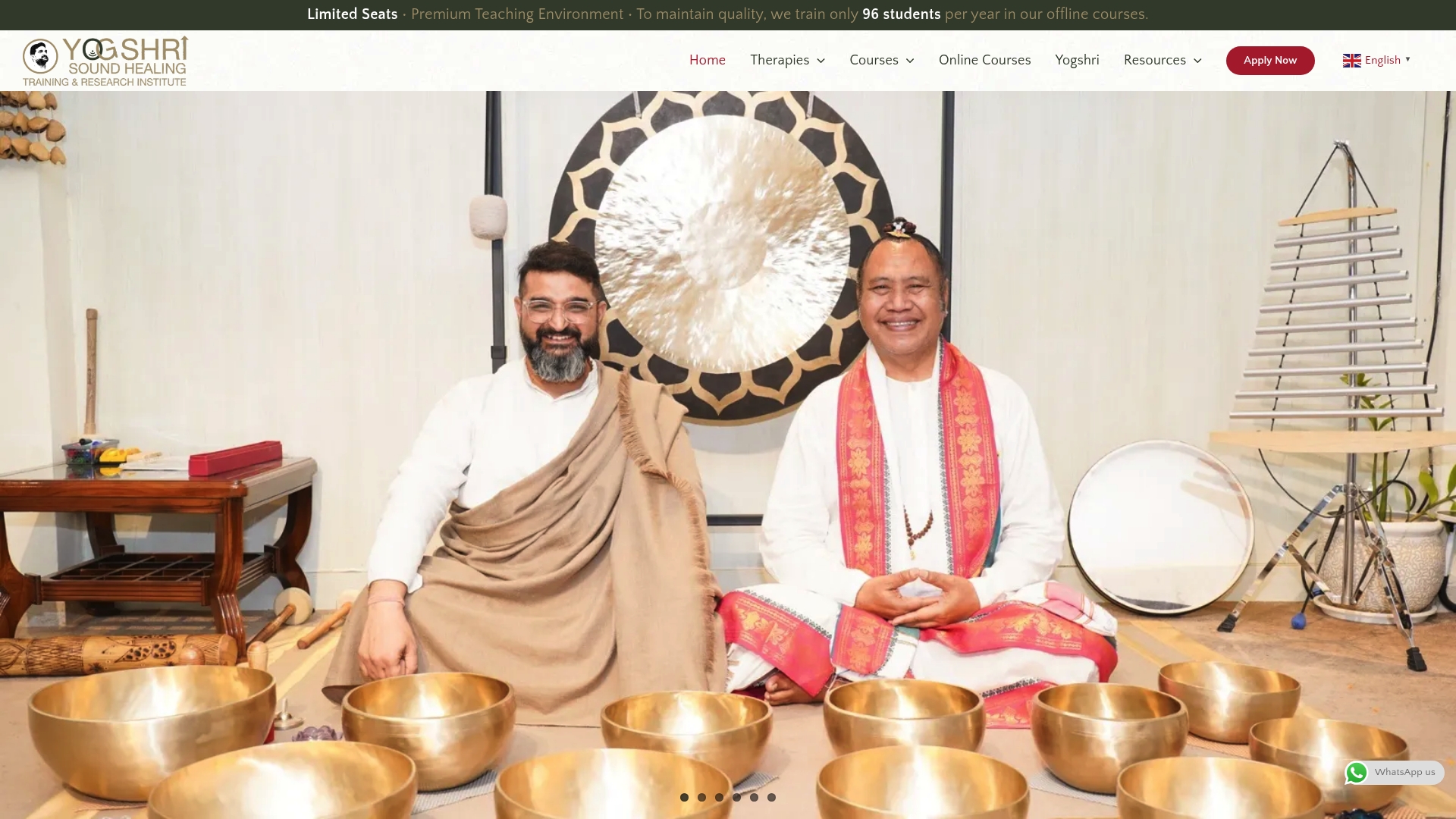
The vendor reports a limited intake of 96 students annually, a deliberate cap framed as a quality control measure to keep training highly practical and mentor-led. The institute advertises internationally accredited courses taught in Rishikesh that blend Himalayan traditions with modern sound therapy approaches.
Core Features
Yogshri Healing organises tiered certification paths from Level 1 to Level 4 and diplomas that cover both foundational and advanced practice. Training mixes classroom theory with hands-on practice on singing bowls, gongs, tuning forks and vocal toning for instrument competence.
Courses include modules on sound science, energetic anatomy and instrument technique, plus personalised therapy sessions for chakra balancing, trauma work and emotional release. The curriculum emphasises professional readiness so graduates can practise with confidence.
Key Differentiator
The course structure ties formal accreditation to an on-site, immersive learning environment in Rishikesh, which the institute frames as amplifying the training. That combination of an accredited pathway plus intensive, place-based practice separates Yogshri Healing from many short online courses that prioritise theory over instrument time.
Pros
- High instrument contact time: students work directly with bowls, gongs and forks, so practical competence is the clear outcome rather than only academic knowledge.
- Accredited progression: the multi-level certification path supports gradual skill building and professional credentialing for practitioners.
- Personal therapy modules accelerate self-development and clinical confidence for those planning to offer sessions to clients.
- Small cohort model keeps feedback immediate and tutor-to-student ratios low, which helps consolidate technique and session design.
- Rishikesh location adds a strong contextual element for learners who value a spiritually charged teaching environment.
Cons
- The small annual intake means course dates can sell out; that scarcity affects scheduling for people with tight travel windows. The figure above is the vendor’s reported cap.
- Offerings are primarily in-person and intensive; learners who need asynchronous, self-paced online content will find the format limiting.
- Course fees and certification scope vary by programme; students must consult course pages for exact fees and what each certification permits professionally.
When It May Not Fit
If you need an online, modular learning path that you can complete across months around work, Yogshri’s intensive in-residence model is not the right match. Also, if you require immediate enrolment, that limited capacity and cohort scheduling may delay your training by months.
Who It’s For
Aspiring sound healers, yoga teachers, therapists and wellness professionals who want a recognised credential and substantial instrument practice. It also suits spiritual seekers looking for immersive personal development and practitioners intending to add sound therapy to a professional offering.
Real World Use Case
A yoga instructor from Europe attends a 12-day certification and returns able to structure 45-minute sound baths that integrate singing bowls and vocal toning. The instructor then adds regular paid sound sessions to their timetable and markets an accredited qualification when recruiting students.
Pricing
Pricing is published on the course detail pages rather than as a single package. Interested learners should review specific course fees and schedules at the vendor’s pricing anchor for each programme: https://yogshrihealing.com/#
Website: https://yogshrihealing.com
Comparing Leading Sound Healing Training Providers
Sound healing training options vary greatly in structure, focus, and accessibility. The following comparative analysis evaluates four leading providers to help aspiring practitioners identify the right fit for their goals.
Focus on Practical Skill Development
Sound Bath Training stands out for its emphasis on hands-on experience with sound healing instruments, supported by in-person workshops in the UK. This approach ensures trainees develop tactile proficiency, a critical skill for facilitating sound baths effectively. Yogshri Healing, while also immersive, combines instrument practice with intensive personal therapy modules, aligning with those who aim to integrate self-development with professional readiness. Trainees prioritising practice over theory might prefer Sound Bath Training’s straightforward instrument focus, whereas those desiring a transformative personal retreat may find Yogshri Healing appealing.
Course Accessibility and Geographic Flexibility
International Academy of Sound Healing (IASH) excels in geographic accessibility with training locations across multiple continents. This feature makes it highly practical for individuals who frequently travel or prefer options closer to home. Conversely, the physical location requirements of Sound Bath Training in the UK might pose limitations for international participants. This contrast highlights a critical decision point depending on geographic preferences and travel capacity.
Professional Certification Pathways
Each provider offers certifications, but their structure and credibility differ. Five Elements provides a research-driven certification program tightly coupled with an active practitioner community. This approach supports graduates in developing confidence and staying connected professionally. For aspiring sound healers focusing on post-training mentorship or instrument quality, Five Elements constitutes a compelling option.
Best Fit Recommendation
- Choose Sound Bath Training if you value hands-on instruction, assessment-based accreditation, and opportunities for post-course community engagement.
- Opt for IASH if your scheduling demands an internationally accessible program.
- Select Five Elements for their research-oriented certification pathways and access to endorsed sound healing instruments.
- Pursue Yogshri Healing if you desire a retreat-like, immersive certification experience in a spiritually significant location.
Our Pick
For aspiring practitioners located within or capable of traveling to the UK, Sound Bath Training provides a unique combination of immersive, practical training and tailored mentorship. While its attendance requirement may restrict availability to some, the hands-on skill development justified the commitment for those who can accommodate an in-person format.
Sound Healing Training Options Comparison
Explore the definitive aspects of various sound healing training institutions to select the one that aligns with your aspirations.
| Provider | Core Feature | Key Differentiator | Best For | Notable Limitation |
|---|---|---|---|---|
| Soundbathtraining | In-person, practical sound healing training | Assessment-led, competence-focused certification | Beginners, yoga teachers, and holistic professionals | Requires physical attendance in the UK, limiting access for international learners |
| International Academy of Sound Healing (IASH) | Professional and experiential sound healing training | Integration of tradition with modern science | Practitioners seeking multiple sound modalities | Mixed reviews about professionalism and consistency in course delivery |
| Five Elements | Research-backed and community-led training | Strong linkage between research and practical application | Yoga teachers and therapists seeking integration of sound with therapies | Limited independent reviews and lack of fixed pricing information |
| Yogshri Healing | Tiered certification paths blending tradition and modern practices | Intimate, immersive learning environment in Rishikesh | Wellness professionals valuing accredited and immersive training | Limited annual intake and in-person only format may not suit those with scheduling or remote learning needs |
Discover Practical, Accredited Sound Healing Training with Soundbathtraining
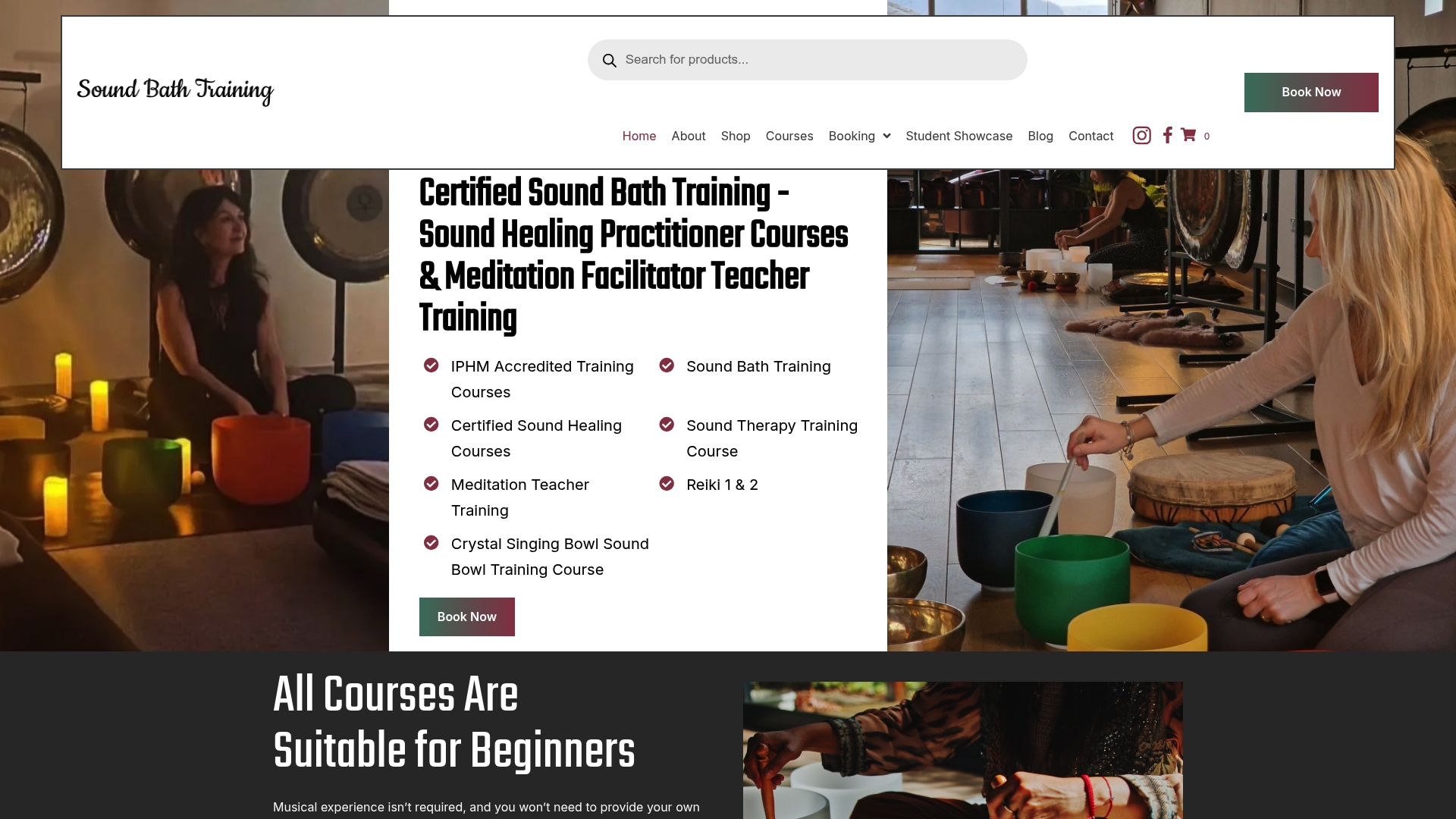
The search for reliable soundhealingindia.com alternatives often leads to challenges such as lack of hands-on learning and clear accreditation. Soundbathtraining directly addresses these key concerns by providing immersive, in-person courses focused on practical skills with accredited certification from IPHM. Whether you are a beginner or a holistic professional, the emphasis on personalised 1:1 sessions and a high trainee-to-instructor ratio ensures you gain confidence working with gongs, singing bowls and other sound instruments in a tranquil studio environment.
Take a confident step into sound healing with courses tailored for effective learning and ongoing mentorship. Explore how our approach integrates wellbeing and science by visiting the Wellness & Science Archives. Ready to develop real-world skills? Visit Soundbathtraining and book your personalised consultation to receive focused support designing your first sound bath sessions.
Frequently Asked Questions
What makes Soundbathtraining suitable for beginners in sound healing?
Soundbathtraining is designed specifically for beginners and focuses on hands-on use of instruments like gongs and singing bowls. The programme teaches instrument handling from first principles, allowing participants without prior musical experience to facilitate sound baths confidently. Beginners can easily expect to gain the necessary skills to run their own sessions.
How does the training focus differ between Soundbathtraining and the International Academy of Sound Healing?
The International Academy of Sound Healing offers a combination of professional sound healing training and experiential events that include concerts and group meditations. In contrast, Soundbathtraining emphasises practical, instrument-focused training with a high trainee to instructor ratio, fostering direct, hands-on experience. If you need a dedicated programme that prioritises instrument practice, Soundbathtraining is the better choice.
What are the post-course support options with Soundbathtraining?
Soundbathtraining provides ongoing mentorship and community support after completion of the course. This feature ensures graduates have assistance when running their first sessions and events, enabling them to transition smoothly into practice. This focused support is crucial for building confidence in their new skills.
Can I participate in Soundbathtraining if I am based outside the UK?
No, Soundbathtraining requires physical attendance in Greater Manchester, which limits participation to individuals who can travel to the UK. If you are seeking a more accessible online option, you may need to explore other providers that offer remote learning.
How is the certification process handled at Soundbathtraining compared to Five Elements?
Soundbathtraining provides assessment-based certification through its courses, ensuring that competence is demonstrable at the end of the training. In contrast, Five Elements offers research-backed certification pathways but lacks the same level of direct assessment. For those prioritising a stringent certification process, Soundbathtraining is the more reliable option.