
Sub-Total: $0.00
Sound bath at the end of a yoga class explained
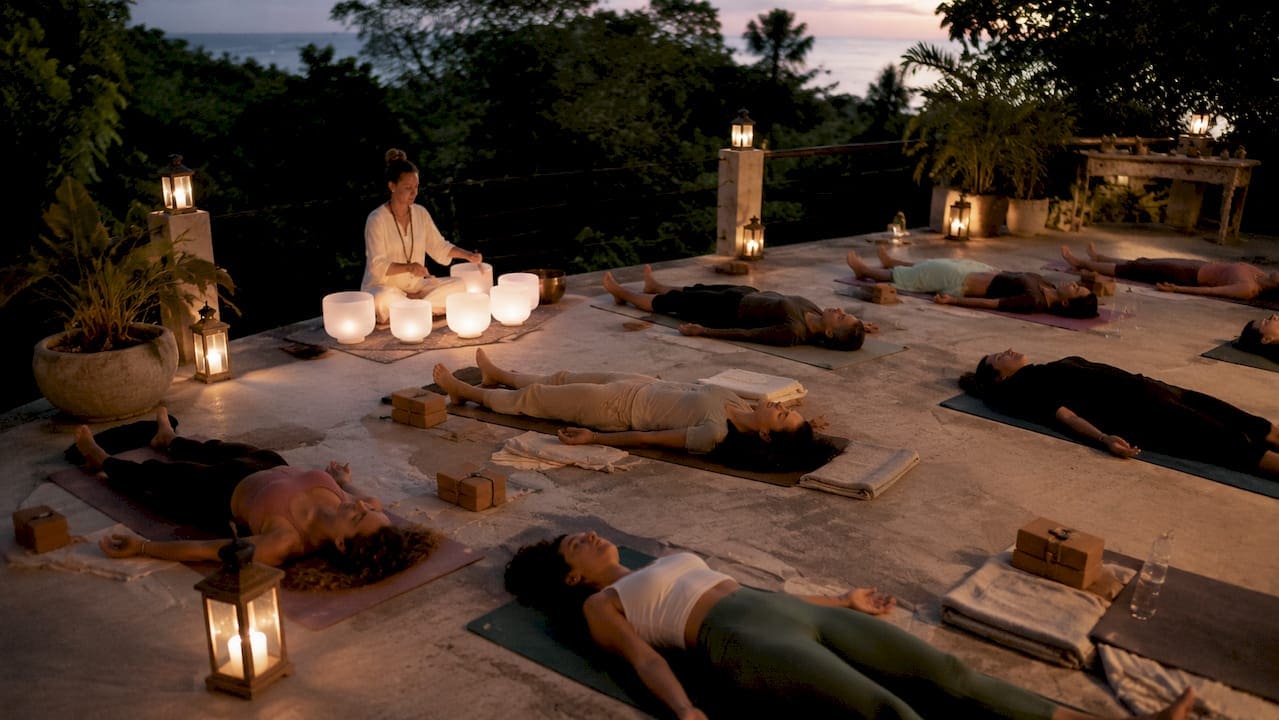
Sound bath at the end of a yoga class explained
A sound bath is an immersive, meditative experience where participants lie in stillness while sound vibrations from instruments such as crystal singing bowls, gongs, and chimes wash over the body to promote deep physical and mental relaxation. Placing this practice at the close of a yoga session is no accident. The sound bath end of a yoga class experience works because movement primes the nervous system for stillness, and sound then anchors that stillness into something genuinely restorative. This article explains the science, the structure, the instruments, and the safety considerations you need to understand before your next session.
How does a sound bath enhance relaxation after a yoga class?
The benefits of sound bath in yoga are rooted in how the two practices interact physiologically. Yoga movement pre-soaks the body, making it far more receptive to vibrational sound and supporting the shift from sympathetic nervous system activation into the parasympathetic “rest-and-digest” state. This is the same state associated with recovery, digestion, and emotional regulation. Without the yoga component, achieving that depth of stillness can take considerably longer.
Sound healing activates the parasympathetic nervous system, improving heart rate variability and reducing stress hormones according to emerging clinical research. The mechanisms include acoustic-induced muscle relaxation and enhanced interoceptive awareness. In plain terms, the vibrations help your muscles let go and sharpen your ability to notice what is happening inside your own body.
Sound also serves a specific cognitive function during savasana. Treating sound as a focal point rather than background noise improves meditation quality and helps calm racing thoughts. When the mind has something to follow, it is less likely to rehearse tomorrow’s to-do list. This is why a well-facilitated sound bath feels qualitatively different from simply lying quietly on a mat.
Key physiological and psychological benefits include:
- Reduced cortisol and stress hormone levels through parasympathetic activation
- Improved interoception, helping practitioners notice internal sensations more clearly after active movement
- Calmer mental chatter through sound acting as a meditative anchor
- Deeper muscle release as acoustic vibration reaches tissue that stretching alone may not address
- Emotional processing supported by the non-judgmental, receptive state the practice creates
“Sound baths uniquely combine ancient contemplative traditions with modern psychoacoustics to support emotional balance and resilience.” Source: Dharma Renaissance
Pro Tip: If your mind tends to wander during savasana, try mentally following the decay of each bowl tone until it disappears completely. This single technique transforms passive listening into active sound bath meditation.
What instruments are used in yoga-end sound baths?
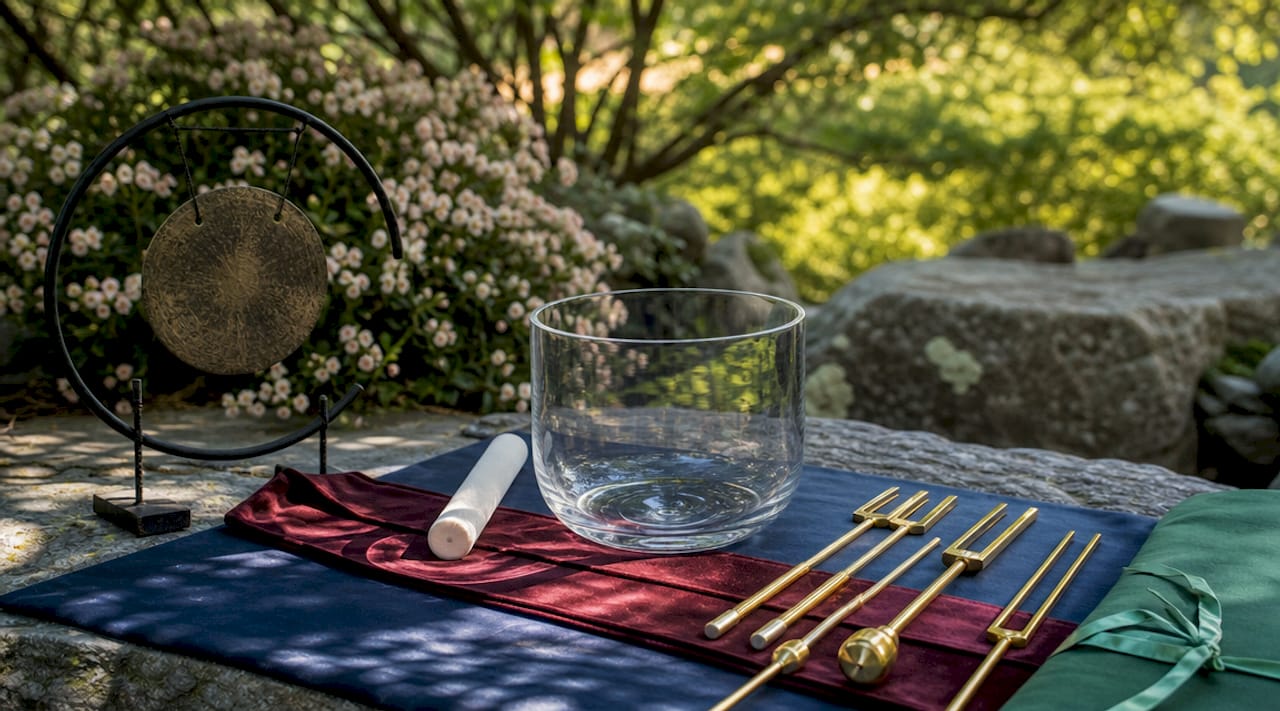
The instruments chosen for sound healing after yoga are not interchangeable. Each produces a distinct frequency range, decay pattern, and physical resonance, and skilled facilitators select them deliberately based on the yoga style and the group’s energy at the close of a session.
| Instrument | Sound quality | Primary effect |
|---|---|---|
| Crystal singing bowls | Pure, sustained tones with long decay | Deep tissue resonance, mental stillness |
| Gongs | Complex, layered overtones | Full-body immersion, emotional release |
| Chimes and koshi bells | Light, high-frequency tones | Gentle transitions, mental clarity |
| Tuning forks | Precise single frequencies | Targeted vibrational work, grounding |
Crystal singing bowls are the most widely used instrument in yoga-end sessions because their sustained tones are easy to follow and their resonance is felt physically in the chest and skull. Gongs produce a far more complex sound field and are better suited to experienced participants or longer sessions where emotional release is an intended outcome. Chimes and koshi bells are particularly effective at the opening and closing of a sound bath, signalling transitions without jarring the nervous system.
Pacing matters as much as instrument choice. A 60-minute sound bath typically uses 6 to 10 sound cues with intentional silences between them, because over-saturation with constant sound fragments attention rather than deepening it. Silence is not empty space in a sound bath. It is where the body integrates what it has just received. Facilitators who understand this design spacious soundscapes rather than filling every second with noise.
Volume is another variable that is frequently misunderstood. Louder does not mean more effective. The goal is resonance at a level that the body can absorb without triggering a stress response. For restorative or yin yoga endings, a quieter, more sustained approach consistently outperforms high-volume gong work.
Pro Tip: If you are attending a yoga and sound bath event for the first time, position yourself at least two metres from any gong. The intensity of the vibration at close range can be overwhelming if your nervous system is not yet accustomed to it.
Who should take precautions with sound baths after yoga?
Sound baths are broadly accessible, but they are not universally appropriate for every person in every condition. Individuals with recent concussions, severe sound sensitivity, or epilepsy should exercise caution, as intense vibrational frequencies can trigger overstimulation in sensitive persons. This is not a reason to avoid the practice permanently, but it is a reason to seek professional guidance before attending.
Conditions and circumstances that warrant particular care include:
- Recent concussion or head injury. Vibrational frequencies can exacerbate neurological sensitivity during recovery.
- Epilepsy. Certain rhythmic sound patterns may act as triggers in susceptible individuals.
- Severe sound sensitivity or hyperacusis. Even moderate volume levels can cause distress or pain.
- Pregnancy. Particularly in the first trimester, it is worth consulting a midwife before attending sessions involving gongs or high-intensity instruments.
- Acute mental health crisis. The emotional release that sound baths can produce is beneficial in stable conditions, but may be destabilising during an acute episode.
- Extreme fatigue or illness. The body’s response to sound is altered when it is already under physiological stress.
Beyond clinical contraindications, self-awareness about your state on any given day is genuinely useful. A sound bath after a particularly intense yoga session when you are already depleted may produce dizziness or emotional overwhelm rather than relaxation. Communicating your condition to the facilitator before the session begins allows them to adjust instrument choice, volume, and proximity accordingly. A well-trained facilitator will always welcome that conversation. For guidance on what to expect from a facilitator, the Soundbathtraining resource on coach-led sound baths is a practical reference.
How should a sound bath session be structured at the end of yoga?
Structure is what separates a genuinely restorative yoga and sound bath experience from one that simply happens in the same room. Sessions typically run 60 to 120 minutes in total, with 30 to 60 minutes of active yoga followed by a 60-minute sound bath. That ratio matters because the body needs sufficient movement to release muscular tension before it can fully surrender to stillness.
A well-structured session follows this sequence:
- Active yoga phase (30 to 60 minutes). Flowing or restorative movement releases physical tension and begins the nervous system transition. The final 10 minutes should move toward slower, grounding postures.
- Transition into the sound bath. Participants settle onto mats with blankets and pillows for comfort during the supine position. Dimming lights and a brief verbal cue from the facilitator signal the shift.
- Opening sounds (5 minutes). Light chimes or a single crystal bowl tone orient the group and invite the breath to slow.
- Main sound bath (40 to 50 minutes). The facilitator moves through the instrument sequence, using 6 to 10 sound cues with deliberate silences. Crystal bowls, gongs, and chimes are layered according to the group’s energy.
- Closing and transition out (10 minutes). A soft transition out of the sound bath is non-negotiable. Abrupt endings cause lightheadedness and undo the parasympathetic state. Practitioners recommend a gradual roll to one side, a brief rest, and a gentle breath before sitting up.
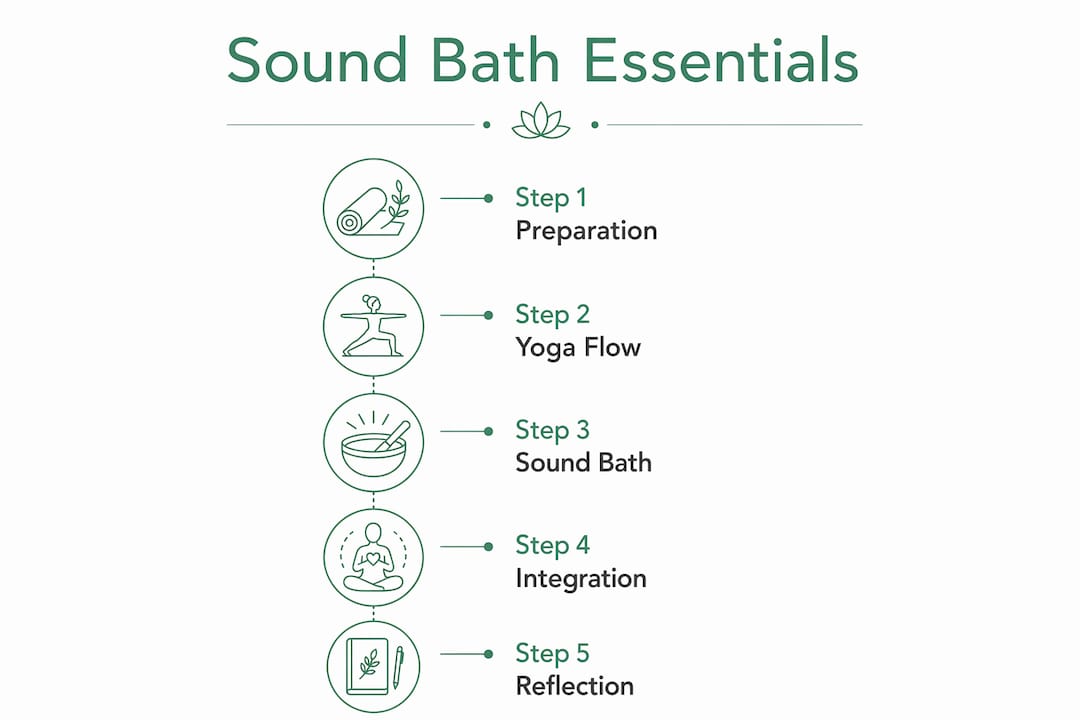
- Integration period. Quiet reflection, journaling, or refreshments help consolidate the experience. Guests who leave immediately often feel disoriented and are less likely to return.
Pro Tip: Bring a journal to your next session and write three sentences immediately after the integration period, before you check your phone. The observations recorded in that window are often the most useful for tracking how your nervous system responds over time.
For instructors looking to build this structure into their own classes, the Soundbathtraining guide on yoga sound bath sequences offers practical examples worth bookmarking.
Key takeaways
A sound bath placed at the end of a yoga class works because movement primes the nervous system for vibrational absorption, and structured sound then deepens that state into genuine parasympathetic rest.
| Point | Details |
|---|---|
| Physiological sequencing | Yoga movement makes the body more receptive to sound vibration, accelerating the shift to parasympathetic rest. |
| Instrument choice matters | Crystal bowls suit most yoga endings; gongs are better reserved for experienced participants or longer sessions. |
| Pacing over volume | Six to ten sound cues with intentional silences outperform constant sound in deepening relaxation. |
| Safe transitions are non-negotiable | Abrupt endings cause dizziness; always close with a gradual roll, breath, and a quiet integration period. |
| Precautions exist | Those with concussion, epilepsy, or severe sound sensitivity should consult a professional before attending. |
What I have learned from facilitating sound baths after yoga
The most surprising thing I have observed is how differently the same sound bath lands depending on what preceded it. After a vigorous vinyasa class, participants drop into stillness within minutes of the first bowl tone. After a gentle yin session, the process takes longer because the nervous system has not been sufficiently activated to need the contrast. This tells me that the yoga component is not just a warm-up. It is a physiological prerequisite.
I have also noticed that emotional releases during the sound bath portion are almost always preceded by a moment of physical letting go, a jaw unclenching, shoulders dropping, a long exhale. The sound does not force anything. It creates the conditions in which the body chooses to release. The facilitator’s intent to create a safe, non-judgmental environment is what makes that choice feel possible. Without that safety, participants stay guarded regardless of how beautiful the instruments sound.
My honest view is that most yoga teachers who add a sound bath to their class underestimate the importance of the closing transition. They invest in good instruments and a thoughtful sequence, then end abruptly because the class time is up. That single mistake erases much of what was built. The integration period is not optional. It is where the work consolidates. If you only take one thing from this article, let it be that.
— Sarah
Deepen your practice with accredited sound healing training
If you are drawn to facilitating sound baths at the end of yoga classes, the difference between a good experience and a genuinely transformative one comes down to training.
Soundbathtraining offers IPHM accredited courses designed for exactly this context. Whether you want a focused introduction through the crystal singing bowl course or the full multi-instrument four-day practitioner programme covering sound therapy and hands-on practice, every course is delivered in small groups of no more than three participants. No prior musical background is required. Every student works with a full set of crystal bowls from day one, which means you leave with real practical confidence rather than theoretical knowledge.
FAQ
What is a sound bath at the end of a yoga class?
A sound bath is a meditative listening experience where participants lie still while a facilitator plays instruments such as crystal singing bowls, gongs, and chimes. Placed at the end of a yoga class, it deepens the relaxation response initiated by movement.
How long does a yoga and sound bath session last?
Most sessions run between 60 and 120 minutes in total, typically with 30 to 60 minutes of yoga followed by a 60-minute sound bath, plus a short integration period afterwards.
Are there any risks or contraindications for sound baths?
Individuals with recent concussions, epilepsy, or severe sound sensitivity should exercise caution, as intense vibrational frequencies can cause overstimulation. Always inform the facilitator of any relevant health conditions before the session begins.
Which instruments are most commonly used in yoga-end sound baths?
Crystal singing bowls are the most widely used instrument due to their sustained, resonant tones. Gongs, chimes, koshi bells, and tuning forks are also common, each offering a different quality of sound and physical resonance.
Do I need any experience to benefit from a sound bath after yoga?
No prior experience is needed. The practice is accessible to beginners, and the yoga movement beforehand naturally prepares the nervous system to receive the sound, making the experience effective even for first-time participants.