
Sub-Total: $0.00
Group sound bath experience preparation: your guide

Group sound bath experience preparation: your guide
Group sound bath experience preparation is the practice of arranging physical, environmental, and personal factors to create a welcoming and supportive space for immersive sound healing in a group setting. Sound therapy, the recognised clinical term for this practice, uses instruments such as crystal singing bowls, gongs, and Tibetan bowls to guide participants into deep states of rest and nervous system regulation. Whether you are attending your first session or hosting one, preparation determines how much you benefit. The difference between a transformative session and an uncomfortable hour on the floor often comes down to what you do before the music starts.
What does group sound bath experience preparation involve?
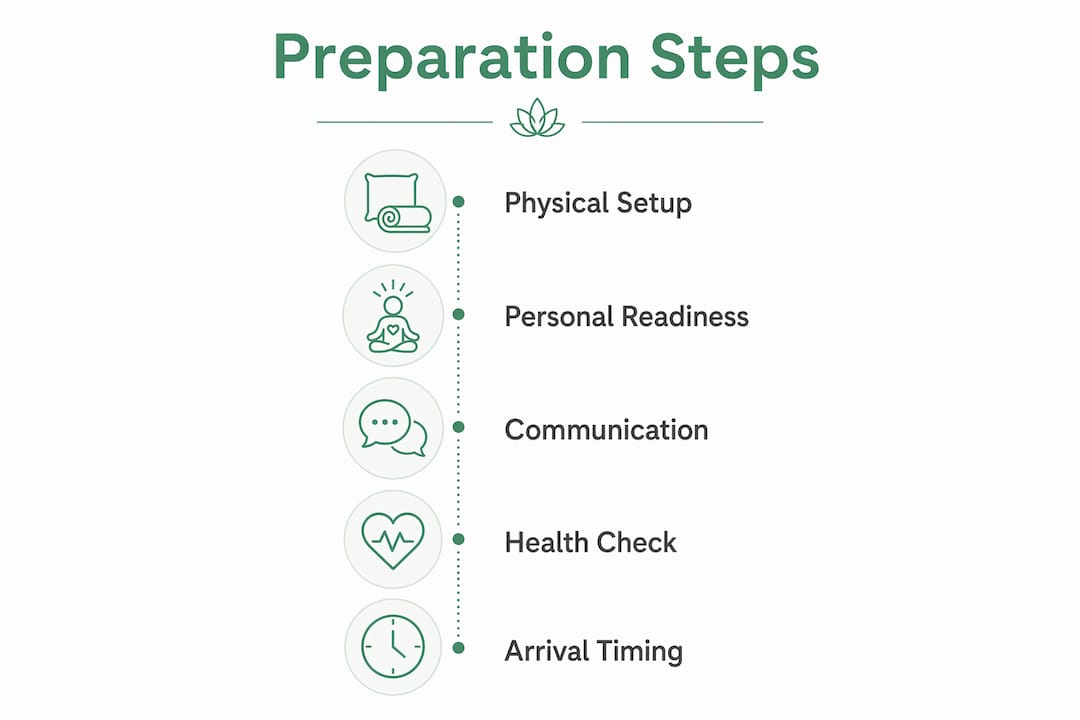
Group sound bath experience preparation covers three areas: physical setup, personal readiness, and communication with your facilitator. Each area directly affects how safe and comfortable you feel during the session. Skipping any one of them leaves gaps that can pull you out of the experience at the worst moment.
The physical setup is the most visible part. You need the right props, the right room arrangement, and the right temperature. Personal readiness means arriving in a state that allows your nervous system to settle quickly. Communication with your facilitator is the step most people skip entirely, and it is the one that makes the biggest difference.
What should you bring to a group sound bath?
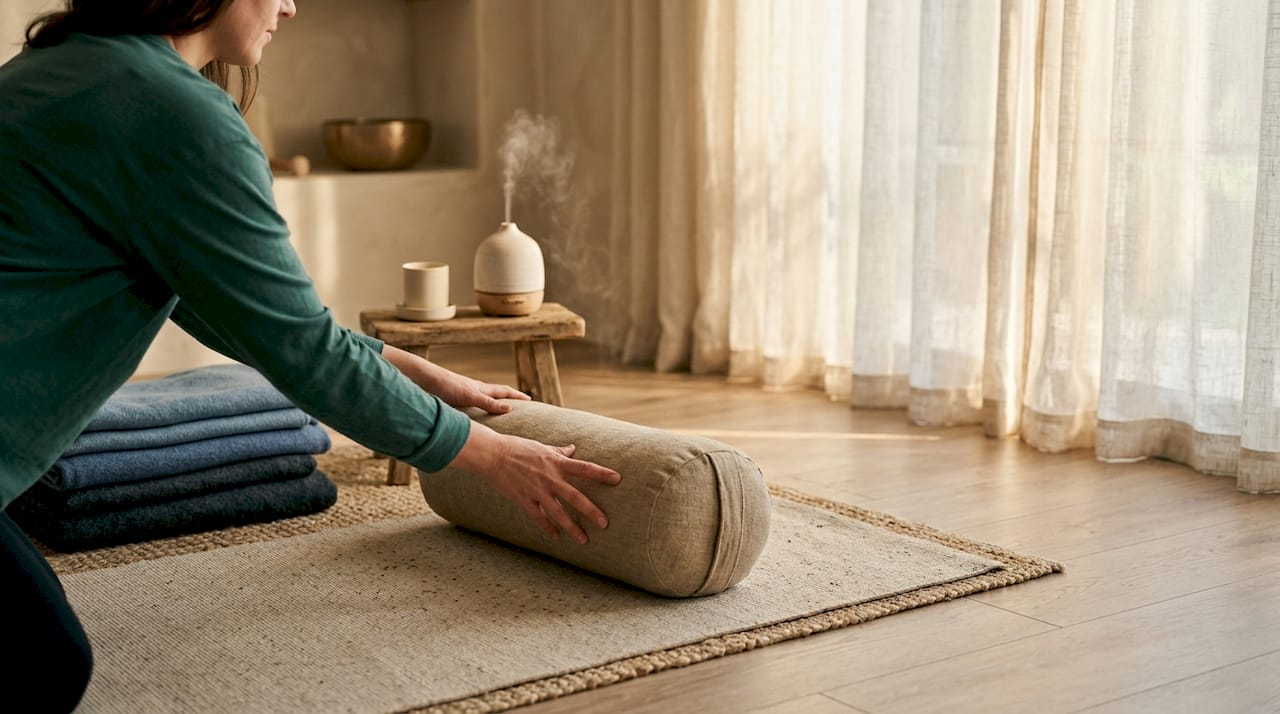
The right kit removes every physical distraction before the session begins. Sound baths typically begin with a settling phase where props such as bolsters, blankets, and eye masks help participants relax and turn their attention inward. Venues often provide some of these, but bringing your own guarantees comfort.
Sound bath essentials checklist:
- Yoga mat or thick mat: Your base layer. A thin mat on a hard floor will distract you within minutes.
- Blanket: Bring your own even if the venue provides one. Body temperature drops during deep relaxation, and a cold draught breaks the parasympathetic state you are trying to reach.
- Bolster or firm pillow: Place it under your knees to release lower back tension during long lying positions.
- Eye mask: Blocks light and signals to your brain that it is time to turn inward.
- Water bottle: Hydration before and after the session supports the body’s response to sound frequencies.
- Ear plugs: Useful if you have sound sensitivity, though selective use is better than wearing them throughout (more on this below).
- Comfortable, layered clothing: Loose layers let you adjust without disrupting others.
| Item | Purpose |
|---|---|
| Blanket | Maintains body temperature during deep relaxation |
| Bolster or pillow | Supports lower back and knees in lying position |
| Eye mask | Reduces light stimulation and aids inward focus |
| Water bottle | Supports hydration before and after the session |
| Ear plugs | Provides selective sound protection for sensitive participants |
Pro Tip: Wear socks. Feet are often the first body part to feel cold during a session, and cold feet are a reliable way to stay alert when you want to relax.
Room arrangement matters as much as personal props. Place mats so that each participant has clear access to the exit without stepping over others. Position the instruments at one end of the room so sound travels across the group evenly. Check the sound healing studio space layout before participants arrive, not during.
How do you communicate needs and support inclusivity in a group session?
Sharing sensitivities with your facilitator before the session is the single most effective step you can take to improve your experience. Facilitators can adjust instrument placement, reduce volume near your position, or offer alternative seating when they know your needs in advance. Waiting until the session starts removes their ability to help you.
Inclusivity in group sound healing practices requires more than good intentions. Stillness is not a required measure of success. Participants may move, reposition, or sit upright at any point. This flexibility is particularly important for neurodivergent participants and those with trauma histories, for whom enforced stillness can trigger anxiety rather than calm.
Steps for communicating needs effectively:
- Contact the facilitator before the session, not on arrival.
- Mention specific sensitivities: sound volume, bright lighting, strong scents, or physical contact.
- Ask about the room layout and whether alternative positions such as seated or near the door are available.
- Confirm that stepping out during the session is accepted without judgement.
Explicit permission to respond bodily reduces participation barriers and builds trust in group settings. A good facilitator will state this at the start of every session. If yours does not, you can ask.
Pro Tip: If you are hosting a group session, send a short pre-session message to all participants asking about sensitivities. This takes five minutes and prevents the majority of mid-session disruptions.
What health considerations apply before attending a sound bath?
People with certain medical conditions should consult a healthcare professional before attending a sound bath. This applies to anyone with a pacemaker or other implanted device, epilepsy, severe anxiety, or a psychiatric condition. Sound frequencies can affect the body in ways that interact with these conditions, and a brief conversation with your GP removes the uncertainty.
For tinnitus sufferers, the guidance is more specific. Continuous sound avoidance in quiet contexts can worsen sensitivity. Wearing ear plugs throughout an entire sound bath may increase that sensitivity rather than protect against it. Selective use, combined with asking the facilitator to reduce volume or adjust your distance from the instruments, is the better approach.
Practical steps to take before your session:
- Eat a light meal at least two hours before attending. A full stomach makes lying flat uncomfortable and can cause nausea during deep relaxation.
- Avoid caffeine and alcohol on the day of the session. Both interfere with the nervous system’s ability to settle.
- Drink water steadily through the day. Arrive hydrated rather than drinking a large amount immediately before.
- Arrive 10–15 minutes early to set up your space and allow your body to begin settling before the session starts.
- Wear loose, comfortable clothing in layers so you can adjust without disturbing others.
“Inform your facilitator about sound or light sensitivities, your preferred position, and any comfort aids you need early. This allows full receptivity during the sound journey.” — Theresa Perry Wellbeing
Arriving early is not just courtesy. It gives your nervous system time to register the space as safe before the sound begins. Threat scanning, the brain’s automatic process of checking for danger in a new environment, takes time to switch off. Settling in early shortens that process considerably.
What happens during and after a group sound bath?
A typical group sound healing session follows four stages. Knowing them in advance removes the uncertainty that keeps many first-timers on edge.
- Settling: You arrange your props, lie down, and begin to slow your breathing. The facilitator may offer a brief body scan or guided relaxation.
- Guided meditation: A short verbal guide helps you release mental activity and prepare for the sound journey.
- Sound journey: The facilitator plays instruments, typically for 30–60 minutes. This is the immersive core of the session.
- Silence: A period of quiet follows the sound. Post-sound silence is critical for integration and should not be rushed.
During the session, adjust your position freely if you need to. Placing a bolster under your knees, rolling onto your side, or sitting upright are all acceptable. Your comfort supports the experience rather than undermining it.
Signs to step out or stop:
- Dizziness or nausea that does not pass within a minute or two.
- Ear pain or a sharp ringing sensation.
- Panic or distress that is not easing.
- Any physical discomfort that is increasing rather than settling.
Post-session integration is where the therapeutic benefit consolidates. Allow 5–10 minutes before returning to activity. Open your eyes slowly, feel your feet on the floor, and notice the room around you. Journalling immediately after the session captures insights that fade quickly. Grounding through the senses, noticing what you can see, hear, and feel, completes the transition from deep rest back to ordinary awareness.
Pro Tip: Keep a small notebook in your bag for post-session notes. Even three sentences written immediately after a session are worth more than an hour of reflection the following day.
For those interested in the home setup equivalent, many of these same principles apply when creating a personal practice space.
Key takeaways
Effective group sound bath preparation combines physical comfort, clear communication, and health awareness to maximise the therapeutic benefit of every session.
| Point | Details |
|---|---|
| Bring your own props | A blanket, bolster, and eye mask guarantee comfort regardless of venue provision. |
| Communicate needs early | Contact the facilitator before the session to share sensitivities and preferred placement. |
| Check health suitability | Those with pacemakers, epilepsy, or tinnitus should consult a professional before attending. |
| Arrive 10–15 minutes early | Early arrival allows the nervous system to settle before sound begins. |
| Allow post-session integration | Take 5–10 minutes to ground after the session before resuming normal activity. |
What I have learned about preparation that most guides miss
Most sound bath articles focus on what happens during the session. The preparation phase gets a paragraph, if that. After working with participants across many group settings, I have found that the quality of preparation predicts the quality of experience more reliably than any other factor.
The thing people resist most is communicating their needs in advance. There is a cultural awkwardness around asking for adjustments in a group wellness setting. People worry about seeming difficult or high-maintenance. That reluctance costs them. A facilitator who knows you have tinnitus, or that you need to sit near the door, can make two small changes that transform your session. A facilitator who finds out mid-session cannot.
The other thing I would push back on is the idea that you need to achieve stillness to benefit. The research is clear on this. Movement and repositioning are encouraged and accepted. Forcing yourself to lie rigid when you are uncomfortable does not deepen the experience. It just makes you uncomfortable. Choosing an experienced facilitator who states this explicitly at the start of the session is worth more than any prop you bring.
Finally, select your facilitator carefully. Accreditation matters. An IPHM-accredited practitioner has trained to a defined standard and understands both the therapeutic and safety dimensions of group facilitation. That is not a small thing when you are lying on the floor with your eyes closed in a room full of strangers.
— Sarah
Ready to facilitate group sound baths with confidence?
Understanding how to prepare as a participant is the first step. Knowing how to create that experience for others is where the real depth begins.
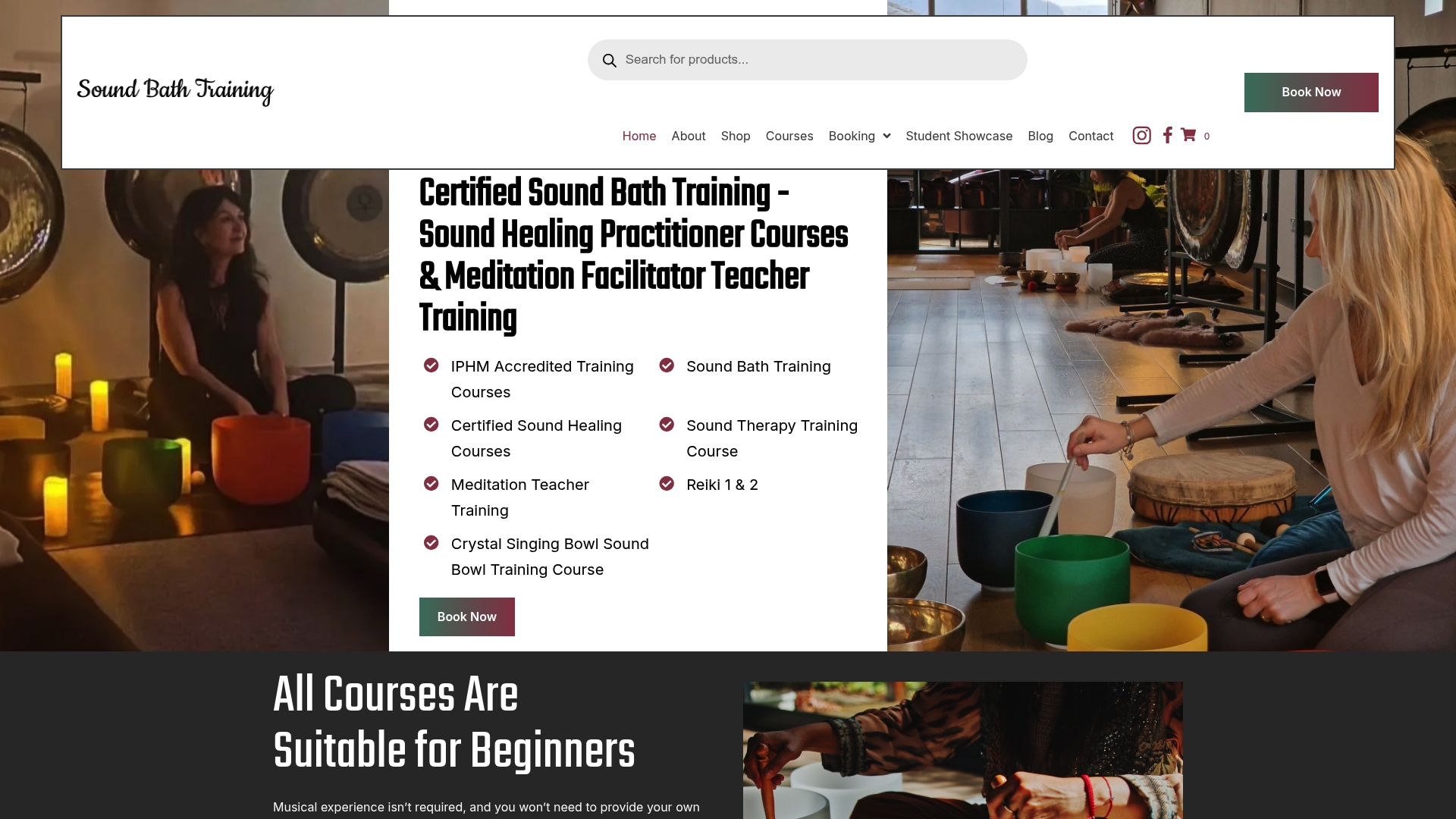
Soundbathtraining offers IPHM-accredited practitioner training designed for people who want to facilitate sound healing professionally. Every participant works with a full set of crystal bowls in a small group of no more than three, so there is no waiting and no passive observation. The accredited sound healing practitioner course covers all instruments, group facilitation techniques, and sound therapy practice across four days of hands-on training. No prior musical background is required. Browse the full range of training courses to find the right fit for your goals.
FAQ
What should I bring to my first group sound bath?
Bring a yoga mat, blanket, bolster or firm pillow, eye mask, and a water bottle. Your own blanket is particularly important because body temperature drops during deep relaxation.
How early should I arrive for a group sound bath?
Arriving 10–15 minutes early gives you time to set up your space and allows your nervous system to begin settling before the session starts.
Do I need to lie still throughout the session?
No. Movement, repositioning, and sitting upright are all accepted and encouraged, particularly for neurodivergent participants or those with trauma histories.
Who should seek medical advice before attending a sound bath?
People with pacemakers, epilepsy, severe anxiety, or psychiatric conditions should consult a healthcare professional before attending. Tinnitus sufferers should discuss ear protection and volume levels with the facilitator in advance.
How long does it take to recover after a group sound bath?
Allow 5–10 minutes before returning to normal activity. Open your eyes slowly, ground through your senses, and avoid rushing back into a busy environment immediately after the session.