
Sub-Total: $0.00
Top 4 soundspaceusa.com alternatives Providers 2026
Top 4 soundspaceusa.com alternatives Providers 2026
Finding accredited sound healing training that offers practical hands-on tuition and ongoing support is more difficult than it should be. Many providers limit courses to remote modules or skip post-course mentorship, which makes it harder to build real-world confidence and practical skills. This comparison clarifies tuition format, certification, and support so wellness practitioners can choose a sound healing training provider that fits their practice needs.
Table of Contents
- Sound Bath Training
- British Academy of Sound Therapy
- Atma Buti® Sound & Vibrational School
- Tibetan Bowl Sound Healing School
- Comparison of alternatives
Sound Bath Training
At a Glance
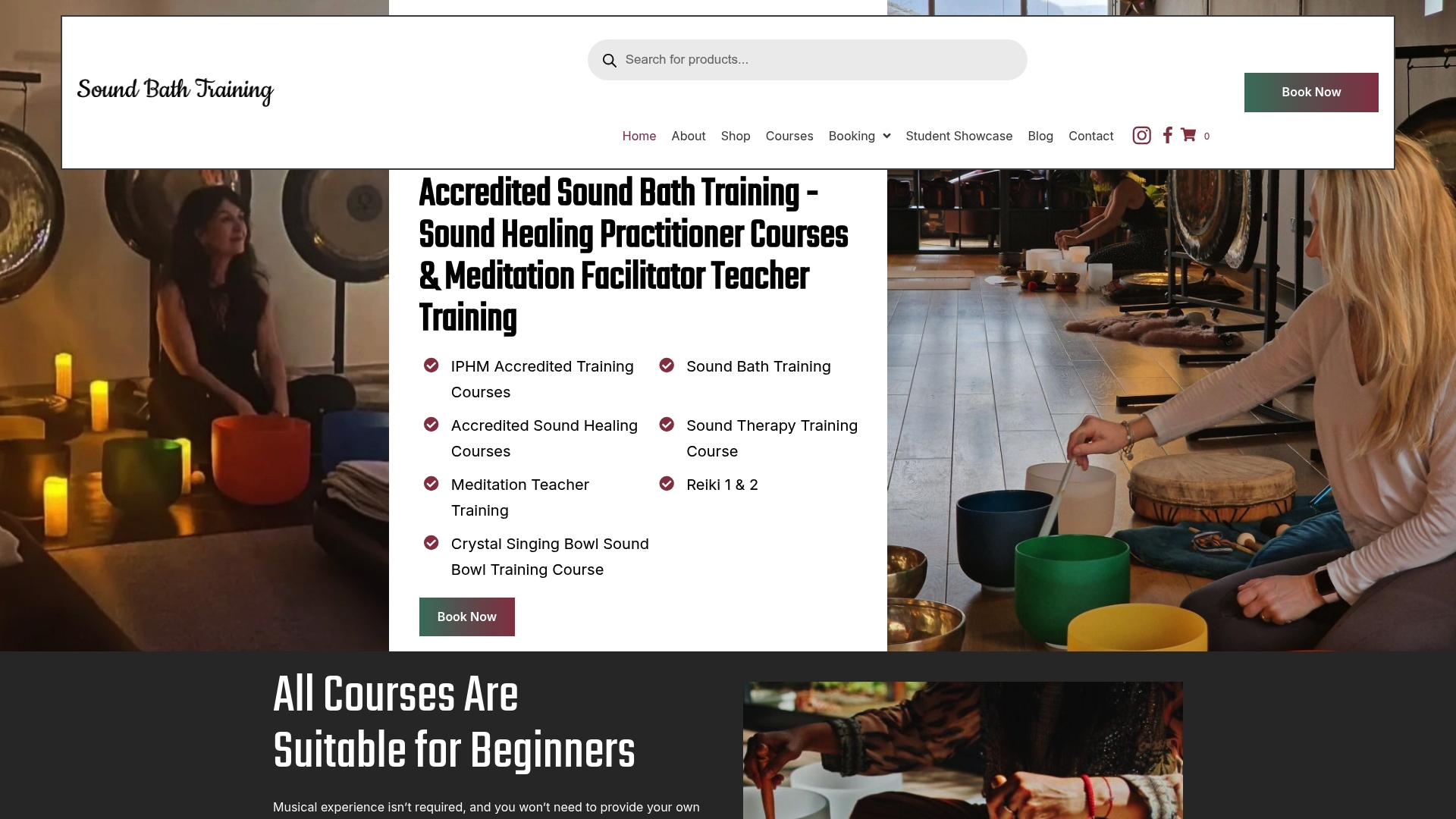
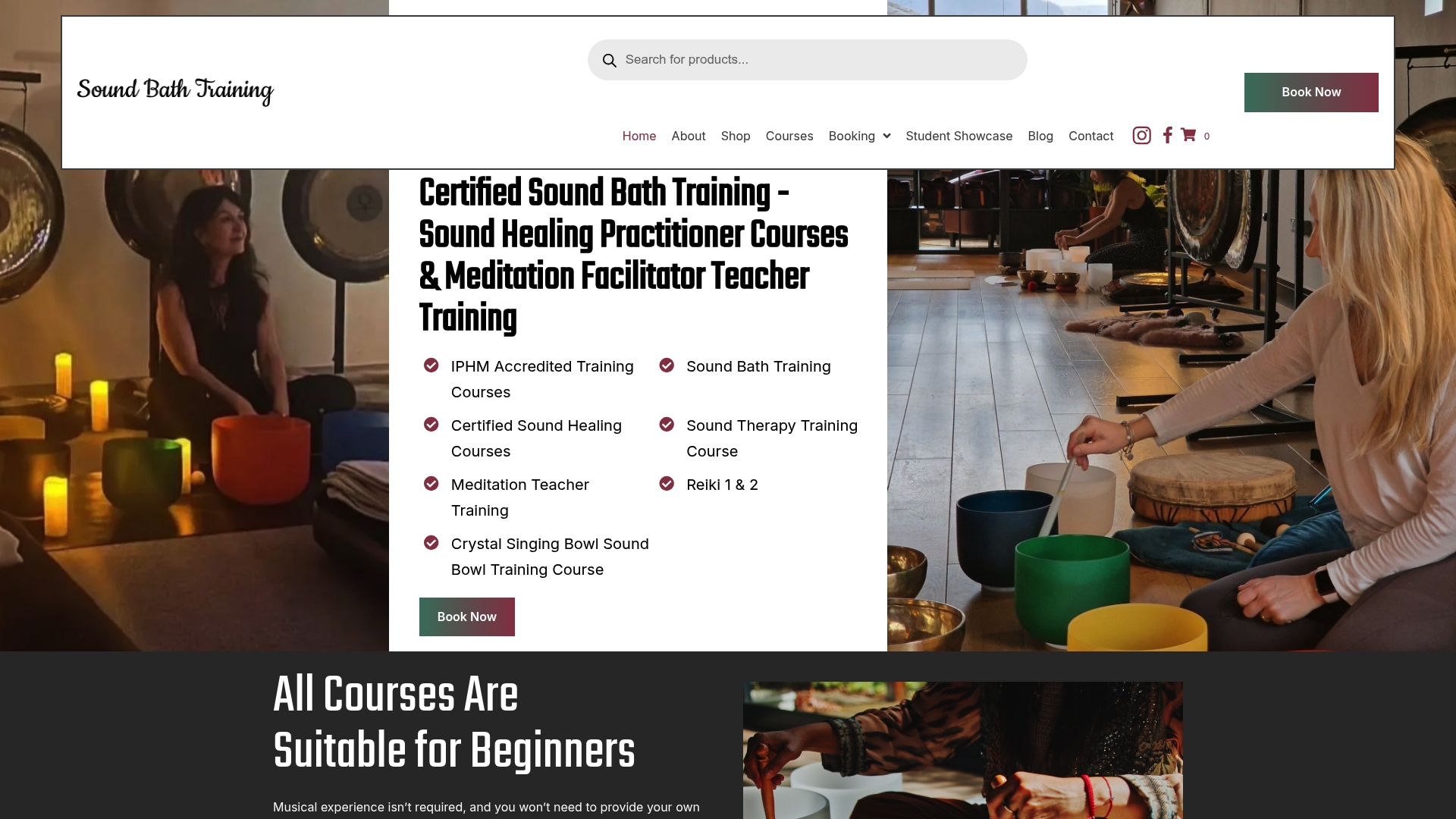
Training happens in a tranquil studio in Horwich, Greater Manchester. The vendor advertises accredited certification on course completion. Courses run as in-person, hands-on sessions with follow-up mentorship and community support.
Core Features
Courses focus on practical, in-person tuition that suits complete beginners without musical experience. You learn with instruments such as crystal singing bowls, gongs, and tuning forks, and options include one to one tuition or small group sessions. Each course includes certification, theory and practical elements, plus ongoing mentorship after the course.
Key Differentiator
Personalised hands-on training in a tranquil studio with small group sizes. This format gives each trainee ample instrument time and direct instructor feedback. The emphasis on practical practice aims to build confidence in conducting sound baths and therapy sessions.
Pros
The training prioritises experiential learning so you practise with the instruments rather than only watching demonstrations. Scheduling includes weekday and weekend options, which helps around existing work or teaching commitments. The course pairs theory with guided practice, and mentorship plus community support continue after certification. That post-course support helps with transitioning from training to offering events, workshops, or private sessions.
Cons
- Primarily in-person training, not suitable for those who prefer remote learning or cannot travel to Horwich.
Who It’s For
People new to sound therapy and wellness practitioners who want in-depth practical skills will benefit most. The courses suit yoga teachers, therapists, coaches, and anyone aiming to add sound baths to events or private practice. Beginners with no musical background can join and learn usable facilitation techniques.
Unique Value Proposition
One to one and small group formats let you practise instruments directly under instructor supervision without long waits between turns. That structure shortens the learning curve for practical facilitation and helps you build confidence faster. Ongoing mentorship and a supportive community mean you can develop offers such as workshops or private sessions after training.
Real World Use Case
A yoga instructor completes the course, then introduces group sound baths in weekly classes using crystal bowls and gongs. She offers private sessions for clients seeking deeper relaxation and lists certification on her service pages to attract bookings. Mentorship from the course helps her set pricing and structure events.
Pricing
Prices vary by course, from £275 for one-day courses to £995 for more comprehensive programmes. Exact fees depend on course length and included materials, and the provider lists each course separately on its site.
Website: https://soundbathtraining.co.uk
British Academy of Sound Therapy
At a Glance
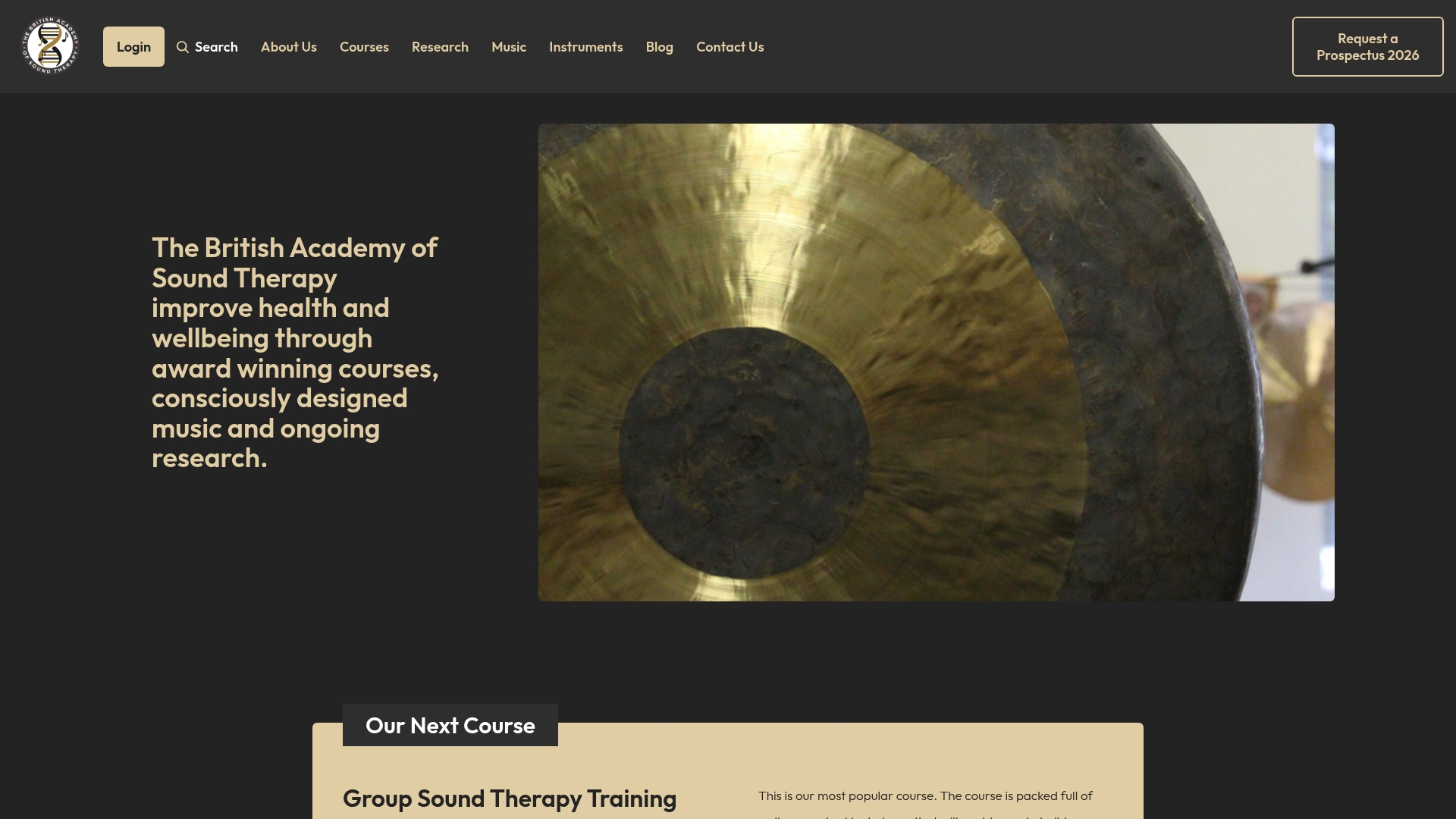
Founded in 2000, the academy stands among the early UK institutions offering formal sound therapy qualifications. The organisation presents a science-led curriculum and research output. The vendor advertises a research-based approach to clinical and educational methods in sound therapy.
Core Features
The platform delivers courses that include group sessions and one on one treatments combined with online materials and in-class teaching to support blended learning. Course topics cover vocal techniques, tuning forks, sound healing instruments, and arts for health and wellbeing. The programme also includes business and practice development support alongside a membership network for professional peers.
Key Differentiator
The main distinction is the academy’s emphasis on evidence and practice for clinical and educational settings. That research focus shapes course syllabuses, assessment methods, and practitioner training. It aims to prepare graduates for professional practice within healthcare and education contexts.
Pros
Training is grounded in ongoing research and formal documentation, which appeals to clinicians and therapists seeking methodical instruction. The course catalogue spans introductory modules to professional qualifications, giving clear learning pathways. Flexible delivery modes let you follow distance modules while attending practical sessions when needed. The membership network and professional support help graduates develop referrals and practice skills. The academy also holds awards and recognition for course quality.
Cons
- Instruments required for practical modules are not included in course fees and can add significant outlay.
- Most learning pathways expect physical attendance in the UK for practical work, limiting access for overseas students.
- Practical, hands-on practice is prioritised, which may frustrate learners preferring purely remote study.
When It May Not Fit
If you cannot travel to the UK for practical sessions, the course format will feel restrictive. Organisations needing a fully remote, scalable training platform will find blended requirements limiting. Buyers who want included equipment and a fully online practical lab will need a different supplier.
Who It’s For
Health and wellness practitioners, therapists, and educators who want methodical training in sound therapy will find this useful. Clinic managers seeking to add complementary therapies will appreciate the practice development content. Professional students aiming for recognised qualifications and peer membership will also benefit.
Real World Use Case
A community health centre trains several staff members through mixed online modules and weekend practicals. Staff learn tuning fork protocols and vocal techniques, then apply them in complementary therapy clinics. The membership network then helps staff exchange case notes and local referral contacts.
Pricing
Not applicable — informational only. Course fees are set per programme and the academy lists detailed pricing and entry requirements on its site.
Website: https://britishacademyofsoundtherapy.com
Atma Buti® Sound & Vibrational School
At a Glance
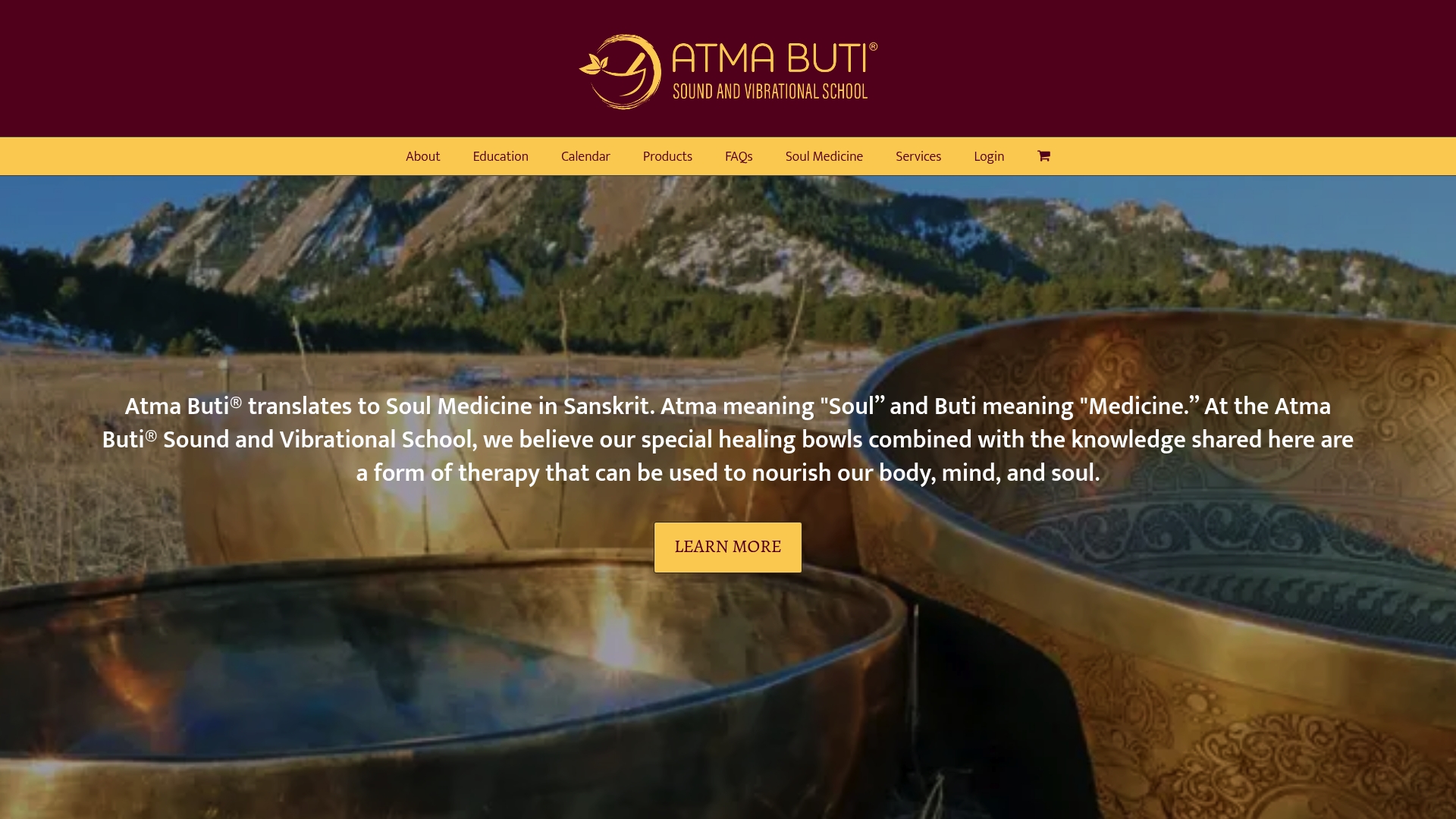
Atma Buti® translates as “Soul Medicine” in Sanskrit and bases its training on Himalayan lineage and methods. The vendor advertises CEU credits approved by the National Certification Board for Therapeutic Bodywork. Courses run in Boulder, Colorado, and the programme is led by Suren Shrestha, a teacher with deep Himalayan roots.
Core Features
The school delivers in-person workshops and multilevel courses that cover beginner, advanced, and certification programme tracks. Training emphasises authentic Himalayan singing bowl techniques alongside modern therapeutic practices and includes hands-on practicum work for skill development. Several offerings target health professionals by combining classroom instruction with practical sessions and CEU workshops.
Key Differentiator
The training pairs traditional Himalayan methods with clinical-minded applications taught by Suren Shrestha. That combination focuses on practical skill transfer so practitioners can use singing bowls and gongs in therapeutic settings. The emphasis on lineage and adaptions for modern therapy distinguishes the curriculum from general sound healing classes.
Pros
Atma Buti® presents genuine Himalayan technique and a clear lineage, which benefits practitioners seeking historical context and specific playing methods. The programme includes multilevel coursework and hands-on practicum, so trainees practise with a full set up rather than only observing. The CEU approval mentioned above supports continuing education credits for massage therapists and allied professionals, and the school links professional development with personal and spiritual growth.
Cons
- Primarily in-person in Boulder, Colorado, which limits access for international or remote learners.
- Focuses on Himalayan singing bowl traditions, which may restrict exposure to other sound healing modalities.
- Course fees and schedules are not published online, so prospective students must contact the school for pricing details.
- No integrations or online learning modules are listed, reducing flexibility for people who need remote study options.
When It May Not Fit
If you need fully online or asynchronous training, this programme will not meet that requirement. Those seeking broad comparative exposure to multiple global sound traditions may find the focus too narrow. Budget-conscious applicants who prefer transparent pricing before contacting a provider will need a different option.
Who It’s For
The offering suits holistic health practitioners, massage therapists, and yoga instructors who want certification and hands-on experience with Himalayan singing bowls. It also fits people pursuing personal growth through focused vibrational practice and health professionals seeking CEUs. Trainees should be able to travel to Boulder for in-person attendance.
Real World Use Case
A massage therapist attends the advanced certification programme to add vibrational therapy to clinic work. The therapist studies singing bowl technique in practicum sessions and completes CEU workshops to maintain professional licensure. After the course, they integrate bowl sessions into 60 minute treatments for stress reduction.
Pricing
Pricing is not specified on the website. Courses and workshops are offered through scheduled programmes and certification tracks, and the school requests enquiries for exact fees and availability. Prospective students must contact the school to receive current cost information.
Website: https://atmabuti.org
Tibetan Bowl Sound Healing School
At a Glance
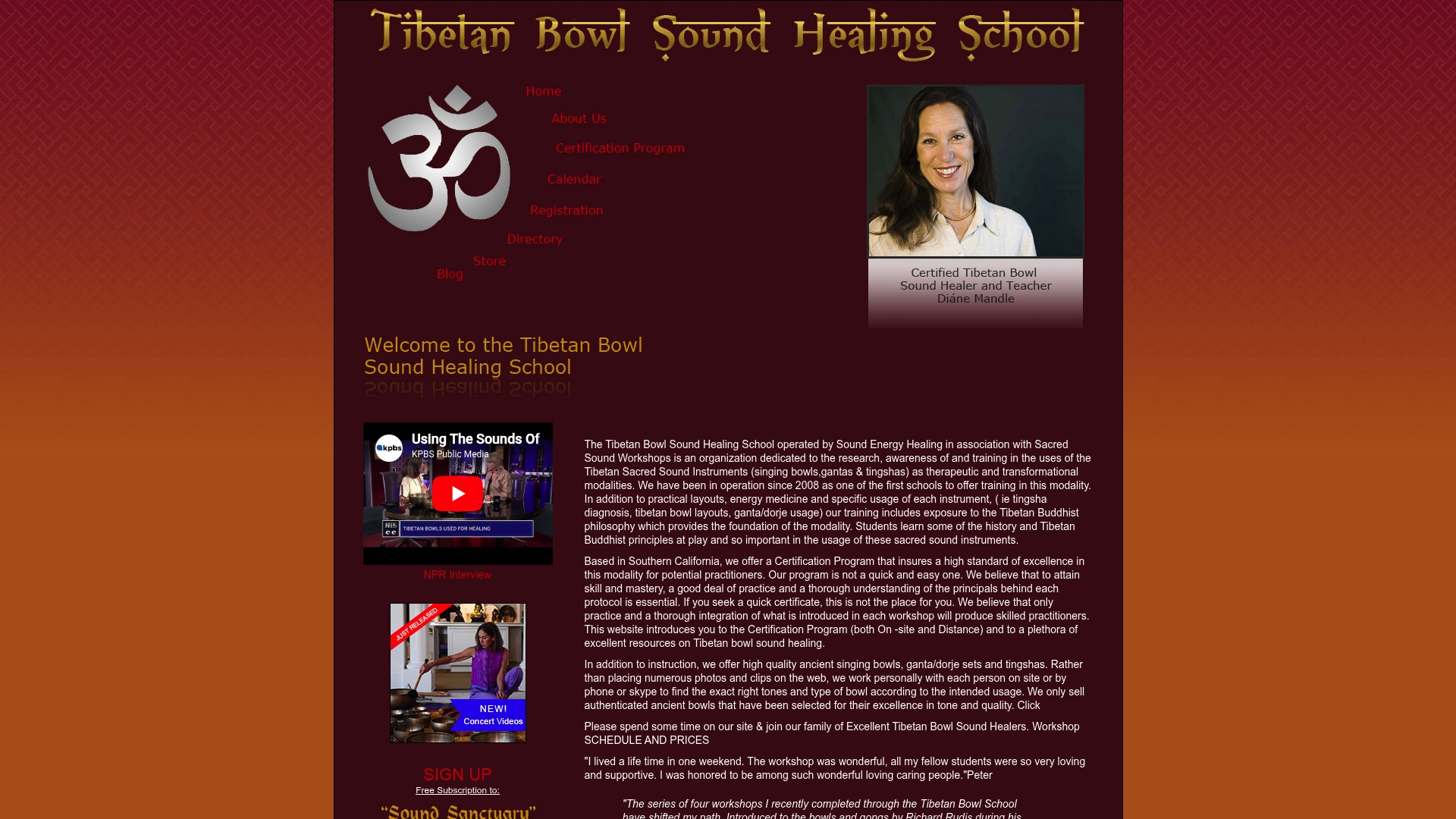
First school to offer comprehensive Tibetan sound healing certification incorporating Tibetan Buddhist principles since 2008. That founding date signals a long track record in formal training and practitioner support. The school runs both on-site and distance learning options, with a focus on practical mastery rather than quick completion.
Core Features
The platform delivers a structured certification programme that combines practical instruction on singing bowls, gantas, and tingshas with lesson modules on sound layouts and client assessment. It pairs an educational library and media centre with a practitioner directory and live workshops, and it sells authentic Tibetan instruments with personalised guidance. The learning pathway emphasises hands-on practise and contextual study of Tibetan Buddhist principles alongside technique.
Key Differentiator
The school claims to have led formal Tibetan sound healing certification since 2008, and that lifespan shapes its curriculum and community. The programme weaves Tibetan Buddhist philosophy into technique teaching, which changes how students approach diagnosis and session design. That depth sets the offering apart from shorter skills workshops and hobbyist courses.
Pros
Longstanding operation gives degree of institutional knowledge, which shows in a practice-focused syllabus and layered resources. The programme emphasises practical skill development, so trainees work directly with instruments rather than only watching demonstrations. The school also supplies authentic Tibetan singing bowls and small percussion with one-to-one guidance on selection and care, and it maintains a practitioner directory and events that keep graduates connected to peers.
Cons
- Requires steady commitment to practise and study, which limits appeal to casual learners.
- Most resource access occurs after enrolment, so free online content is limited for independent hobbyists.
- Not a rapid certification option; the pathway is deliberately in-depth rather than short and superficial.
When It May Not Fit
People seeking a fast weekend certificate or a light introduction will find the programme too demanding. Those who want a fully self-guided online course with abundant free materials may prefer other providers. Organisations needing a quick staff training rollout or a low-cost entry option should look elsewhere.
Who It’s For
Serious students, healers, therapists, and wellness practitioners aiming for professional certification will benefit most. People who want to run therapeutic sound sessions and list themselves in practitioner directories will find the structure useful. Enthusiasts prepared to invest time in practise and philosophical study will gain the deepest value.
Real World Use Case
A practitioner completes the certification modules and practises instrument technique in supervised sessions. They buy a matched set of high quality bowls from the school with guidance on tuning and placement. After qualifying they list on the practitioner directory and run paid Tibetan sound healing sessions while attending ongoing workshops.
Pricing
Not applicable. Informational only. The school frames its offerings as training and instrument sales rather than a subscription software product, and public pricing is not listed.
Website: https://tibetanbowlschool.com
Comparison of alternatives
When evaluating sound healing training providers, each programme exhibits unique strengths to suit varied goals and learner types. From hands-on practice in small groups to lineage-based traditions, providers differ in delivery methods, focus areas, and community involvement, making the choice contingent on priorities.
Practicality in learning modalities
Sound Bath Training excels in providing hands-on, in-person mentorship, ensuring each learner ample time with instruments during small group or individual sessions. Contrastingly, the British Academy of Sound Therapy integrates practical elements with academic rigor, blending online theory with in-person workshops to cater to academic learners requiring flexibility within clinical contexts. Meanwhile, Atma Buti® Sound & Vibrational School offers immersive sessions emphasising Himalayan traditions, providing authenticity but demanding in-person attendance in Boulder, Colorado.
Unique instructional philosophies
The Tibetan Bowl Sound Healing School incorporates Tibetan Buddhist principles in its methodology, fostering a deeper connection between philosophy and practice, suitable for those embracing both traditional and spiritual dimensions. In comparison, the British Academy commits to evidence-based methodologies for clinical settings, attracting professionals aiming for scientifically grounded practices.
Best fit
- Trainees prioritising direct hands-on mentorship in small group settings will find Sound Bath Training well-suited, particularly for beginners.
- Academic professionals or clinicians seeking research-supported methodologies may prefer the structured pathways of the British Academy of Sound Therapy.
- Practitioners pursuing Himalayan sound techniques with therapeutic intentions may benefit from the expertise of Atma Buti® Sound & Vibrational School.
- Enthusiasts interested in integrating Tibetan philosophy within their practice will align with Tibetan Bowl Sound Healing School’s offerings.
Our pick
While each provider excels in its specialised focus, Sound Bath Training stands out for its mentorship, accessibility for beginners, and emphasis on direct instrumental interaction. For those seeking guided practical training within a supportive community, this choice is in its delivery.
Explore the following sound healing training options to identify the best fit for your learning style, location, and goals.
| Training Programme | Core Feature | Key Differentiator | Best For | Pricing | Notable Limitation |
|---|---|---|---|---|---|
| Soundbathtraining | Practical, in-person training with certification | Personalised hands-on mentorship in a peaceful studio | Beginners and wellness practitioners | £275 to £995 | Primarily in-person training limiting remote access availability |
| British Academy of Sound Therapy | Blended in-person and online materials for sound therapy | Emphasis on research-supported clinical applications | Clinicians and health professionals | Price not published | Instrument costs not included in course fees |
| Atma Buti® Sound & Vibrational School | Himalayan singing bowl techniques with CEUs | Combination of traditional and clinical approaches | Health professionals seeking CEUs | Price not published | In-person programmes conducted only in Boulder, Colorado |
| Tibetan Bowl Sound Healing School | Comprehensive certification with Tibetan Buddhist principles | Focused curriculum merging philosophy and technique | Dedicated healers seeking in-depth knowledge | Price not published | Long, demanding certification process unsuitable for casual learners |
Challenges in Finding Soundspaceusa.com Alternatives for Practical Sound Therapy Training
Choosing the right sound healing course can feel daunting. Many seekers want hands-on experience without long waits or large groups. Soundbathtraining offers IPHM accredited courses with 1:1 or small group sessions (max 3). Training happens in a calm studio using crystal singing bowls, gongs, and tuning forks. This suits beginners and wellness practitioners aiming for personalised skill development and confidence to lead sound baths and therapies.
Benefits of Soundbathtraining include:
- Direct instrument practise in small groups
- Practical sessions without prior musical skills
- Ongoing mentorship after certification
Explore options that focus on practical learning at Uncategorized Archives | Sound Bath Training or visit the main site at Soundbathtraining.
Considering alternatives to soundspaceusa.com? See how tailored hands-on courses can prepare you fully for sound bath facilitation. Book your first session with Soundbathtraining and gain skills in a supportive setting for your wellness practice.
FAQ
What features make Soundbathtraining suitable for complete beginners?
Soundbathtraining offers personalised hands-on training with a focus on practical, in-person tuition. The courses allow participants to learn using instruments like crystal singing bowls, gongs, and tuning forks, making it ideal for those with no prior musical experience. Beginners can expect a supportive environment to build their confidence in conducting sound baths.
How does Soundbathtraining compare to the British Academy of Sound Therapy?
The British Academy of Sound Therapy provides a research-led curriculum that is appealing to clinicians and therapists. Soundbathtraining, on the other hand, prioritises experiential learning in a tranquil setting, offering personalised hands-on training that helps beginners gain practical skills quickly. Each programme serves distinct needs, with Soundbathtraining focusing on immediate application for complete newcomers.
What ongoing support is available after completing a course with Soundbathtraining?
Soundbathtraining includes ongoing mentorship and community support after course completion. This additional support aids trainees in transitioning from training to offering sound bath events or private sessions. It ensures that learners can confidently develop and implement their new skills in real-world applications.
Can I learn sound healing techniques if I live outside the UK?
Soundbathtraining primarily offers in-person training in Horwich, Greater Manchester, which may not be suitable for those unable to travel. Prospective trainees seeking sound healing courses might want to explore providers that offer remote learning options or flexible course structures to accommodate various needs.
What pricing options does Soundbathtraining offer for its courses?
Soundbathtraining courses vary in price, with fees starting from £275 for one-day courses up to £995 for more comprehensive programmes. Prospective students should explore the specific course details available on the website to find one that fits their budget and learning goals.