
Sub-Total: $0.00
Yoga nidra sound healing: a mindfulness guide
Yoga nidra sound healing: a mindfulness guide
Yoga nidra sound healing is the practice of consciously inducing deep rest through guided yogic sleep paired with specific sound frequencies that promote neurological and emotional balance. The standard industry term for the broader discipline is sound therapy, though the combined practice is widely known as yoga nidra sound healing within wellness communities. Dopamine increases by up to 65% during sessions, while cortisol drops measurably. That single physiological shift explains why so many mindfulness practitioners are turning to this practice for stress relief, sleep support, and emotional processing. Instruments including Tibetan singing bowls, crystal singing bowls, and gongs create the immersive sound environment that makes this depth of rest possible.
What is yoga nidra sound healing and how does it work?
Yoga nidra is defined as yogic sleep with awareness maintained. Unlike ordinary sleep, it preserves conscious witness awareness while the body enters a state of deep physiological rest. Sound healing layers onto this by using specific frequencies and harmonic overtones to guide the nervous system into progressively quieter states. The result is a practice that reaches places silent meditation often cannot.
Sound therapist Simon Heather describes the combination as synergistic by design: sound bypasses mental resistance while yoga nidra anchors awareness, providing structure for deeper rest. This is particularly useful for people who find silent meditation frustrating. The sound gives the mind something to follow, removing the pressure to “clear your thoughts.”
How does this practice affect the nervous system?
The combined practice activates the parasympathetic nervous system, commonly called the “rest and digest” response. This shifts the body away from the stress-driven sympathetic state and into genuine physiological recovery. Heart rate slows, blood pressure drops, and muscle tension releases without any deliberate effort from the practitioner.
Brainwave activity follows a predictable pattern during a well-structured session. The brain moves from beta waves (active thinking) through alpha (relaxed alertness) into theta (deep meditative states) and sometimes delta (associated with deep sleep). Sound entrainment drives this shift. The rhythmic vibrations of instruments like gongs and crystal bowls act as an external pacemaker for the brain’s electrical activity.
The most significant neurological feature of yoga nidra is the hypnagogic threshold state. This is the conscious threshold between waking and sleep where the nervous system recalibrates most effectively. Most people pass through this state unconsciously every night. Yoga nidra teaches you to linger there deliberately.
Clinical Professor Manuela Kogon explains that acoustic therapies quiet stressful thought patterns by giving the brain a soothing task. This is not mystical. It is measurable physiology. Research shows anxiety reduces by 42% and chronic pain decreases by 37% with consistent practice. Sleep quality improves to a degree comparable with some sleep medications.
Pro Tip: If you find your mind wandering during a session, treat it as information rather than failure. The hypnagogic state is naturally fluid. Simply return your attention to the sound.
What sound healing techniques and instruments are used?
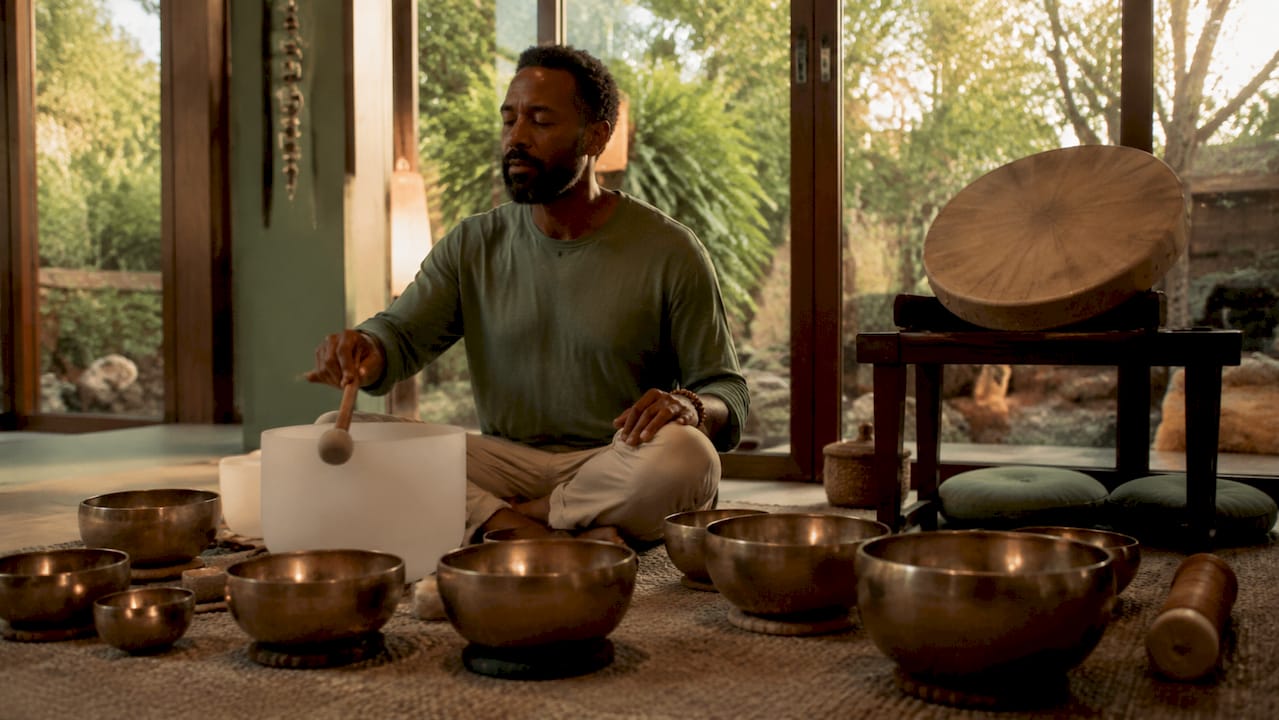
The instruments used in yoga nidra sound healing are not interchangeable. Each produces a distinct frequency range and harmonic profile that affects the body differently.
- Tibetan singing bowls produce warm, complex overtones in the 110–660 Hz range. They are well suited to grounding and body awareness work at the start of a session.
- Crystal singing bowls generate cleaner, sustained tones. Many practitioners tune them to 432 Hz for frequency alignment with the body’s energy centres, known as chakras.
- Gongs produce the broadest frequency spectrum of any single instrument. Their layered vibrations are particularly effective at inducing deep trance states and are better suited to experienced practitioners.
- Chimes and tingsha bells offer sharp, clear tones used to mark transitions between session stages, particularly the return to waking awareness.
The choice of instrument shapes the emotional and physical experience of the session. Crystal bowls tend to produce a lighter, more expansive feeling. Tibetan bowls feel more grounding and physical. Gongs can be overwhelming for beginners if used without care.
Mantras are sometimes woven into sessions alongside instruments. Repeated sound patterns like Om or specific Sanskrit syllables amplify vibrational focus and deepen the meditative state. This is an optional layer, not a requirement.
| Instrument | Best For | Frequency Profile |
|---|---|---|
| Tibetan singing bowls | Grounding, body scan phases | Warm, complex overtones |
| Crystal singing bowls | Chakra alignment, sustained relaxation | Clean, sustained tones |
| Gongs | Deep trance, advanced sessions | Broad spectrum vibration |
| Chimes and tingshas | Session transitions, gentle awakening | Sharp, clear, short tones |
Pro Tip: If you are new to sound healing, start with a session using only crystal or Tibetan bowls. Gong baths can be intense and are best approached once you are comfortable with lighter instruments.
What should you expect in a typical session?
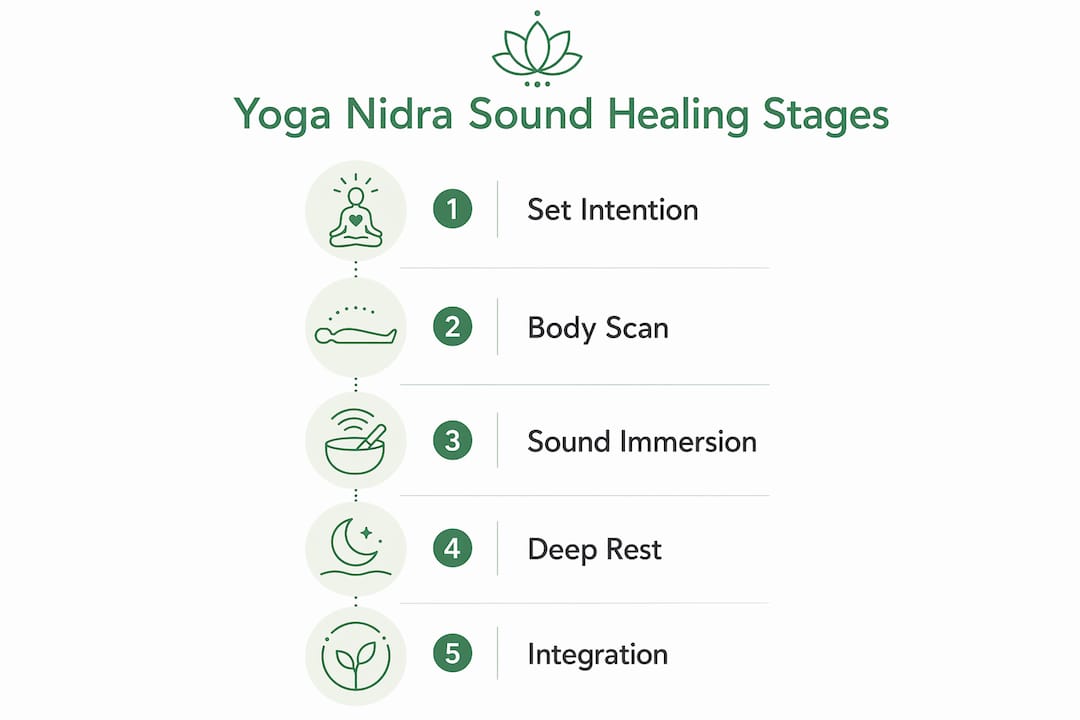
A standard yoga nidra sound healing session lasts 45–60 minutes and moves through four distinct phases. Knowing the structure removes uncertainty and helps you settle more quickly.
- Intention setting (Sankalpa): You begin lying down and set a short personal intention. This could be as simple as “I am at rest.” The intention plants a seed in the receptive state that follows.
- Body scan: A guided voice directs attention systematically through each body part. This withdraws awareness from external stimuli, a process called pratyahara in yogic tradition.
- Sound immersion: Instruments are played around and sometimes over the body. This is the core of the session. The sound frequencies do the heavy lifting, guiding brainwave states and releasing held tension.
- Integration: The session closes slowly. A gentle reintegration phase is non-negotiable. Ending abruptly causes disorientation and undoes much of the session’s benefit.
Physical comfort directly affects how deeply you can rest. Props including bolsters, blankets, and eye pillows prevent micro-movements that pull you out of deep states. Wear loose, warm clothing. The body temperature drops during deep rest, so having a blanket available is practical, not optional.
Sessions are available in studio settings, small group formats, and as online recordings. For beginners, a structured yoga sound bath with a live guide is preferable to recordings because the practitioner can adjust the sound in real time based on the group’s energy.
What are the benefits and realistic limitations?
The benefits of combining yoga nidra with sound healing are well documented and span multiple dimensions of health.
- Stress and anxiety: Anxiety reduces by 42% with regular practice. Cortisol, the primary stress hormone, drops measurably within a single session.
- Sleep quality: The practice improves sleep to a degree comparable with some medications, without side effects.
- Pain management: Chronic pain decreases by 37% in consistent practitioners. Sound modulates pain perception through the nervous system rather than through chemical intervention.
- Emotional processing: The hypnagogic state makes the subconscious more accessible. Emotional material surfaces and integrates more readily than in ordinary waking states.
- Immune function: Sessions boost immune cell activity, supporting the body’s natural defences.
The limitations matter equally. Cedars-Sinai experts confirm that sound healing is a safe wellness tool but not a substitute for conventional medical treatment. Anyone managing a serious chronic condition should consult a healthcare professional before using this practice as a primary intervention.
“The benefit arises not from mystical healing frequencies but from measurable physiological stress reduction.” — Clinical Professor Manuela Kogon, as cited in Harper’s Bazaar
Sound healing lowers heart rate and blood pressure and reduces perceived pain, anxiety, and fatigue. These are real, physiological effects. The frequencies are not magic. They are triggers for the body’s own regulatory systems.
Key takeaways
Yoga nidra sound healing works because guided yogic sleep and targeted sound frequencies together activate the parasympathetic nervous system, recalibrate brainwave states, and reduce cortisol in ways neither practice achieves as effectively alone.
| Point | Details |
|---|---|
| Core mechanism | Sound frequencies guide the brain from beta to theta states, enabling deep nervous system rest. |
| Dopamine and cortisol | Sessions increase dopamine by up to 65% and reduce cortisol, producing measurable stress relief. |
| Instrument choice matters | Crystal bowls suit beginners; gongs are better suited to experienced practitioners seeking deep trance states. |
| Session structure | Four phases (intention, body scan, sound immersion, integration) take 45–60 minutes; props improve depth. |
| Realistic expectations | Benefits are physiological and well documented, but the practice complements rather than replaces medical care. |
Why sound changed how i experience deep rest
I came to yoga nidra through a fairly conventional mindfulness route. Breath work, body scans, silent sitting. All useful. None of them got me to the depth of rest I was looking for. The first time I experienced a session with crystal singing bowls, something shifted that I had not managed through silent practice alone.
What I noticed immediately was that the sound removed the need to try. Silent meditation asks you to manage your own attention. Sound gives your attention somewhere to go. That distinction sounds small. In practice, it is the difference between straining and surrendering.
The integration phase is where most beginners underestimate the practice. The temptation is to sit up quickly and get on with the day. Every time I have rushed that transition, I have felt foggy for hours. When I allow ten minutes of gentle return, the clarity that follows is genuinely different from ordinary rest.
The other thing worth saying honestly: emotional material does come up. Not always, and not dramatically. But the hypnagogic state is permeable. Old feelings surface. The practice does not force you to process them. It simply creates the conditions where processing becomes possible. That is both the gift and the reason some people find it unexpectedly moving the first time.
Consistency matters more than session length. A 20-minute guided session three times a week produces more lasting nervous system change than one long session monthly. The body learns to drop into rest more quickly each time.
— Sarah
Deepen your practice with professional sound healing training
If yoga nidra sound healing has sparked something in you, formal training takes that interest somewhere meaningful.
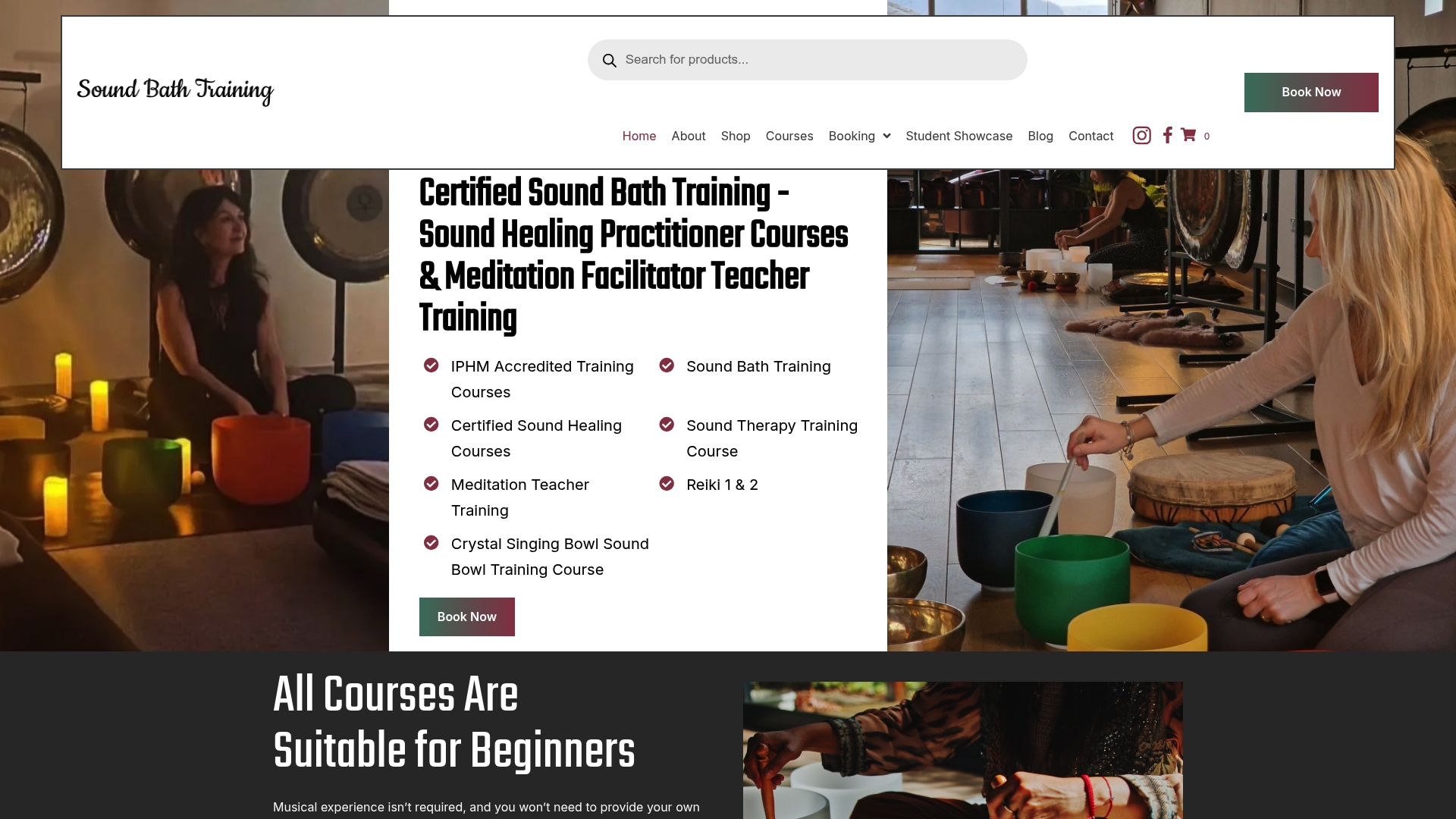
Soundbathtraining offers IPHM accredited sound healing practitioner courses in a tranquil studio environment, with a maximum of three students per instructor. Every participant works with a full set of crystal bowls from day one. No musical background is required. The accredited practitioner training covers all major instruments alongside sound therapy techniques, making it suitable for both personal development and professional practice. You can also browse the full courses archive to find the format and duration that fits your schedule. For those already combining sound with yoga, the guide on sound bath integration is a practical starting point.
FAQ
What is yoga nidra sound healing in simple terms?
Yoga nidra sound healing combines guided yogic sleep with live sound frequencies from instruments like crystal bowls and gongs to induce deep physical and neurological rest. The practice activates the parasympathetic nervous system and can increase dopamine by up to 65% in a single session.
Do you need experience in meditation to try it?
No prior meditation experience is required. The sound provides an external focus that makes the practice accessible to beginners who struggle with silent techniques.
How long does a typical session last?
A standard session lasts 45–60 minutes and moves through four phases: intention setting, body scan, sound immersion, and a gentle integration phase.
Is sound healing scientifically supported?
Sound healing is supported by clinical research showing reductions in heart rate, blood pressure, anxiety, and chronic pain. Cedars-Sinai and UCLA Health both recognise it as a safe complementary wellness tool, though not a replacement for medical treatment.
Can you fall asleep during yoga nidra?
Falling asleep during a session is normal and not considered a failure. The practice targets the hypnagogic threshold between waking and sleep, so drifting across that line occasionally is part of the experience.