
Sub-Total: $0.00
What is sound meditation? a beginner’s guide
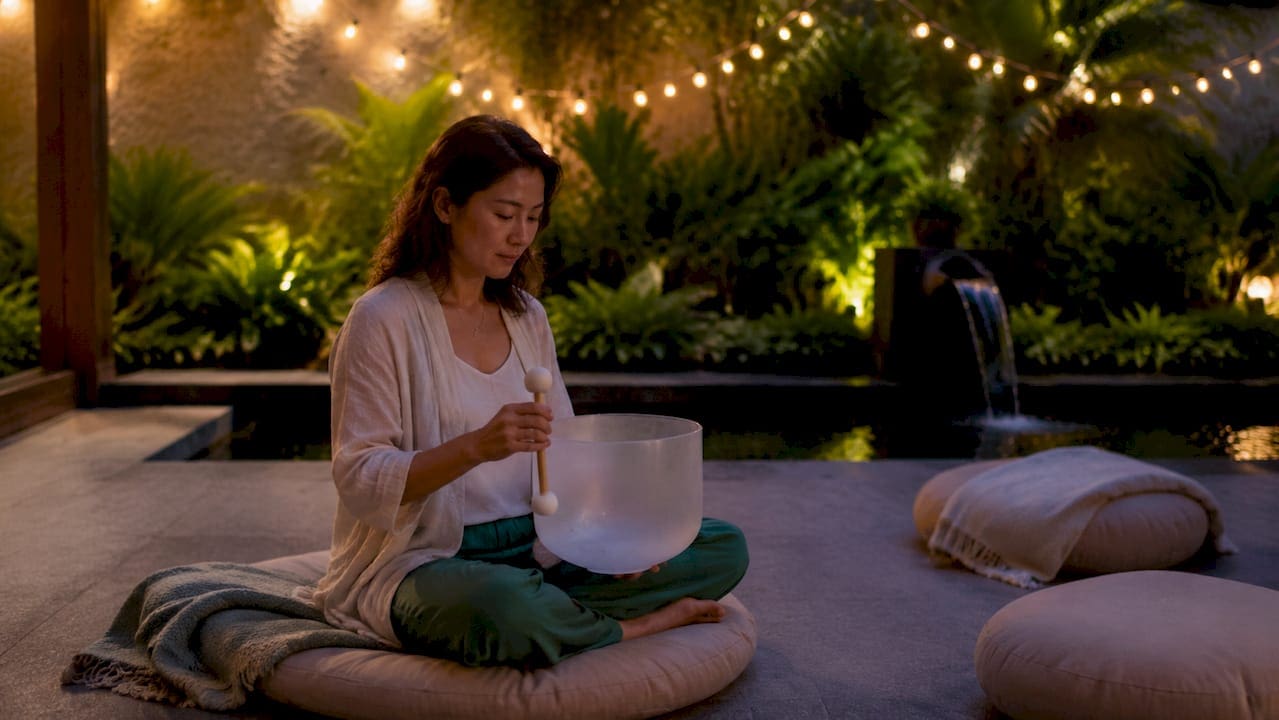
What is sound meditation? a beginner’s guide
Sound meditation is the practice of using focused auditory stimuli, including singing bowls, gongs, and vocal toning, to calm the mind and body through active listening and vibration. Unlike silent mindfulness, it gives the brain an external focal point, making it one of the most accessible entry points into meditative practice. The formal term used across yoga traditions is Nada Yoga, meaning the yoga of sound, though modern practitioners know it through sound baths and guided frequency sessions. Scientific research now supports what ancient traditions long claimed: deliberate exposure to sound produces measurable changes in brainwave activity, heart rate, and nervous system regulation.
What is sound meditation and how does it work?
Sound meditation is defined as a contemplative practice in which sound and vibration serve as the primary object of attention, replacing the breath or a mantra as the meditative anchor. The listener does not need to clear the mind. Instead, the mind is given a task: listen actively and follow the sound. That shift alone separates it from most other forms of meditation.
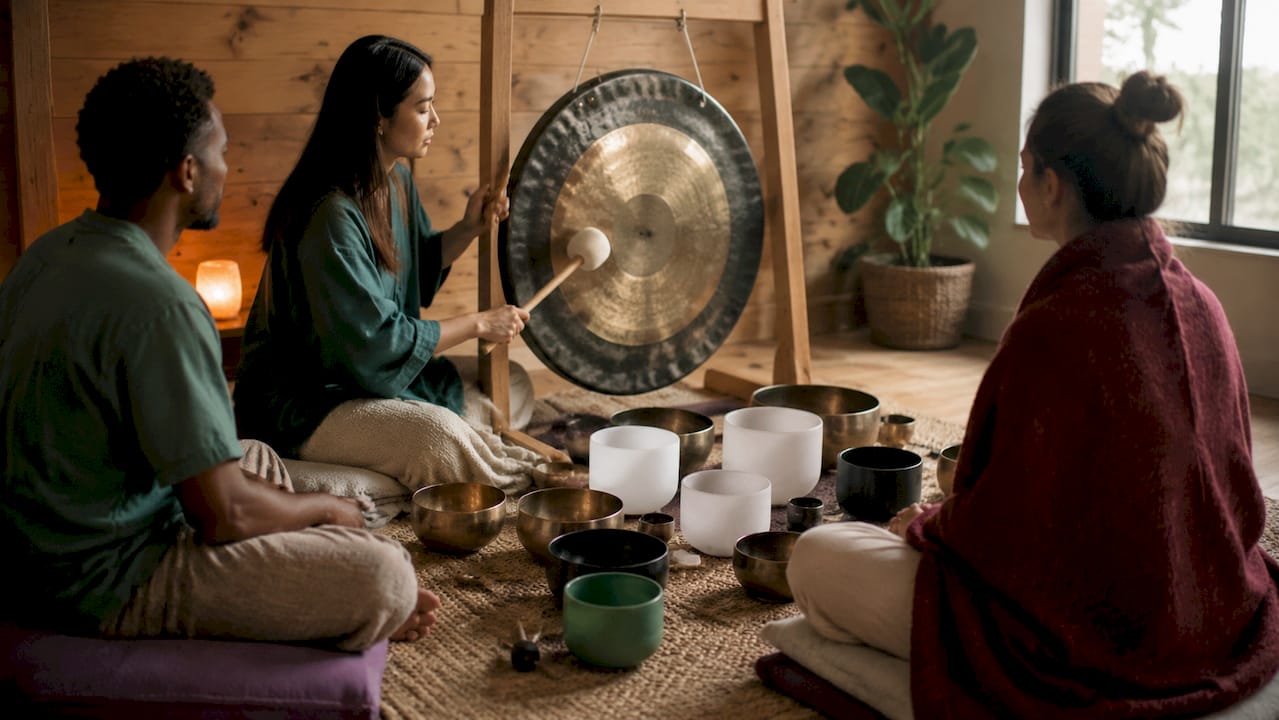
The practice spans two broad traditions. Nada Yoga, rooted in Hindu philosophy, works with both external sound (called ahata, or struck sound) and internal sound (called anahata, meaning unstruck). The goal in Nada Yoga is to move from audible instruments toward the subtle inner vibration that exists beyond hearing. Modern sound baths, by contrast, are experiential and largely passive. You lie down, close your eyes, and allow instruments such as Tibetan singing bowls, crystal bowls, or gongs to wash over you for 30–60 minutes.
Both approaches share a core mechanism. Active listening to sound anchors the mind to the present moment, reducing the analytical thinking that makes silent meditation so difficult for beginners. The sound gives the brain a job, and in doing that job, the mind quiets without effort.
What are the different types of sound meditation practices?
Sound meditation is not a single method. It is a family of practices, each with a different focus and intended outcome.
Nada yoga
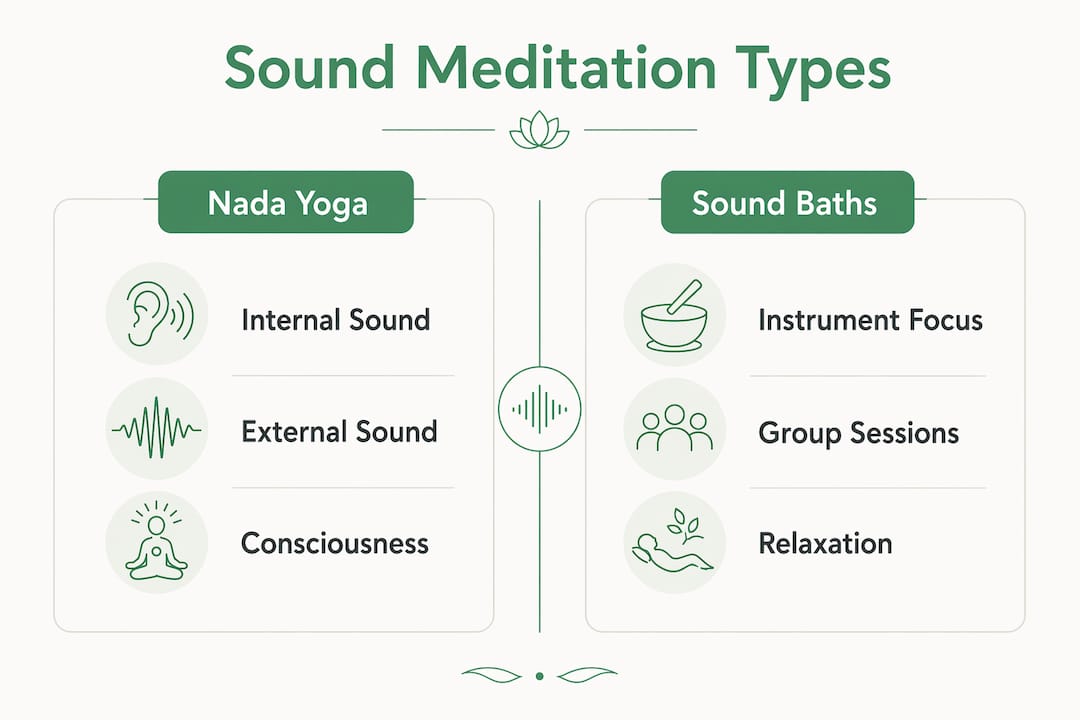
Nada Yoga uses both external and internal sound as a path to consciousness. Anahata Nada refers to the subtle internal vibration that practitioners aim to perceive once external sounds fade. The ultimate aim is to reach a state of awareness beyond ordinary hearing, which is said to accelerate meditation and spiritual awakening. This makes Nada Yoga the most philosophically deep form of sound meditation.
Sound baths
A sound bath is a group or solo session in which instruments are played around or over the listener. Crystal singing bowls, Tibetan bowls, gongs, and chimes are the most common instruments used. Sessions typically last 30–60 minutes and require no prior skills or musical knowledge. The listener remains passive, making this the most beginner-friendly format available.
Vocal toning and chanting
Vocal toning involves producing sustained vowel sounds or simple tones with your own voice. Chanting uses repeated phrases or mantras, such as the Sanskrit syllable Om, to create internal resonance. Both practices combine sound production with breath awareness, adding a somatic layer that purely receptive practices do not offer.
Here is a comparison of the main types:
| Practice | Primary Focus | Main Goal |
|---|---|---|
| Nada Yoga | Internal and external sound | Consciousness awakening |
| Sound Bath | Receptive listening | Relaxation and nervous system reset |
| Vocal Toning | Self-generated sound | Somatic resonance and stress relief |
| Chanting | Rhythmic repetition | Focus, spiritual connection |
| Binaural Beats | Brainwave entrainment | Sleep, focus, or deep relaxation |
How does sound meditation affect the mind and body?
The effects of sound meditation are not placebo. EEG studies show that rhythmic sound meditation produces a distinctive brain state. Brainwave activity decreases in the frontal regions of the brain, yet participants report feeling more alert and clear-headed rather than drowsy. Researchers call this the “alertness paradox.” It is a state distinct from both sleep and ordinary waking consciousness, and it is one of the reasons people describe sound baths as deeply refreshing.
The body responds too. A 2023 clinical trial found that singing bowls outperformed standard relaxation techniques for reducing heart rate and blood pressure. The physical vibration produced by instruments travels through the body’s tissues, releasing muscular tension in a way that mental focus alone cannot achieve.
The nervous system benefits are equally significant. Sound stimulates the vagus nerve, the primary pathway of the parasympathetic nervous system. Activating this nerve shifts the body from a stress response into a rest-and-digest state. That is why many people feel a physical heaviness or warmth during a session, particularly in the chest and abdomen.
Key mechanisms at work during sound meditation:
- Brainwave entrainment: The brain synchronises with external rhythmic frequencies, shifting towards alpha and theta states associated with calm and creativity.
- Vagus nerve stimulation: Sound vibration activates the parasympathetic nervous system, reducing cortisol and lowering heart rate.
- Cognitive offloading: The mind focuses on sound rather than internal chatter, reducing rumination without requiring willpower.
- Somatic release: Physical vibration loosens held tension in muscles and fascia that mental relaxation techniques often miss.
Pro Tip: Do not try to achieve silence or stop your thoughts during a session. Let the sound do the work. Your only task is to notice the sound as it changes, fades, or shifts. That act of noticing is the meditation.
How should beginners practise sound meditation at home?
Starting at home requires no specialist equipment and no musical ability. The goal is consistency over perfection. A short, regular practice produces more lasting benefit than an occasional long session.
Consistent sound bath practice retrains the nervous system over time, shifting your baseline stress response rather than simply offering temporary relief. One session relaxes you. Regular sessions change how you respond to stress day to day.
A simple structure for a 20–30 minute home session:
- Choose your sound source. A crystal singing bowl, a recorded sound bath on YouTube, or simply your own voice humming are all valid starting points. You do not need to invest in instruments immediately.
- Set your environment. Sit or lie in a comfortable position. Dim the lights if possible. Remove distractions. A consistent space helps signal to the brain that it is time to settle.
- Begin with humming. Hum naturally for one full exhalation, then rest in silence for 2–3 minutes and listen to the residual sensation in your body. Repeat this cycle for the duration of your session.
- Shift to receptive listening. If using a recording or bowl, simply listen. Follow the sound as it rises and fades. When your mind wanders, return to the sound without judgement.
- Close with stillness. Spend the final 3–5 minutes in complete silence. Notice whether the quality of that silence feels different from the silence before you began.
For a more detailed walkthrough, Soundbathtraining’s beginner’s practice guide covers posture, breathing, and instrument choice in depth.
The most common beginner mistake is becoming attached to the instrument sounds themselves rather than using them as a gateway. In Nada Yoga, the external sound is a vehicle, not the destination. The real meditative target is the subtle internal vibration you notice when the external sound fades.
Pro Tip: Start with 10 minutes rather than 30. Shorter sessions practised daily build the habit faster than long sessions attempted once a week.
Why is sound meditation gaining popularity in 2026?
Sound meditation has become one of the defining wellness trends of 2026, and the reason is not mystical. Mainstream adoption is driven by collective cognitive overload. People are exhausted by the mental demands of modern life, and silent meditation, which requires sustained concentration, often feels like another task to fail at.
Sound meditation sidesteps that problem entirely. It requires no prior skill, no ability to concentrate, and no tolerance for discomfort. The sound carries you. That is why practitioners and wellness writers describe it as “effortless” or even “lazy” meditation. That framing is not dismissive. It reflects a genuine accessibility that silent practices cannot match for many people.
How sound meditation compares to silent mindfulness:
- Effort required: Sound meditation is passive and receptive. Silent mindfulness requires active concentration on breath or sensation.
- Barrier to entry: Sound meditation needs no prior experience. Silent meditation has a steep learning curve for beginners.
- Immediate effect: Sound produces a physical response within minutes. Silent meditation often takes weeks of practice before benefits feel tangible.
- Depth of practice: Silent mindfulness can reach profound states with experience. Sound meditation offers depth too, particularly through Nada Yoga, but the entry point is far lower.
- Accessibility: Sound meditation works for people with anxiety, ADHD, or trauma responses that make silence feel threatening.
Sound meditation also fits naturally alongside yoga. What is sometimes called yoga sound ceremony or sound-assisted meditation yoga refers to the practice of closing a yoga class with a sound bath, allowing the body’s post-movement openness to deepen the meditative effect. For more on that format, Soundbathtraining’s guide to sound baths after yoga explains the structure clearly.
Key takeaways
Sound meditation works because it gives the mind an external focal point, producing measurable physiological changes without requiring prior skill or sustained concentration.
| Point | Details |
|---|---|
| Core definition | Sound meditation uses auditory stimuli as a meditative anchor, replacing breath or mantra. |
| Scientific backing | Singing bowls reduce heart rate and blood pressure more effectively than standard relaxation techniques. |
| Types available | Nada Yoga, sound baths, vocal toning, and binaural beats each serve different goals and experience levels. |
| Beginner approach | Start with 10-minute humming cycles followed by silent listening, practised daily for nervous system benefit. |
| Why it works | Active listening offloads cognitive effort, stimulates the vagus nerve, and induces alpha and theta brainwave states. |
Sound meditation is more than a trend
I have watched hundreds of people encounter sound meditation for the first time, and the reaction is almost always the same: surprise. They expect it to feel like music. What they get instead is something closer to being held still by the sound, a physical settling that no amount of breathing instruction produces as quickly.
The misconception I encounter most often is that sound meditation is a shortcut or a lesser form of practice. It is not. Nada Yoga is one of the oldest contemplative traditions in existence, and its depth is considerable. The sound bath format is simply the most accessible entry point into that lineage. Treating it as a gateway rather than a destination is the right frame.
What I find genuinely interesting is the alertness paradox. Most people assume meditation means becoming drowsy or zoning out. The research shows the opposite. The brain quiets in measurable ways while subjective alertness increases. That combination, physical rest with mental clarity, is rare. It is not something you get from a nap, a walk, or a breathing exercise. Sound produces it reliably, even in a first session.
My honest advice: do not wait until you feel ready or calm enough to try it. Sound meditation is most useful precisely when you are not calm. That is the point. If you are curious about how sound supports spiritual growth beyond relaxation, that dimension of the practice is worth exploring once you have a few sessions under your belt.
— Sarah
Take your sound meditation practice further
If you have found that sound meditation resonates with you, structured training is the natural next step. Soundbathtraining offers IPHM accredited sound healing practitioner courses in a tranquil studio environment, with small group sizes of no more than three participants per session.
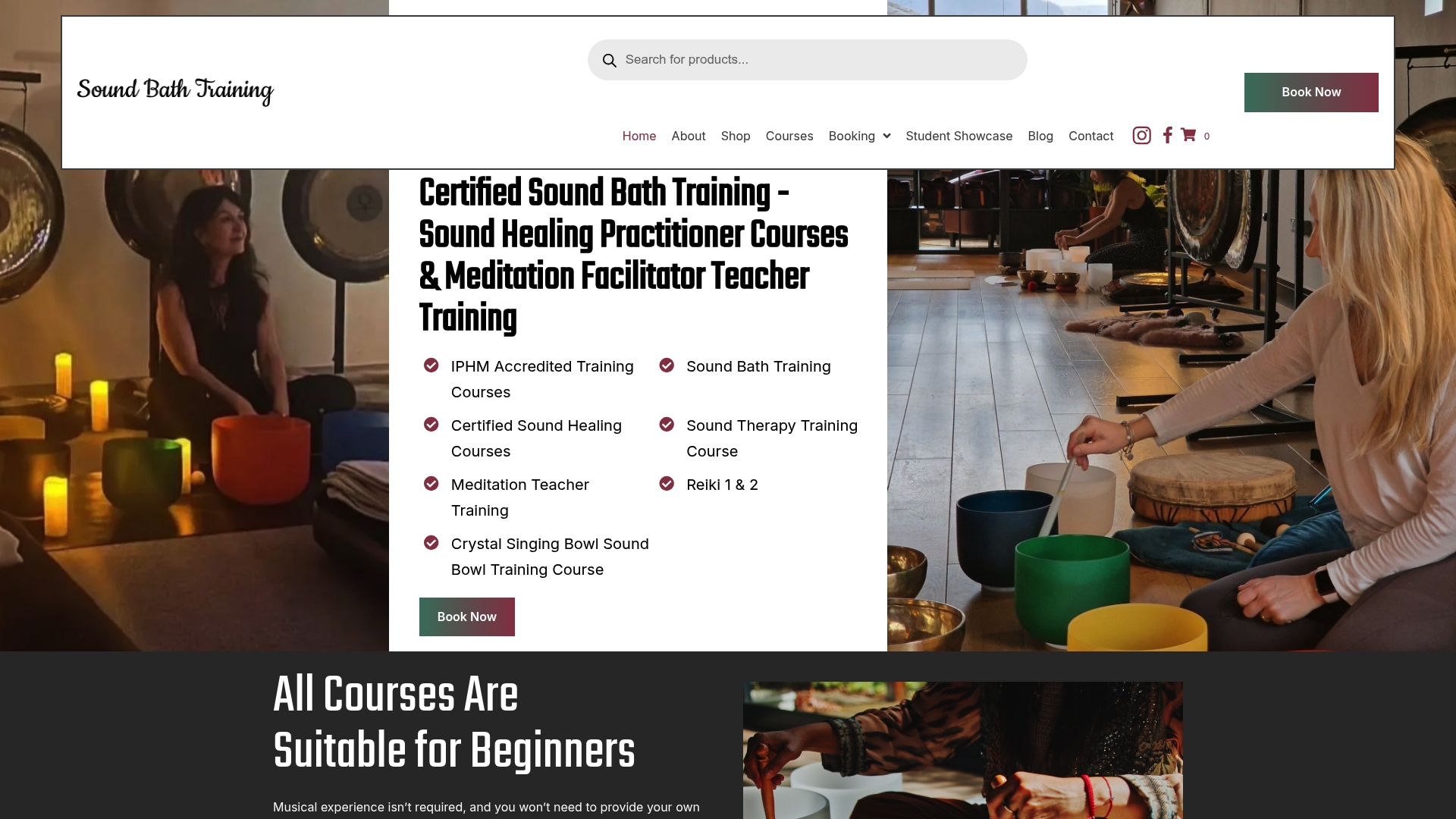
Every student works with a full set of crystal bowls from day one. No musical background is required. Whether you want to deepen your personal practice or qualify to facilitate sessions for others, the sound healing courses at Soundbathtraining cover all instruments and integrate wellness principles throughout. For those ready to commit to a full practitioner qualification, the four-day accredited programme includes sound therapy and hands-on teaching from the first session.
FAQ
What is the difference between a sound bath and sound meditation?
A sound bath is a specific format of sound meditation in which instruments are played around a passive listener for 30–60 minutes. Sound meditation is the broader practice, which includes vocal toning, Nada Yoga, binaural beats, and self-directed humming.
Do i need any equipment to start sound meditation at home?
No equipment is required to begin. Your own voice, used for humming or toning, is a fully effective instrument. Recorded sound baths are widely available and provide a structured experience without any investment.
How quickly does sound meditation produce results?
Most people notice a physical shift, such as reduced muscle tension or slower breathing, within a single session. Longer-term benefits such as improved stress regulation require consistent regular practice over several weeks.
What is nada yoga and how does it relate to sound meditation?
Nada Yoga is the traditional Indian system of using sound as a path to meditation and consciousness. It forms the philosophical foundation of most sound meditation practices, distinguishing between external audible sound and the subtle internal sound that deeper practice aims to reveal.
Is sound meditation suitable for people who struggle with silent meditation?
Sound meditation is particularly well suited to people who find silent meditation difficult. Active listening to sound reduces analytical thinking and mental chatter by giving the mind a concrete external focus, removing the need for sustained concentration.