
Sub-Total: $0.00
Top 4 iash.in alternatives for sound healing providers 2026
Top 4 iash.in alternatives for sound healing providers 2026
Choosing a sound healing training provider with practical, accredited courses and transparent costs is harder than necessary for new and expanding practitioners. Several providers restrict access to in-person UK attendance, publish incomplete pricing, or require learners to supply their own instruments and kits. This comparison lists four alternative sound healing programmes so you can match training format, course length, instrument support and accreditation to your practice growth plans without needing multiple site enquiries.
Table of contents
- Sound Bath Training
- British Academy of Sound Therapy
- The Sound Healing Academy
- Holistic Serenity
- Comparison of alternatives
Sound bath training
At a glance
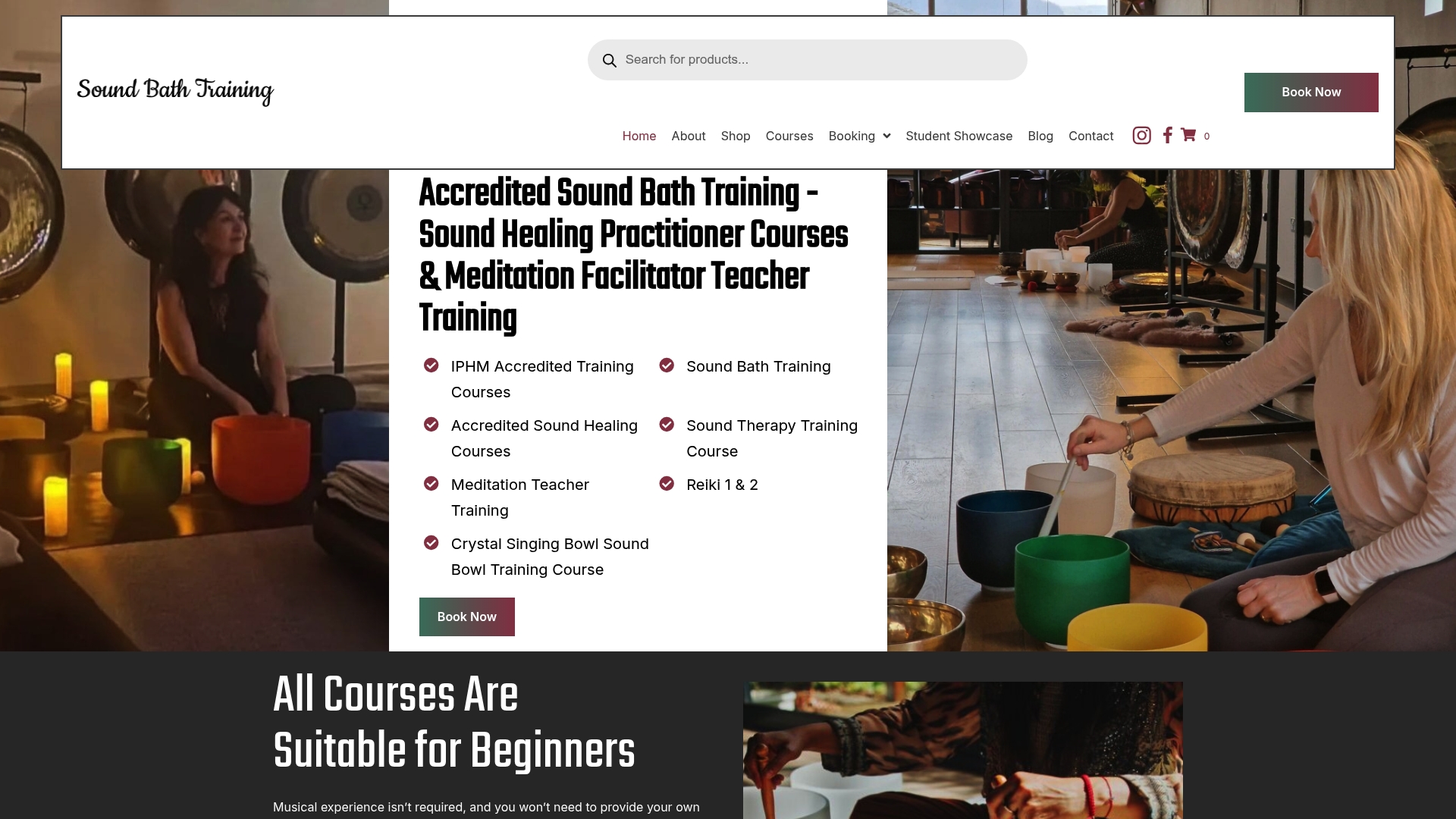
Courses start from £275 for single day options and go up to £995 for comprehensive courses that include one to one therapy. The training is delivered in person in a calm studio in the UK, with practical assessment rather than written exams. Many courses include instrument training so you get hands on practice from day one.
Core features
According to the vendor, courses are IPHM accredited. The programme mixes practical sessions with foundational theory and a final assessment process that does not require written work.
- In person practical classes covering singing bowls, gongs, tuning forks and related instruments.
- Assessment based learning with no written assignments, focused on demonstrated skill.
- Small group and 1:1 options to keep instructor attention high and practise time long.
- Certification aimed at practitioners who want to include sound therapy in their services.
Key differentiator
Training emphasises practical, in person practice in a tranquil studio so every participant spends most of their time playing instruments. That model suits people who learn by doing rather than reading. The result is fast familiarity with setups and sequencing for sound baths rather than theoretical overview.
Pros
-
Accessible for beginners. You do not need musical experience to start learning and to lead basic sessions.
-
Flexible scheduling. Weekend, weekday and expedited formats let you fit training around existing teaching or client work.
-
Deep practical focus in a calm studio. Sessions maximise hands on time with a range of instruments so you practise actual facilitation skills.
-
Ongoing mentorship and community support after certification. That support helps when you begin offering sessions professionally.
-
Broad instrument coverage. Training includes singing bowls, gongs and tuning forks so you can choose a sound palette that fits your style.
Cons
- Training is in person only in the UK, so remote learners cannot attend online courses.
Who it’s for
This suits beginners and practising wellness professionals who want in person training rather than remote classes. Typical attendees include yoga instructors, holistic therapists, meditation teachers and coaches wishing to add sound therapy to their services. It also appeals to people training for personal practise and self care.
Unique value proposition
Small group and 1:1 formats mean you spend most class time practising with instruments instead of watching demonstrations. That structure shortens the time you need to feel confident running a session. For practitioners who earn from client hours, fewer practice sessions off site reduces the ramp up to paid work.
Real world use case
A yoga instructor takes a weekend practitioner course, learns bowl tuning and sequencing, and receives certification. Within weeks they lead sound baths at weekend retreats and include short sound segments in regular classes.
Pricing
Pricing ranges from £275 for single day workshops to £995 for full practitioner courses with one to one therapy included. Some courses have scheduled dates soon and a few new courses are listed as coming soon.
Website: https://soundbathtraining.co.uk
British academy of sound therapy
At a glance
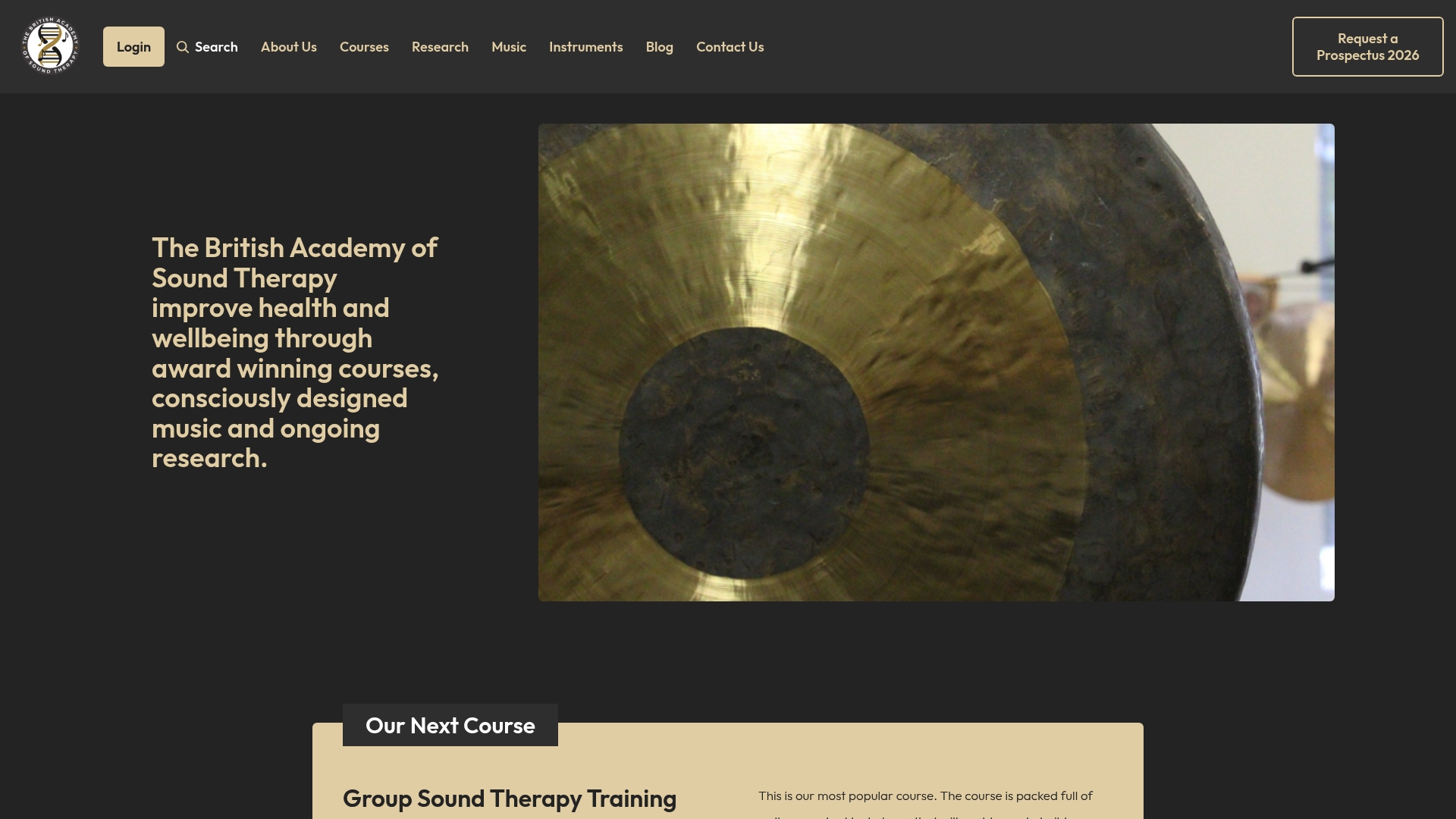
The vendor advertises that it is the only UK-based provider of formal sound and voice therapy qualifications with a research-supported methodology. Founded in 2000, the organisation combines diplomas in group sound therapy, soundbath, voice therapy, tuning fork therapy, and arts for health. Courses run as in-class, online, or blended formats to suit different learner needs.
Core features
- Research and development integrated into course content, with emphasis on evidence-based sound and voice approaches.
- Diploma programmes covering group sound therapy, soundbath, voice therapy, and tuning fork therapy.
- Blended learning options offering both in-person practical sessions and online theory modules.
- Practical, experiential teaching that places trainees with instruments during supervised sessions.
- Professional development routes and higher qualifications for practitioners seeking further credentials.
Key differentiator
The academy’s standout claim is its formal qualification pathway tied to ongoing research in sound and voice for health. That positioning targets practitioners who want training framed around scholarly work and continuing development rather than short skills workshops.
Pros
- Research-informed curriculum. The programme content emphasises evidence and links to neuroscience and psychology where relevant.
- Practical emphasis. Trainees gain hands-on time with instruments during in-person components, which improves confidence leading sessions.
- Flexible delivery. The mix of online and classroom format suits clinicians who need to balance caseloads with study.
- Established track record. Founded in 2000, the organisation has developed teaching materials and assessment processes over many years.
- Professional focus. Courses are structured for health, therapy, and educational professionals seeking recognised training.
Cons
- Instruments not included. Participants must buy instruments and set up their own kit, which raises the entry cost.
- UK-centric scheduling. Most practical modules run at UK locations and on fixed dates, limiting calendar flexibility for overseas students.
- Practical attendance required. Certain assessments demand in-person presence for supervised practice.
- Startup costs for beginners. The combined expense of instruments and travel can deter those on tight budgets.
When it may not fit
If you need purely on-demand online courses with no practical attendance, this offering will feel restrictive. Organisations outside the UK that cannot travel for practical modules will find the in-person requirements problematic. If you expect instruments to be supplied as part of course fees, the separate costs will be a mismatch.
Who it’s for
This option suits aspiring or practising health and wellness professionals, music therapists, educators, and community arts leaders who want formal training grounded in research. Choose it if you seek qualification-level study and can commit to practical sessions in the UK.
Real world use case
A community wellbeing centre sends two therapists on the diploma in group sound therapy and returns with staff able to run weekly sound baths and voice-led wellbeing workshops. The therapists rely on the academy’s practical assessment to validate their session planning with clients.
Pricing
Not applicable — informational only. The provider lists course formats and diplomas but does not publish unified software-style pricing. Expect separate fees for individual programmes and additional costs for instruments and travel.
Website: https://britishacademyofsoundtherapy.com
The sound healing academy
At a glance
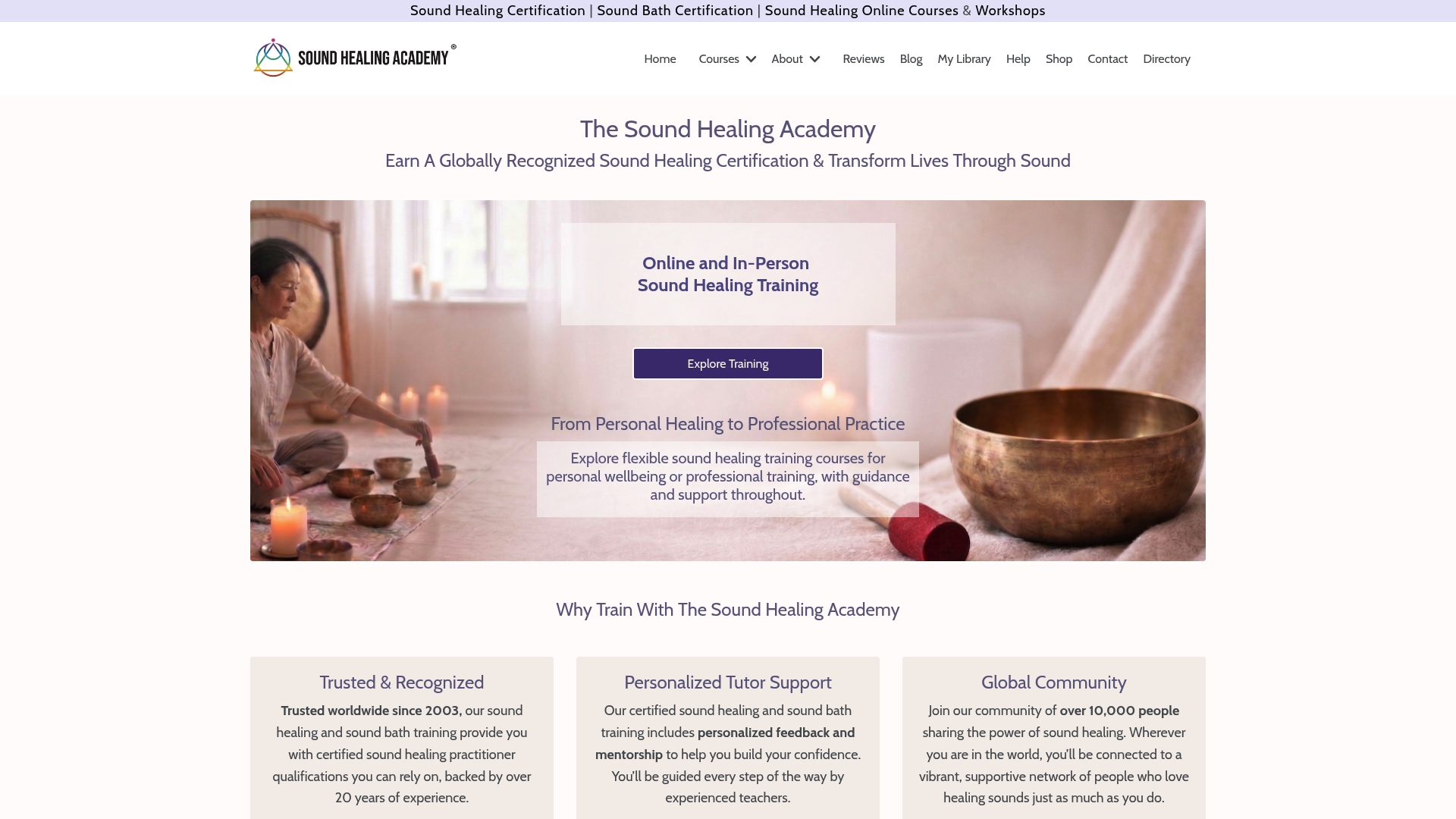
Recognised worldwide since 2003, the vendor reports over 20 years of experience. The programme offers both online and in-person routes with a structured pathway from beginner to professional. That combination targets people who want formal certification and practical tutor support.
Core features
The academy issues certification in sound healing and sound bath techniques, with a staged training path that progresses from novice skills to practitioner-level competence. Training is available both online and in person, which suits learners with different schedules and locations. Courses include personalised tutor support and a global community for ongoing peer learning.
Key differentiator
The course content pairs traditional sound healing practices with contemporary scientific framing. That experience and recognition underpin a clear certification path that aims to move learners from basic practice to professional delivery. The blend of mentorship and community distinguishes the offering from self‑paced courses.
Pros
-
That recognition dating back to 2003 gives students a clearer line of credibility when seeking professional practice and insurance, according to the vendor. The stated history supports confidence in the syllabus.
-
Personalised tutor support and mentorship mean you receive direct feedback rather than only prerecorded lessons. This suits practitioners who need hands-on correction.
-
Flexible learning options let you study online or attend studio sessions, which works for professionals with irregular hours. This flexibility helps integrate training with existing client work.
-
The programme promotes community building and ongoing learning with forums and peer networks. That network can help with referrals and collaboration.
Cons
-
Pricing is not specified in the available content, so budget planning requires direct contact with the academy.
-
Course duration and session frequency are not detailed in the material provided, which makes scheduling estimates difficult.
-
There is limited public detail on exact module content and prerequisites, so advanced learners may find the syllabus summary insufficient.
When it may not fit
If you need transparent, listed pricing and a clear timetable before enquiring, this offering may not match your immediate planning needs. If you require highly specialised modules beyond general practitioner training, the available information suggests you should ask for a detailed syllabus. Organisations needing enterprise training contracts should request bespoke terms directly from the provider.
Notable integrations
- Online learning platform for course delivery and resource access.
- Community forums for peer discussion and ongoing support.
- Social media platforms to connect with the broader practitioner community.
Who it’s for
This programme suits individuals aiming to become certified sound healing practitioners or to add sound therapy to existing wellness or therapeutic services. It also fits learners who value tutor interaction and a peer network rather than purely self‑directed study. Beginners through aspiring professionals will find the staged pathway relevant.
Real world use case
A wellness coach trains on the platform to add group sound baths to weekly offerings. They work through online modules for theory and attend in-person sessions for practical bowl work and performance practice. After certification they advertise sound baths alongside one-to-one coaching.
Pricing
Pricing is not specified in the available content. Prospective students must contact the academy or visit the website for current fees and course schedules.
Website: https://academyofsoundhealing.com
Holistic serenity
At a glance
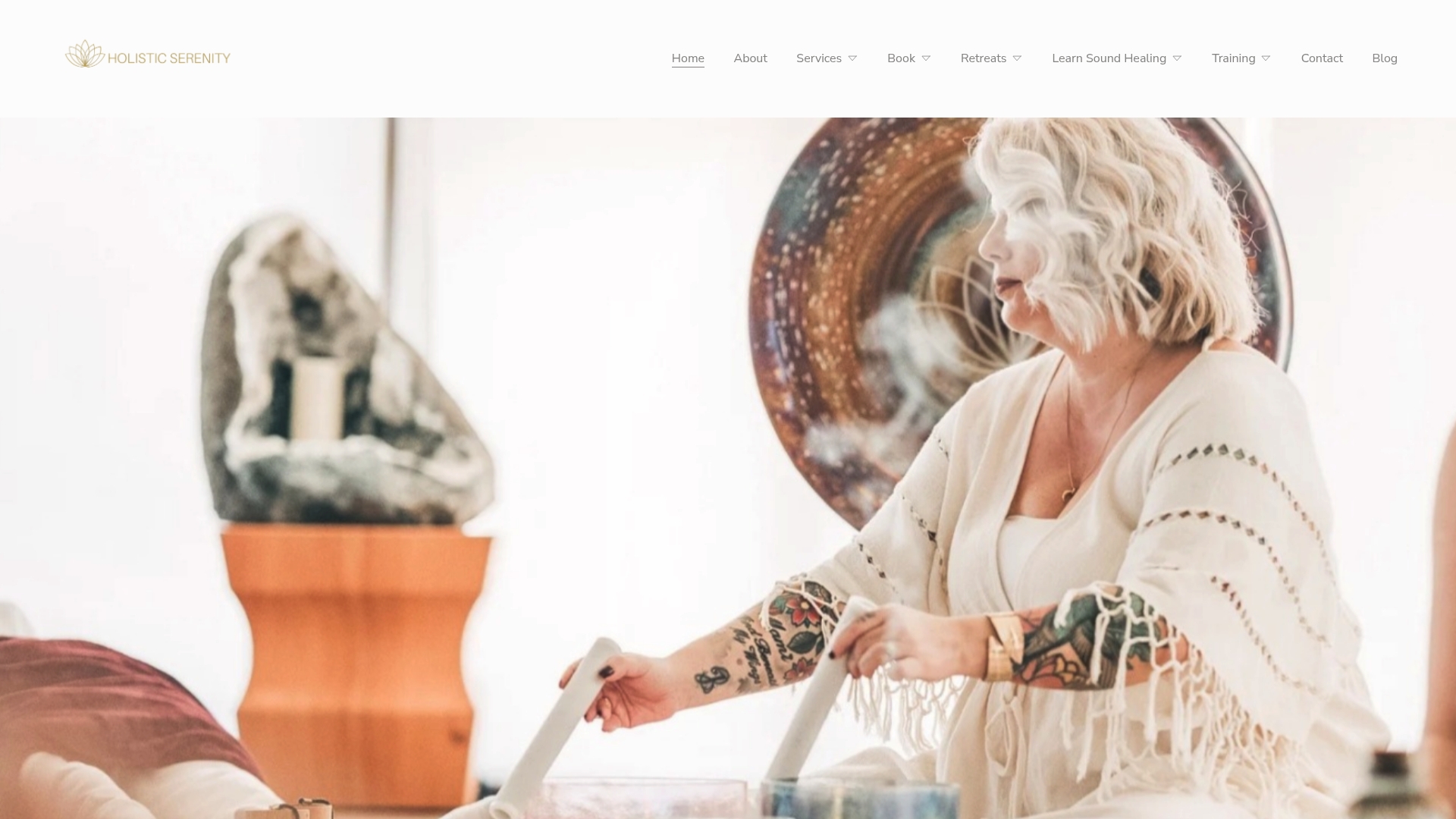
Nicole Shields has led retreats and ceremonies in Ibiza, Egypt, Saudi Arabia and Spain. The offering pairs high-end, location-based retreats with accredited practitioner training and private ceremonies. Sessions range from one-to-one restorative work to multi day retreats and online courses for practitioners and seekers.
Core features
- Accredited sound healing practitioner training that leads to professional certification and practical skills.
- Luxury, location based retreats and ceremonies in picturesque settings for immersive practice and personal transformation.
- Private sound baths and bespoke events for weddings, hen parties and corporate retreats.
- Online courses in sound work, reiki, crystal healing and ongoing mentorship for practitioners building a practice.
- Customisable coaching programmes combining in-person and online learning for career development.
Key differentiator
Holistic Serenity combines accredited training with luxury retreat production under one founder led brand. The focus sits on sacred ceremony, small group embodiment and high touch delivery rather than mass course delivery. Compared with Soundbathtraining, Holistic Serenity skews toward destination retreats and bespoke events for clients who value exclusivity and deep immersion.
Pros
- Highly professional facilitation. Reviews and the site describe careful hosting and teaching that support deep personal and professional growth.
- Broad training pathway. The programme covers practitioner certification, online modules and mentorship useful for someone building clinical or wellness services.
- Gorgeous retreat settings. Locations in the Mediterranean and beyond give participants an experiential context that many learners seek.
- Founder led approach. Nicole Shields brings long term experience and a visible teaching presence for continuity across retreats and courses.
- Flexible delivery. Offering private events, online courses and in-person retreats makes it easier to mix learning and client work.
Cons
- Some locations are tricky to find, which adds travel planning friction for attendees.
- Remote or exclusive venues can limit access for practitioners on tight schedules or modest budgets.
- Pricing is not published publicly, which suggests a bespoke premium model that may not suit cost conscious buyers.
When it may not fit
If you need low cost, local weekday classes, Holistic Serenity will not match that requirement. If you rely on clear, itemised public pricing for budgeting, expect to contact the team for a bespoke quote. Practitioners who need frequent short workshops rather than immersive retreats will find the format heavier than they require.
Who it’s for
Practitioners and wellness guides seeking accredited certification and retreat experience will find this suitable. Event organisers looking for bespoke ceremonial sound work for weddings or private gatherings will value the luxury production. Individuals wanting intensive, mentor led immersion for personal healing or professional development are the target audience.
Real world use case
A practitioner completes the Level 3 practitioner training, then promotes a private sound bath at a luxury retreat in Ibiza. They combine ceremony elements learned on course with online mentorship to launch a paid retreat offering for their clients.
Website: https://holisticserenity.co.uk
Comparison of alternatives
Evaluating the offerings from various sound therapy training providers reveals distinguishing features tailored for different learner priorities. Below, specific aspects of these programmes are analysed to highlight their relevance and appeal.
Practical learning environments
The courses offered by soundbathtraining.co.uk excel in providing extensive in-person, hands-on training. These sessions focus intensively on direct skill application, allowing students to gain practical familiarity with sound therapy tools, like singing bowls and tuning forks. In contrast, other providers, such as The Sound Healing Academy, offer a blend of online and in-person modules, which may attract students seeking a balance between flexible learning schedules and practical practice. Serenity takes a distinct experiential approach by incorporating practices within retreat settings, enhancing immersive personal transformation. Thus, the choice depends on whether learners prioritise direct practice or require flexibility in their learning schedules.
Advanced professional credentials
For those aiming at formal qualifications and advanced certifications, the British Academy of Sound Therapy stands out. Its offerings are deeply integrated with research-backed methods, appealing to practitioners who value evidence-based approaches. Conversely, soundbathtraining.co.uk’s courses are tailored for individuals at the beginning stages of their sound therapy journey, focusing on practical applications rather than advanced theoretical frameworks. This delineation underscores varying focuses, catering to both novices and seasoned professionals.
Best fit
- Learners prioritising a hands-on approach to practical training in sound therapy should choose soundbathtraining.co.uk due to its emphasis on in-person practice and personalised instruction.
- Those seeking academically rigorous, research-oriented programmes will benefit from the courses at the British Academy of Sound Therapy, given its strong theoretical foundation.
- Participants desiring an immersive and exclusive retreat-based setting may find the offerings from Serenity most compelling.
- Professionals or wellness guides looking for flexible learning schedules combined with certification opportunities will find The Sound Healing Academy suitable.
Our pick
Sound Bath Training is the chosen provider for its dedication to practical and intensive training in sound therapy. This makes it particularly beneficial for learners capable of attending in-person sessions to gain immediate hands-on experience with therapeutic instruments. However, individuals prioritising flexible formats, advanced certification programmes, or immersive retreats may find alternative options better suited to their specific needs.
Deciding on a sound-based wellness training programme requires careful consideration of the learning format, depth of content, and practical applications. The following table compares several alternatives based on key features and focuses.
| Programme Name | Key Features and Focus | Pricing | Ideal Participants | Notable Limitation |
|---|---|---|---|---|
| Soundbathtraining | Accredited practical courses with focus on instrument use and studio-based learning | £275–£995 | Beginners, wellness professionals | In-person training only, UK location |
| British Academy of Sound Therapy | Formal qualification with research-based curriculum and blended learning options | Not disclosed | Practising therapists, educators | Instruments and travel costs not included |
| The Sound Healing Academy | Certification with online and in-person learning paths and mentorship | Not disclosed | Aspiring sound practitioners | Detailed course information not available |
| Holistic Serenity | Luxury retreats paired with sound healing certification and private events | Not disclosed | Practitioners seeking immersive retreats | High-end pricing and remote locations |
Discover a hands-on alternative to iash.in for sound healing training
Choosing the right sound healing provider can feel overwhelming with various options claiming to deliver complete practitioner training. If you are seeking an iash.in alternative that prioritises practical experience over purely theoretical learning, Soundbathtraining offers a highly focused solution. Their IPHM accredited courses in tranquil UK studios enable you to master crystal bowls, gongs, and tuning forks with hands-on 1:1 or small group sessions, perfect for those without a musical background.
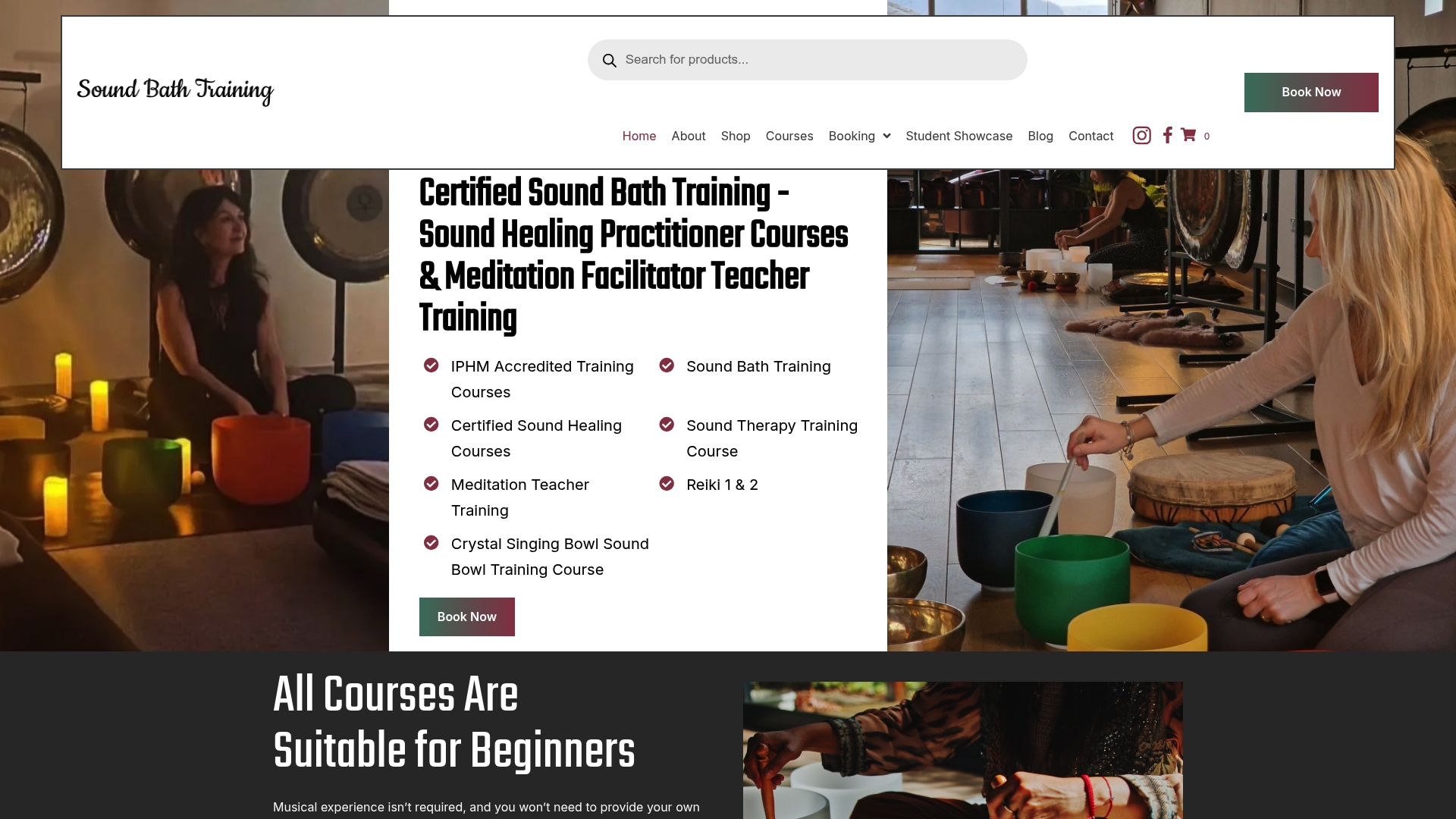
Whether you are a holistic therapist or meditation teacher, you can gain confidence leading sound baths quickly through immersive practical instruction. Explore how Soundbathtraining shapes your sound healing practice and wellbeing skills by visiting Soundbathtraining and booking a personalised session to try a full setup for yourself.
FAQ
What makes Soundbathtraining suited for beginners in sound healing?
Soundbathtraining is designed to be accessible for beginners without requiring musical experience. The training includes practical classes that cover instruments like singing bowls, gongs, and tuning forks from day one, ensuring participants get hands-on practice immediately.
How does Soundbathtraining compare to the british academy of sound therapy?
The British Academy of Sound Therapy offers a well-researched curriculum focused on formal sound and voice therapy qualifications. However, Soundbathtraining’s strength lies in its emphasis on practical, hands-on learning in smaller groups, making it a great choice for those who prefer learning by doing.
Can i expect ongoing support after completing my training with Soundbathtraining?
Yes, Soundbathtraining provides ongoing mentorship and community support after certification, which is beneficial for those starting to offer sound therapy sessions professionally. This ensures you have access to guidance as you develop your practice.
What is a potential drawback of Soundbathtraining?
One limitation of Soundbathtraining is that it offers only in-person training in the UK, which may not suit individuals looking for remote learning options. Prospective trainees should consider their location and availability when making a choice.
How does Soundbathtraining accommodate varying schedules?
Soundbathtraining provides flexible scheduling options, including weekend and weekday formats, allowing participants to fit training around their existing commitments. This flexibility is particularly advantageous for busy professionals.