
Sub-Total: $0.00
Sound meditation for beginners: a practical guide
Sound meditation for beginners: a practical guide
Sound meditation is the practice of directing sustained attention to structured sounds, such as Tibetan singing bowls, gongs, chimes, or binaural beats, to induce relaxation, focus, and emotional balance. Rooted in traditions spanning centuries and now supported by emerging neuroscience, this sound meditation beginner guide explained in plain terms will show you exactly what to expect, how to start, and why it works. Whether you are drawn to it for better sleep, stress relief, or simple curiosity, the practice is far more accessible than most people assume. No musical background, no expensive equipment, and no prior meditation experience required.
What are the common types of sound meditation and how do they differ?
Understanding sound therapy begins with recognising that it is an umbrella term covering several distinct practices. The industry standard term is sound healing, and within it, sound meditation refers specifically to the attentional and mindfulness dimension of the work. Knowing the difference between formats helps you choose the right starting point.
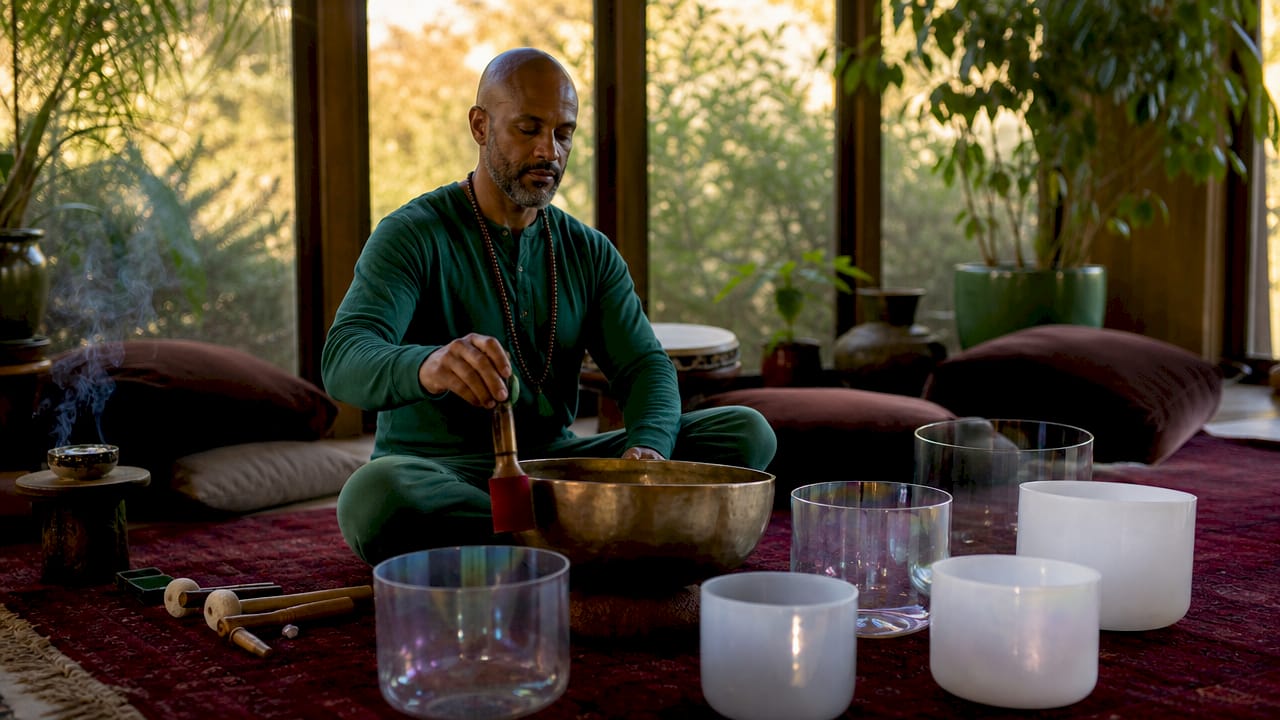
Sound baths are the most immersive format. A practitioner plays instruments such as crystal singing bowls, Himalayan bowls, gongs, or chimes while participants lie or sit in a relaxed position. The goal is to bathe the listener in overlapping tones, encouraging the mind to release its grip on thought and settle into the present moment. Sound baths are widely offered in yoga studios, wellness centres, and retreat settings.
Binaural beats work differently. Two slightly different frequencies are played into each ear separately, and the brain perceives a third, phantom frequency equal to the difference between them. Proponents argue this entrains brainwaves toward specific states such as deep relaxation or focused alertness, though the evidence remains mixed.
Meditation music and ambient soundscapes sit at the gentler end of the spectrum. Recordings of Tibetan bowls, nature sounds, or drone instruments provide an auditory anchor for standard mindfulness practice. These are the easiest entry point because they require no equipment and are freely available on platforms such as YouTube, Spotify, and Insight Timer.
| Type | Main instruments | Primary benefit | Accessibility |
|---|---|---|---|
| Sound bath | Singing bowls, gongs, chimes | Deep relaxation, stress relief | Classes or home practice |
| Binaural beats | Headphones and audio tracks | Brainwave entrainment, focus | Headphones only |
| Meditation music | Recorded bowls, drones, nature | Mindfulness anchor, calm | Free online |
| Toning and vocalisations | Voice | Neural relaxation, presence | No equipment needed |
Each format suits different goals. Sound baths offer the richest sensory experience. Binaural beats suit those who prefer a structured, technology-assisted approach. Ambient music works well as a daily background practice.
How does sound meditation work? Scientific insights explained
Sound meditation produces measurable changes in the brain and nervous system, though the full picture is still being assembled by researchers. A 2026 PLOS ONE EEG study found that alpha and theta brainwave power increases following toning and singing vocalisations. Alpha and theta states are associated with relaxed alertness and light meditative absorption, which explains why participants consistently report feeling calm yet mentally clear after sessions.
A separate line of research adds a counter-intuitive finding. Rhythmic sound meditation reduced electrical power across all five brainwave types compared to resting baseline, particularly in frontal and central brain regions, while participants reported heightened alertness. This suggests sound meditation does not simply sedate the brain. It reorganises attention in a way that is simultaneously quieter and more awake than ordinary rest.
The physiological pathway is equally important. Sound vibrations, particularly those from low-frequency instruments like gongs and large singing bowls, activate the parasympathetic nervous system. This is the branch of the autonomic nervous system responsible for the rest-and-digest response, the physiological opposite of the stress response. Slower breathing, reduced heart rate, and muscle relaxation follow naturally.
What beginners should know about realistic expectations:
- Short sessions of five to ten minutes produce subjective calm reliably, even in first-time practitioners
- Measurable physiological effects may require longer or repeated exposures to appear in EEG or autonomic data
- Effects vary considerably between individuals and between methods
- The experience of distraction during a session is not failure. It is the practice itself
“Sound baths reframe meditation success as gently returning awareness to sound rather than achieving instant stillness.” — Verywell Mind
Pro Tip: Approach your first few sessions as experiments, not performances. Notice what you feel without judging whether it is the “right” response. Curiosity is a far better starting posture than expectation.
How to start sound meditation: a practical guide with singing bowls
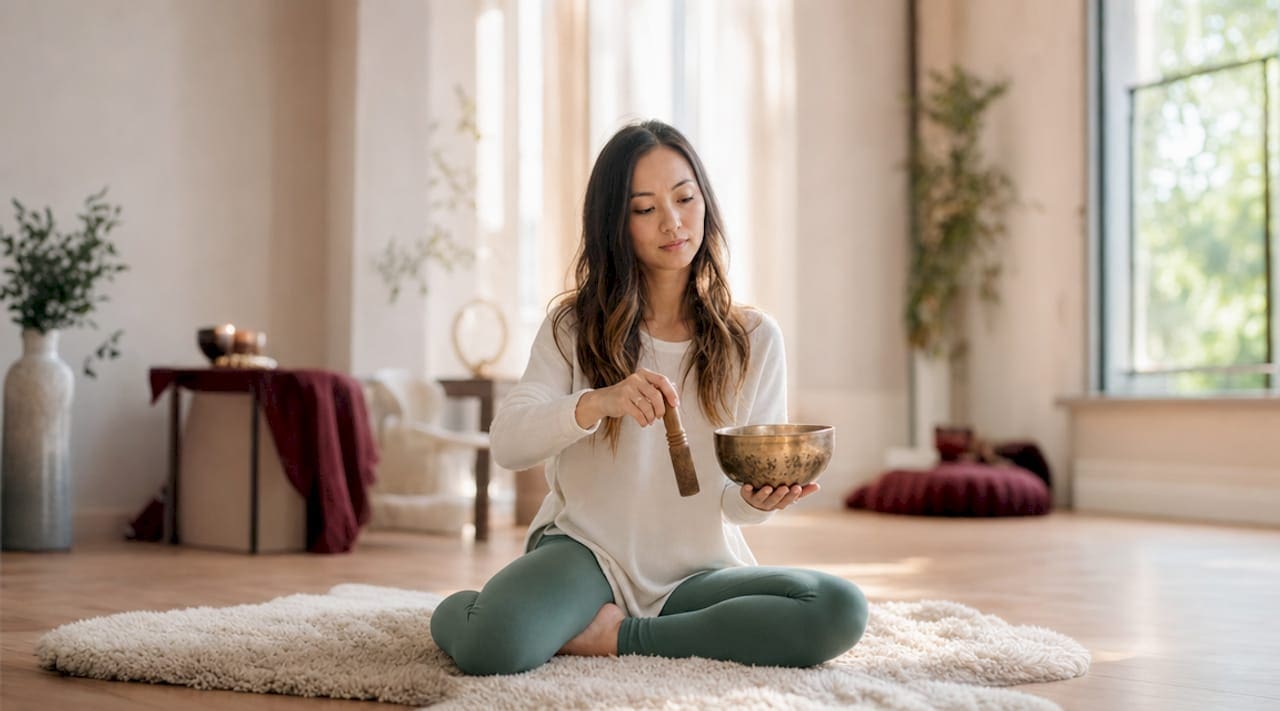
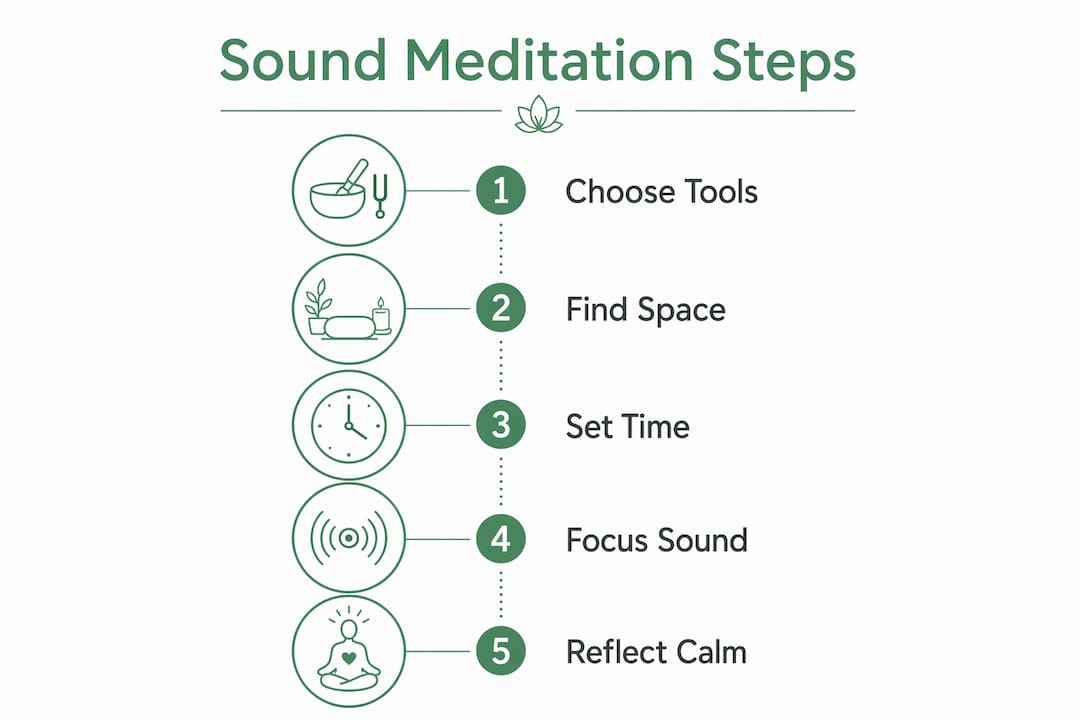
The simplest and most tactile way to begin is with a Tibetan or crystal singing bowl. Beginners can start with as little as five minutes in a quiet space, making the practice genuinely sustainable alongside a busy schedule. Here is a step-by-step routine that works from day one.
- Choose your space. Find a quiet room where you will not be interrupted. Sit comfortably on a chair or cushion with your spine upright but not rigid. Place the bowl on your open, flat palm or on a cushion in front of you.
- Hold the bowl correctly. Rest the bowl on your fingertips, keeping your palm flat and fingers together. Do not curl your fingers around the rim. Gripping the rim mutes the vibration immediately, which is the single most common beginner error.
- Strike the bowl. Use the mallet to strike the side of the bowl gently. Do not tap the rim. Let the sound emerge fully before doing anything else.
- Follow the sound. Close your eyes and track the tone as it rises, sustains, and gradually fades. This is the core of the practice. The fading sound is your mindfulness object, moment by moment.
- Re-strike on distraction. When the sound disappears completely, or when your attention drifts to a thought or sensation, gently re-strike the bowl. This sound-following loop anchors mindfulness to an auditory anchor rather than the breath, which many beginners find easier to sustain.
- Close the session. After five minutes, set the mallet down and sit in silence for sixty seconds. Notice the quality of the quiet after the sound.
For equipment, a basic Tibetan singing bowl with a wooden mallet costs between £15 and £40 from reputable wellness retailers or online marketplaces. Crystal singing bowls produce a longer, purer tone and are available from specialist suppliers, though they sit at a higher price point. Neither requires any musical skill to use effectively.
Pro Tip: Daily practice of five minutes outperforms a single forty-five-minute session once a week. Consistency builds the neural habit of returning attention to sound, which is the actual skill you are developing.
What are the benefits and potential limitations of sound meditation?
Sound meditation is drug-free and non-invasive, which makes it one of the most accessible self-care practices available. The benefits most consistently reported by practitioners and supported by research include stress reduction, improved sleep quality, reduced anxiety, and a general sense of emotional equilibrium. These are meaningful outcomes, even when the underlying mechanisms are not yet fully mapped.
That said, scientific evidence remains mixed. Studies tend to be small, methodologically varied, and difficult to compare. Sound meditation is best understood as a supportive self-care practice rather than a clinical treatment. It complements rather than replaces medical or psychological care.
| Benefit | Evidence strength | Notes |
|---|---|---|
| Subjective relaxation | Strong (self-report) | Consistent across formats and populations |
| Stress reduction | Moderate | Supported by autonomic and cortisol studies |
| Sleep improvement | Moderate | Particularly noted with sound bath formats |
| Brainwave changes | Emerging | EEG data promising but studies are small |
| Pain or symptom relief | Weak to mixed | Anecdotal; not a substitute for medical care |
If you have a history of epilepsy, tinnitus, or significant hearing sensitivity, consult a healthcare provider before beginning. For most people, the practice carries no meaningful risk. For guidance on specific sound healing contraindications, it is worth reviewing the relevant considerations before your first session.
How to integrate sound meditation into daily life
Consistency matters more than duration. A five-minute morning session before checking your phone, or a ten-minute wind-down before sleep, produces more lasting benefit than sporadic longer sessions. The key is attaching the practice to an existing habit so it does not require willpower to begin.
Practical integration tips worth adopting from the start:
- Morning sessions work well because the mind is less cluttered. Strike the bowl before coffee and you establish a calm baseline for the day.
- Pre-sleep sessions are particularly effective for those using sound meditation for sleep improvement. Dim the lights, lie down, and use a recorded sound bath or a single bowl strike to signal the nervous system that the day is over.
- Setting up a dedicated space does not require a separate room. A cushion, a bowl, and a phone on silent in one corner of a bedroom is sufficient. Consistency of location reinforces the habit. For more detailed ideas, the guide on creating a sound healing space offers practical room-by-room suggestions.
- Guided sessions are invaluable in the early weeks. Apps such as Insight Timer offer free guided sound meditations led by experienced practitioners. Community sound baths, offered by yoga studios and wellness centres, provide the added benefit of group energy and expert facilitation.
- Emotional responses during sessions are normal and should not alarm you. Tears, unexpected memories, or a sudden sense of relief are common, particularly in the first few sessions. These are signs the nervous system is releasing held tension, not signs that something is wrong.
The mindset that serves beginners best is patience without passivity. You are building a skill, and skills develop through repetition. The spiritual growth dimension of sound meditation tends to emerge naturally over weeks of consistent practice, not in a single session.
Key takeaways
Sound meditation works because it gives the mind a concrete, fading auditory object to follow, which trains attention and activates the parasympathetic nervous system more reliably than abstract breath-focused techniques for many beginners.
| Point | Details |
|---|---|
| Start with five minutes | A short daily session with a singing bowl is enough to build the core skill of sound-following. |
| Hold the bowl correctly | Rest it on flat fingertips and never grip the rim, or you will mute the vibration entirely. |
| Evidence is real but mixed | Brainwave and autonomic studies support relaxation benefits; treat it as self-care, not medicine. |
| Consistency beats duration | Daily short sessions outperform occasional long ones for habit formation and lasting calm. |
| Guided support accelerates progress | Apps, community sound baths, and accredited training all shorten the learning curve significantly. |
What I have learned from watching beginners discover sound meditation
The most common mistake I see is people treating the first session as a test they need to pass. They sit down, strike the bowl, and immediately start monitoring whether they feel relaxed yet. That self-monitoring is the very thing that prevents relaxation. The practice is not about achieving a state. It is about repeatedly returning attention to the sound, which is a skill that takes a few weeks to feel natural.
What surprises most beginners is how quickly the mind quietens once it has something specific to follow. The breath is abstract. A fading tone is concrete, and the brain finds it far easier to stay with. I have seen people who have struggled with breath-based meditation for years find genuine stillness within their first three sessions using a singing bowl.
My honest recommendation for anyone starting out is to resist the pull toward complexity. One bowl, five minutes, every morning for two weeks. That is the entire programme. The urge to buy more instruments, try binaural beats, and attend weekend retreats is natural, but it often becomes a way of avoiding the simple, slightly uncomfortable work of sitting with a fading sound and a wandering mind.
The emotional releases that sometimes happen in sessions are worth mentioning because they catch people off guard. A wave of unexpected sadness or a sudden feeling of lightness is not unusual. These are not problems to solve. They are the nervous system doing exactly what you asked it to do.
— Sarah
Deepen your practice with accredited sound healing training
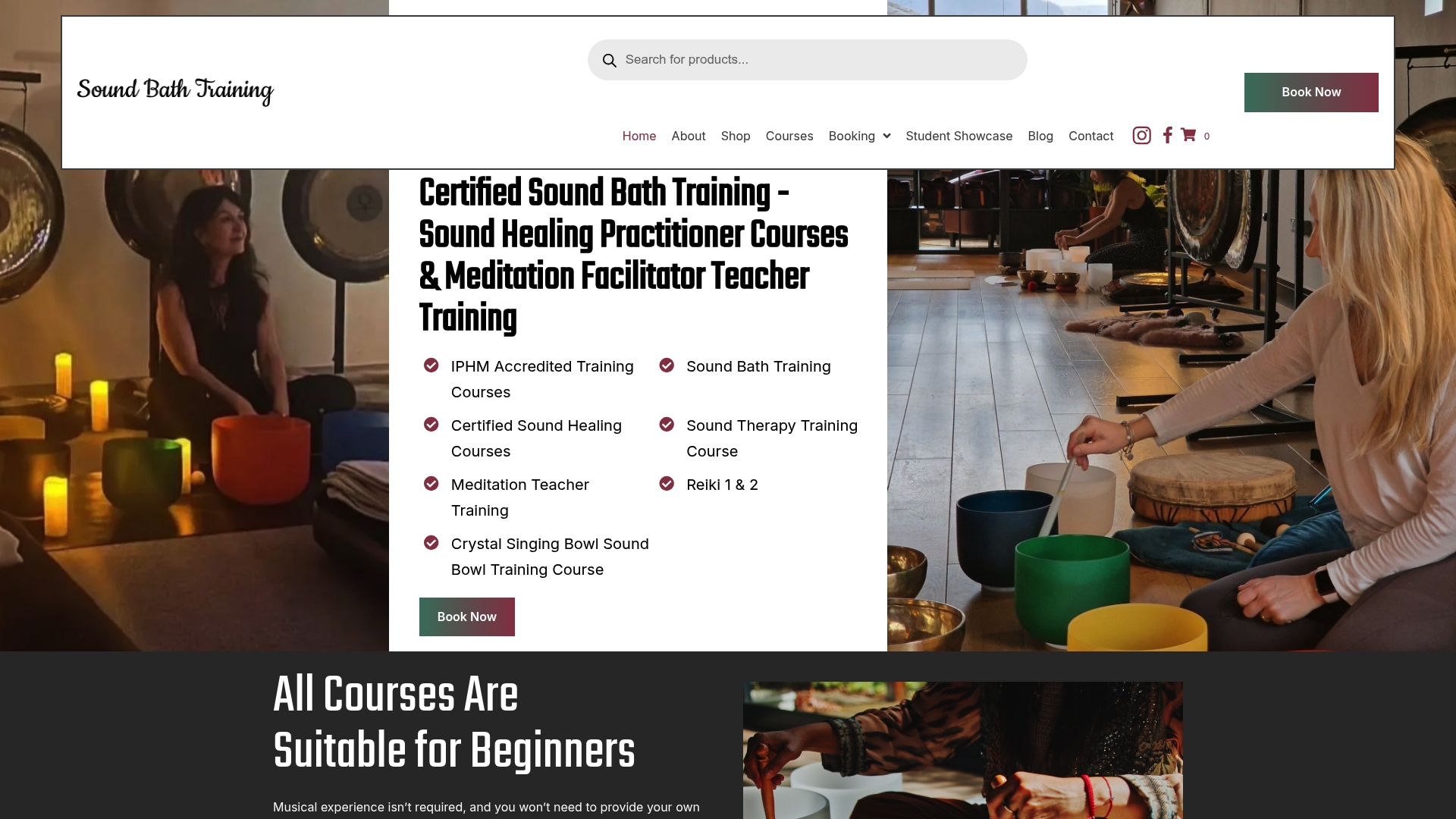
If this guide has sparked a genuine interest in sound meditation and you want to go further, Soundbathtraining offers IPHM accredited courses designed specifically for people at the beginning of their sound healing path. The crystal singing bowl course covers everything from correct technique and bowl selection to designing your own sound journeys, all in a small group setting with a maximum of three participants per instructor. For those ready to work across multiple instruments, the full practitioner training covers gongs, chimes, and sound therapy in a four-day programme. No musical background is required for either course.
FAQ
What is sound meditation?
Sound meditation is the practice of focusing sustained attention on structured sounds, such as singing bowls, gongs, or binaural beats, to promote relaxation, mindfulness, and emotional balance. It is the attentional and mindfulness dimension of the broader field of sound healing.
How long should a beginner session last?
Five minutes is sufficient for a first session. Short sessions produce reliable subjective calm, and daily practice of five to ten minutes builds the skill of sound-following more effectively than occasional longer sessions.
Do I need special equipment to start?
A basic Tibetan singing bowl with a wooden mallet is all you need, and entry-level bowls are widely available for under £40. Alternatively, free recorded sound baths on platforms such as Insight Timer or YouTube require no equipment beyond headphones.
Is sound meditation safe for everyone?
Sound meditation is generally non-invasive and drug-free, making it safe for most people. Those with epilepsy, tinnitus, or significant hearing sensitivity should consult a healthcare provider first and review relevant contraindications before beginning.
How quickly will I notice benefits?
Most beginners report a subjective sense of calm within their first session. Measurable physiological effects, such as changes in brainwave patterns or autonomic markers, may require several weeks of consistent practice to become detectable.