
Sub-Total: $0.00
Sound therapy pricing structure explained for beginners

Sound therapy pricing structure explained for beginners
Sound therapy pricing structure is defined by four core variables: session format, degree of personalisation, practitioner experience, and venue. Understanding these variables is the fastest way to make sense of a market where a single session can cost £20 or £250 for what appears, on the surface, to be the same experience. Group sessions typically run £20 to £75 per person, while private one-to-one appointments reach £100 to £300 or more. This sound therapy pricing structure explained guide covers every tier, every cost driver, and every question worth asking before you book.
What does sound therapy pricing structure look like?
Sound healing, also called vibrational or acoustic therapy, uses instruments such as Tibetan singing bowls, crystal bowls, gongs, and tuning forks to shift the body’s physiological state. The pricing structure for these sessions is not standardised across the industry, which is precisely why costs vary so dramatically. The sound healing market is unregulated, meaning a practitioner with two months of self-study and one with a formal accredited qualification may both advertise sessions at similar rates. Knowing what sits behind a price tag is therefore not optional. It is the only way to judge value accurately.
The four main session formats each occupy a distinct price band. Group sound baths are the most accessible entry point, priced per person and shared across a room of participants. Private sessions command a premium because the practitioner designs the experience entirely around one individual. Virtual sound baths scale their fees by audience size rather than per person. AI-powered sound therapy apps sit at the budget end, offering on-demand audio for a monthly subscription. Each format serves a different need, and understanding sound therapy fees means understanding which format matches your goal.

Session formats and typical price ranges
| Format | Typical price range | Strengths | Limitations |
|---|---|---|---|
| Group in-person | £20 to £75 per person | Affordable, community feel | No personalisation |
| Private 1:1 in-person | £75 to £200+ per session | Fully tailored, deeper results | Higher cost |
| Virtual group | £350 to £2,100 per event (1 to 500 attendees) | Scalable, no travel needed | Less immersive |
| AI sound therapy apps | £15 to £30 per month | 24/7 access, very affordable | No live practitioner |
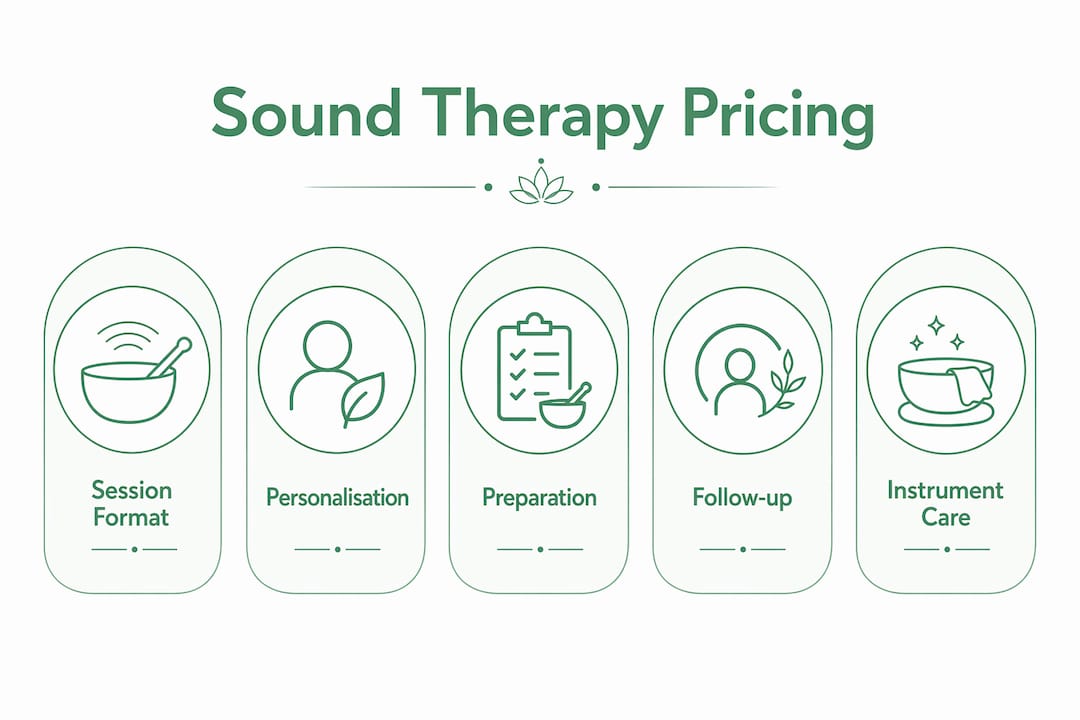
Virtual pricing scales with participant numbers rather than per head, which makes it cost-effective for corporate wellness events and large retreats. AI apps offer genuine accessibility for daily practice but cannot replicate the physical resonance of live instruments in the same room. For anyone exploring different session formats, the format choice should come before the budget conversation, not after.
What factors influence sound therapy pricing beyond the session itself?
The most common misconception about sound healing pricing is that instruments drive the cost. Customisation level, travel, venue, and session length are the strongest pricing predictors, not the instruments alone. A practitioner using a single high-quality singing bowl in a well-prepared private session will charge more than one using a full gong collection in a drop-in group class. The logic is straightforward once you understand what you are actually paying for.
The following factors directly shape what a practitioner charges:
- Practitioner experience and training. Experienced practitioners charge more because years of refinement add value that a single session cannot quantify. Accredited training, continued professional development, and specialist certifications all increase a practitioner’s overhead and justify higher fees.
- Session personalisation. A practitioner who conducts an intake consultation, designs a bespoke sound journey, and follows up afterwards invests significantly more time than one running a standard group class.
- Instrument quality and capital investment. Professional gongs can cost thousands of pounds, and a full set of crystal singing bowls represents a substantial capital outlay. These costs are spread across sessions over the instrument’s lifetime.
- Venue hire and atmosphere. A dedicated healing studio with acoustic treatment, ambient lighting, and comfortable equipment costs money to run. Practitioners who hire premium spaces pass a portion of that cost to clients. You can read more about what goes into creating a healing studio space to appreciate the investment involved.
- Travel for private or corporate events. A practitioner travelling to your home, office, or event venue charges for time, fuel, and the logistical effort of transporting fragile instruments.
- Cancellation policies and administrative overhead. Booking systems, liability insurance, and cancellation buffers are real business costs that factor into session fees, even if they are invisible to the client.
Pro Tip: Before booking, ask the practitioner directly: “What does your preparation process look like for this session?” A confident, detailed answer reveals genuine professionalism. A vague response is a signal worth heeding.
How to compare sound therapy costs and choose the right option
Comparing sound therapy session rates effectively starts with clarifying your goal, not your budget. Someone seeking deep trauma-informed work needs a different session type than someone wanting a relaxing lunch-hour reset. Prioritising value over raw cost leads to better outcomes, and one-to-one sessions are recommended for faster, deeper results while group sessions offer affordable relaxation. This is not a marketing claim. It reflects the practical reality that a practitioner working with one person can adjust frequencies, pacing, and instrument choice in real time in a way that is simply impossible in a group setting.
Use this decision framework before booking any session:
- Define your primary goal. Relaxation and stress relief suit group sessions well. Specific therapeutic goals, sleep disorders, or anxiety management benefit from private sessions where the practitioner can tailor the approach.
- Check credentials before price. Since the market is unregulated, look for practitioners with accredited qualifications. Soundbathtraining, for example, offers accredited practitioner training that signals a practitioner has met a defined standard.
- Ask about cancellation and rescheduling terms. Consumers should check cancellation policies before committing, particularly for higher-cost private bookings where a last-minute cancellation fee can be significant.
- Consider virtual or app-based options as a starting point. If you are new to sound healing and uncertain whether it suits you, a monthly app subscription at £15 to £30 is a low-risk way to explore the practice before committing to a live session.
- Compare like with like. A £50 group session at a dedicated healing centre and a £50 group session in a community hall are not equivalent products. Factor in the venue, the practitioner’s background, and the instruments used.
- Ask what is included. Some practitioners include a pre-session consultation, post-session integration guidance, and follow-up support. Others deliver the session and nothing more. The total value package matters more than the headline fee.
Understanding sound therapy fees at this level of detail means you are evaluating the full service, not just the duration.
What are the hidden costs behind a sound therapy session?
The visible cost of a sound bath is the session fee. The invisible cost is everything the practitioner does before and after you arrive. Preparation and setup time often exceeds the actual session duration, meaning a one-hour session may represent three or four hours of a practitioner’s working day. This includes instrument tuning and cleaning, room preparation, reviewing client intake forms, and the post-session reset of the space.
Instrument maintenance is a genuine ongoing expense. Crystal singing bowls require careful handling and periodic professional cleaning. Gongs develop tonal characteristics over time that require skilled maintenance to preserve. High-end instruments factor significantly into pricing beyond labour hours alone, and a practitioner who has invested £5,000 or more in their instrument collection is amortising that cost across every session they deliver.
There is also the less tangible but very real cost of holding space. Skilled practitioners manage the emotional and energetic dynamics of a session actively, not passively. This requires training, experience, and a level of focused attention that is genuinely tiring. Practitioners who work with clients experiencing grief, trauma, or chronic illness carry an additional professional responsibility that justifies premium pricing. Checking a practitioner’s awareness of sound healing contraindications is one practical way to assess whether they have the depth of training that warrants their fees.
Pro Tip: When a session fee seems high, ask yourself what it would cost to hire a specialist therapist for the same duration. Sound therapy at £100 to £150 per private session sits well within the range of counselling, physiotherapy, and other regulated wellness services.
Key takeaways
Sound therapy pricing is determined primarily by session format and personalisation level, not by instruments alone.
| Point | Details |
|---|---|
| Session format sets the price band | Group sessions cost £20 to £75 per person; private sessions run £75 to £200 or more. |
| Customisation drives cost more than instruments | Travel, venue, session length, and personalisation are the strongest pricing predictors. |
| Hidden preparation time justifies fees | Practitioners often spend two to four hours preparing for every one-hour session delivered. |
| Unregulated market requires due diligence | Always check credentials, cancellation policies, and what is included before booking. |
| AI apps offer a low-cost entry point | Monthly subscriptions at £15 to £30 provide accessible practice without live practitioner costs. |
Why I think most people approach sound therapy pricing the wrong way
People tend to shop for sound therapy the way they shop for a gym class: find the cheapest option nearby and try it once. That approach almost guarantees a disappointing first experience, because a poorly facilitated session in a draughty community hall with a practitioner who has done a weekend course is not representative of what sound therapy can actually deliver.
What I have observed consistently is that the clients who get the most from sound healing are those who invest time in vetting the practitioner before they invest money in the session. They ask about training, they read about the instruments being used, and they choose a format that matches their actual goal rather than their convenience. A group session is genuinely wonderful for relaxation and community. It is not the right tool for someone working through chronic pain or sleep disruption.
The other thing worth saying plainly: the cheapest session is rarely the best value. A practitioner who has completed accredited training, invested in quality instruments, and built a proper practice has higher overheads than someone running casual sessions from a spare room. That overhead reflects in the fee, and it reflects in the outcome. When you understand the full sound therapy pricing structure, the higher-cost options stop looking expensive and start looking like what they are: a professional service delivered by someone who has taken their craft seriously.
— Sarah
Deepen your understanding with Soundbathtraining
If this sound healing pricing guide has sparked an interest in the practice itself, whether as a client or as a future practitioner, Soundbathtraining offers accredited courses designed for people with no prior musical background.
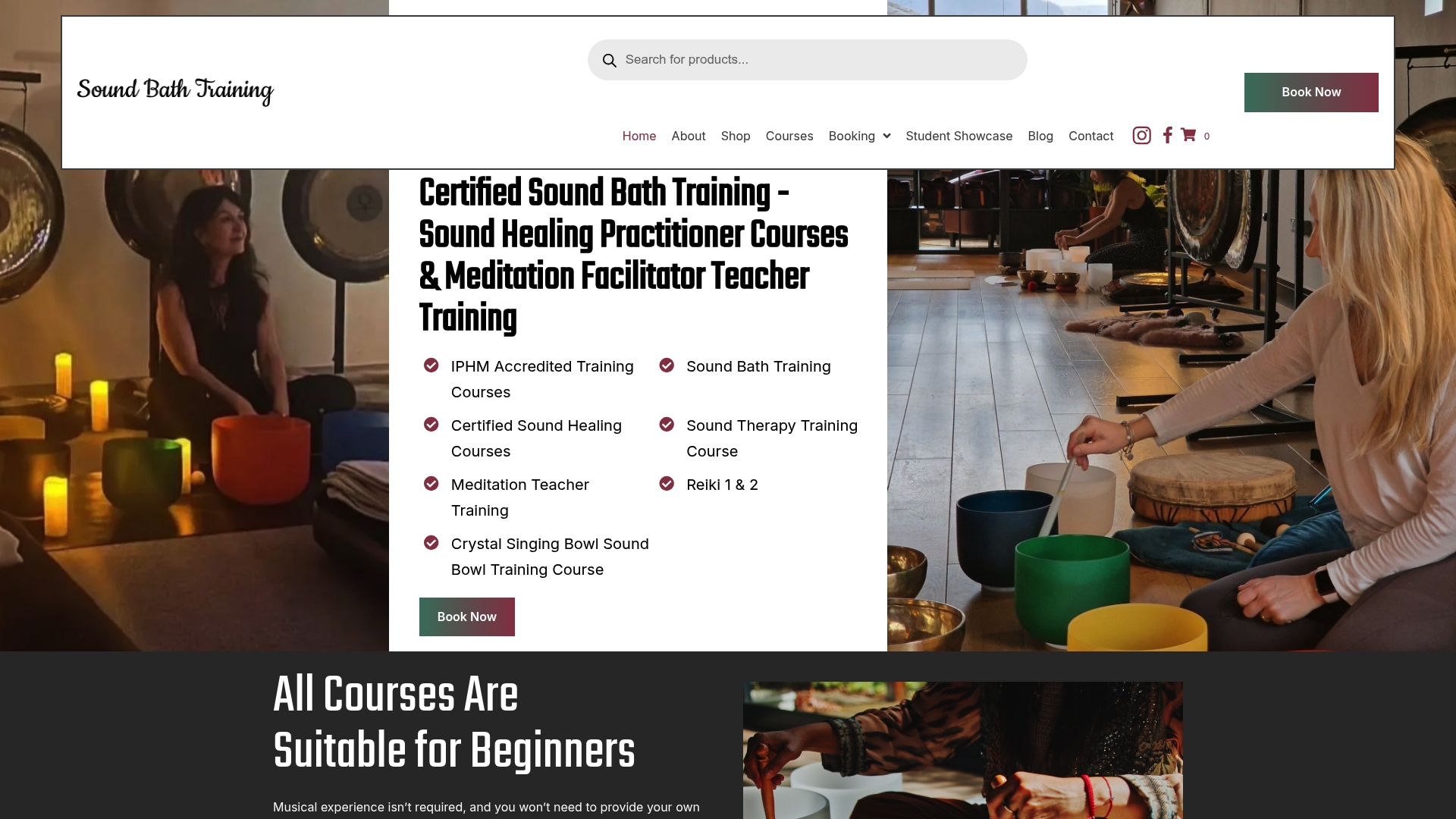
The four-day accredited practitioner course covers hands-on training with a full range of instruments in a professional studio environment, with a high trainee-to-instructor ratio that ensures genuine individual attention. For those wanting a shorter commitment, the three-day accredited option covers the core practitioner skills at a lower entry point. Browse the full course catalogue to find the format that fits your goals and schedule.
FAQ
What is the average cost of a sound therapy session?
Group sound therapy sessions typically cost £20 to £75 per person, while private one-to-one sessions range from £75 to £200 or more depending on the practitioner’s experience and the level of personalisation involved.
Why do private sound therapy sessions cost so much more than group sessions?
Private sessions require the practitioner to design a bespoke experience for one individual, conduct intake consultations, and adapt instruments and techniques in real time. This level of customisation, combined with the practitioner’s full attention, justifies the higher fee.
Are AI sound therapy apps worth the money compared to live sessions?
AI sound therapy apps at £15 to £30 per month offer genuine value for daily relaxation practice and for those new to sound healing. They cannot replicate the physical resonance of live instruments or the adaptive skill of a trained practitioner, making them a complement to live sessions rather than a replacement.
How do I know if a sound therapy practitioner is charging a fair price?
Check whether the practitioner holds an accredited qualification, ask what preparation and follow-up is included, and compare their fee against the going rate for other wellness professionals in your area. An unregulated market means credentials and transparency matter more than price alone.
Does the type of instrument used affect the session price?
Instruments contribute to pricing indirectly because professional-grade gongs and crystal singing bowls represent a significant capital investment. However, customisation level, travel, and venue costs are stronger pricing predictors than the instruments themselves.