
Sub-Total: $0.00
What is vibrational medicine? A clear guide
What is vibrational medicine? A clear guide
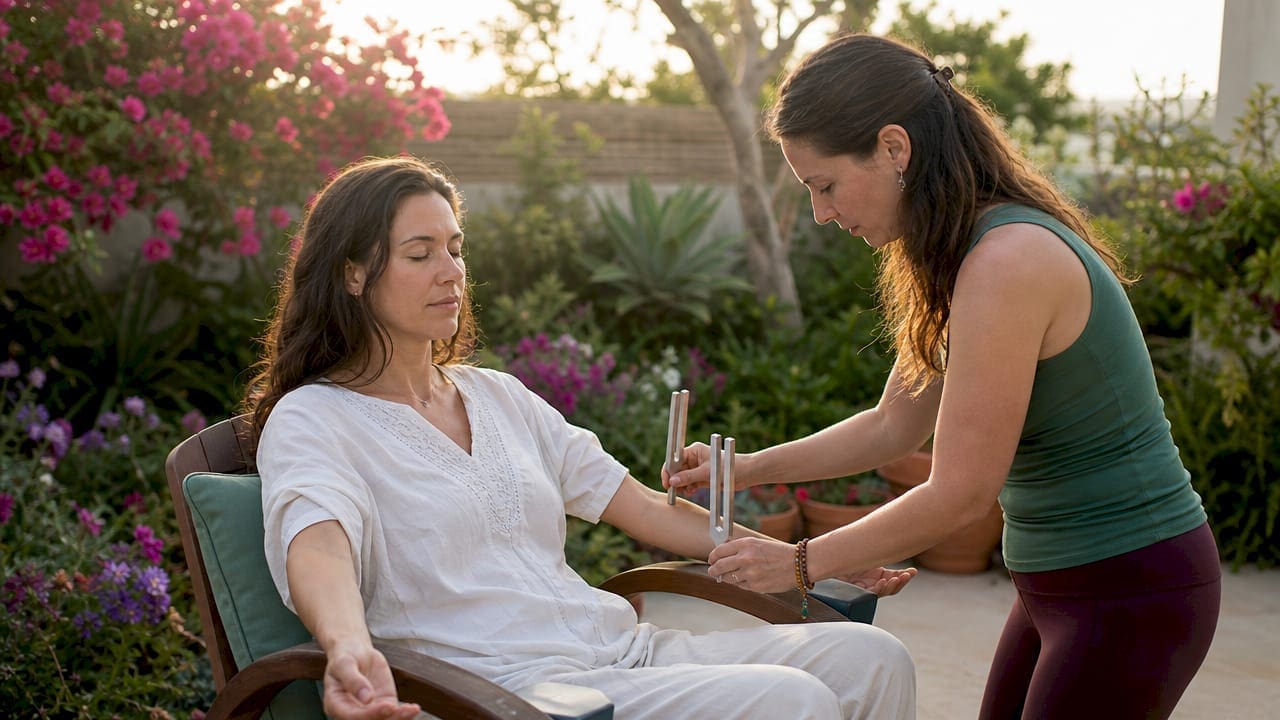
Vibrational medicine is defined as a therapeutic approach that uses energy frequencies and vibrations to promote balance across the body, mind, and spirit. Known formally within complementary and alternative medicine (CAM) as energy medicine, it encompasses modalities such as sound therapy, vibroacoustic therapy, and biofield-based practices. The core premise is that the human body responds to specific frequencies in ways that can reduce stress, ease pain, and support overall wellbeing. This guide explains the principles, the science, the main techniques, and how you can explore these therapies safely and realistically.
How does vibrational medicine work?
Vibrational medicine operates on the concept that the body possesses subtle energy fields, often called biofields, that can be influenced by external vibrations and frequencies. The Merck Manual describes energy medicine as the manipulation of these biofields around the body to affect health, positioning it firmly within integrative and CAM frameworks. This theoretical foundation draws on traditions from Ayurveda, Traditional Chinese Medicine, and modern biophysics, though the biomedical mechanisms remain a subject of ongoing debate.
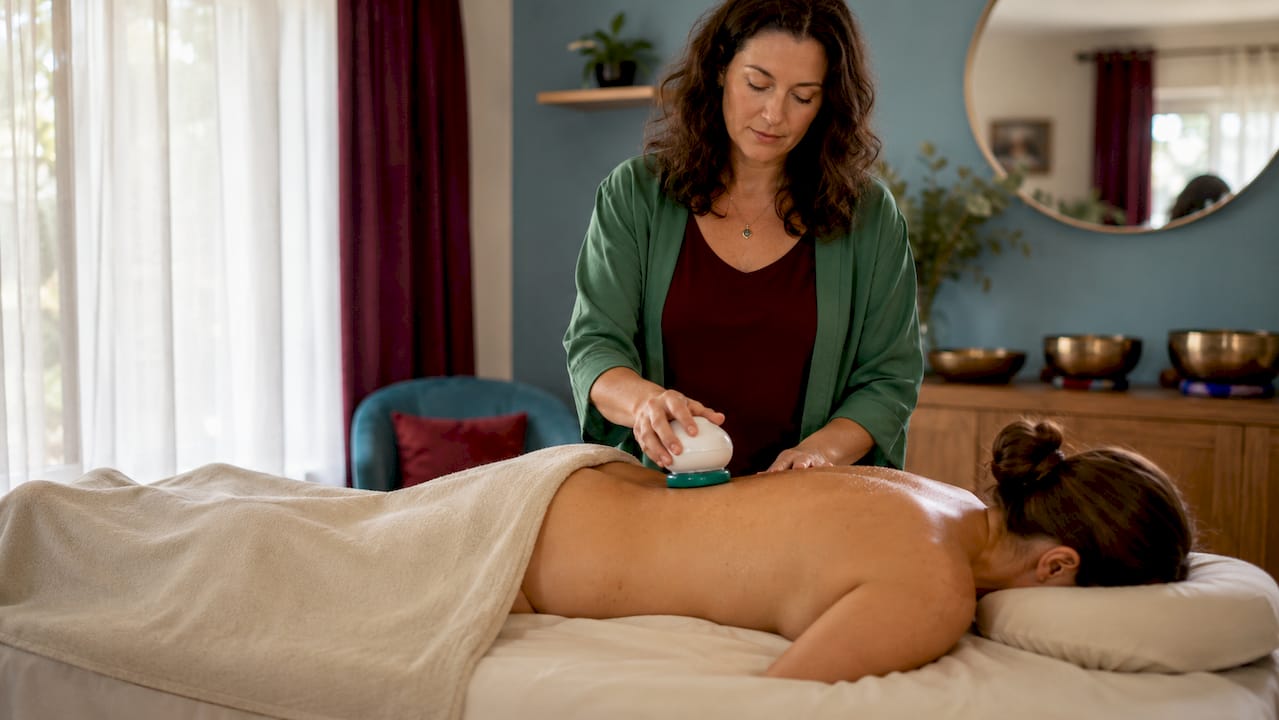
From a physiological standpoint, the most plausible explanation for vibrational medicine’s effects runs through the nervous system. UCLA Health frames the benefits through nervous system pathways, suggesting that vibrations trigger the relaxation response, shift attention, and reduce stress hormone activity rather than acting through narrowly frequency-specific mechanisms. This means the body is not simply “tuned” like a guitar string. Instead, vibration appears to create conditions in which the nervous system can downregulate, supporting recovery and awareness.
Several factors shape how effective any given session will be:
- Frequency range: Vibroacoustic therapy typically uses low-frequency sound between 30 and 120 Hz, delivered through transducers embedded in chairs or mats.
- Session structure: The duration, sequencing, and environment of a session all affect outcomes.
- Body coupling: Whether vibration reaches the body through direct physical contact or purely through air (auditory input) produces meaningfully different physiological effects.
- Patient engagement: Therapeutic outcomes often require active participation, not passive exposure.
Biofield therapies lack agreed-upon biomedical mechanisms, which is why mainstream medicine treats vibrational medicine as a complementary rather than curative approach. That distinction matters enormously when you are evaluating claims made by practitioners.
Pro Tip: When researching a practitioner, ask them to describe their session protocol in specific terms. Vague references to “energy balance” without defined frequencies, durations, or measurable outcomes are a signal to look elsewhere.
What are the main types of vibrational therapy?
The field contains a wider range of techniques than most people realise. Below is a comparison of the most commonly encountered modalities.
| Therapy type | Method | Primary mechanism |
|---|---|---|
| Vibroacoustic therapy | Transducers in chairs or mats deliver 30–120 Hz vibrations | Direct physical vibration through body contact |
| Sound bath therapy | Singing bowls, gongs, or chimes create ambient sound | Auditory and mild physical resonance |
| Music therapy | Structured musical interventions by a trained therapist | Psychological and emotional processing |
| Whole-body vibration | Vibrating platforms used in clinical or fitness settings | Musculoskeletal stimulation |
| Biofield therapies | Reiki, therapeutic touch, and similar practices | Proposed subtle energy field interaction |
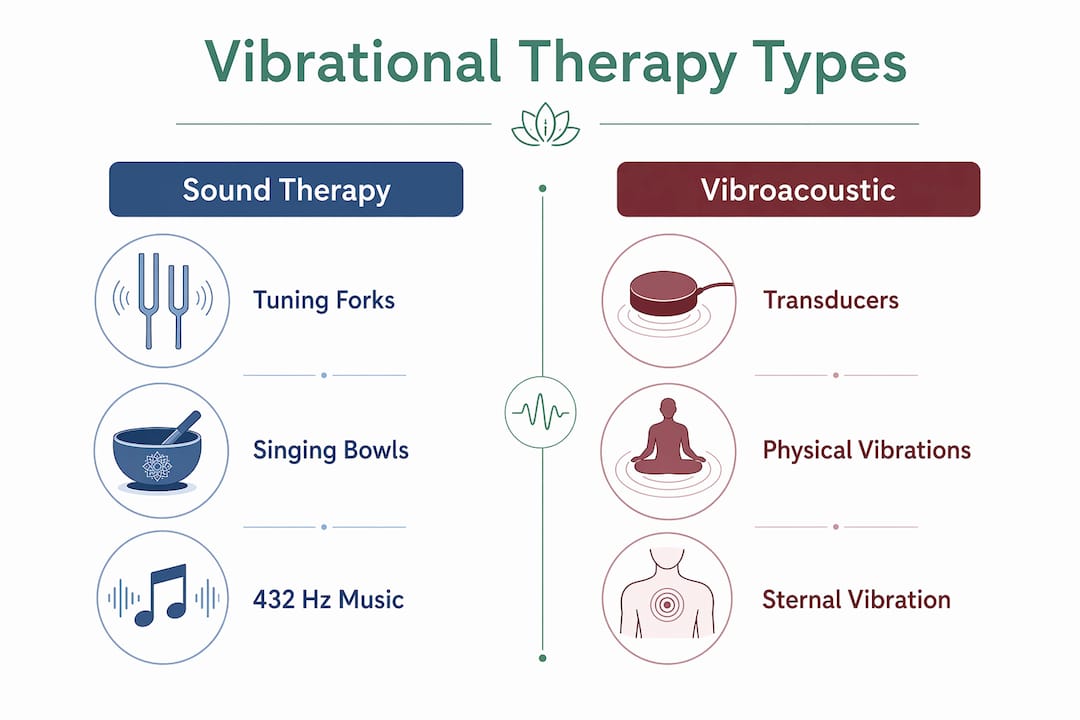
The distinction between these approaches is more than academic. Vibroacoustic therapy uses transducers that deliver vibration through direct body contact, which differentiates it from a standard sound bath where you absorb sound through the air. A sound bath can be deeply relaxing and is an accessible entry point for most people. Vibroacoustic therapy, by contrast, is a more clinical modality with specific hardware requirements and defined protocols.
Frequency selection is another area where the field gets nuanced. Practitioners often cite 432 Hz music as a particularly beneficial tuning, and research does support its use. A 2025 trial found that 432 Hz showed greater cardiovascular relaxation signs compared to 443 Hz in cancer patients, though the difference was not statistically significant. The researchers cautioned that benefits may stem from the general pleasantness of lower frequencies rather than the specific tuning itself. Understanding the types of sound healing frequencies in use helps you ask better questions before committing to a particular approach.
One of the most promising emerging techniques combines gentle sternal vibration with mindfulness meditation. An Emory University study found that vibration during mindfulness was linked to enhanced white matter pathways for interoception and improved self-reported body awareness in trauma survivors. This suggests that pairing physical vibration with attentional practices may amplify the neurological benefits of each individually. For anyone interested in sound meditation and spiritual growth, this research offers a compelling scientific rationale.
What does the evidence say about the benefits of vibrational medicine?
The research base for vibrational medicine is growing, though it remains uneven across modalities. The strongest evidence sits in the areas of stress reduction, anxiety relief, and pain management.
A review of more than 20 studies found that binaural beats may improve memory and attention, while whole-body vibration studies conducted over 12 weeks found improvements in chronic pain and motor function. These are not trivial findings. Chronic pain affects millions of people in the UK, and any non-pharmacological intervention with a credible evidence base deserves serious attention.
“Clinical sound therapy uses both auditory and physical vibrations to produce relaxation and stress hormone changes that likely mediate perceived health benefits.” — UCLA Health
The cardiovascular data from the 432 Hz versus 443 Hz trial adds another layer of nuance. Both frequencies produced psychological improvements in cancer patients, which suggests that the act of intentional listening itself carries therapeutic weight. The specific frequency may matter less than the quality of attention brought to the session. This is a finding that practitioners and clients alike tend to overlook.
Where the evidence thins out is in claims about curing specific diseases. Can vibrational medicine cure diseases? The honest answer is no, not in the way that antibiotics cure a bacterial infection. What the research does support is a meaningful role in symptom management, stress reduction, and quality-of-life improvement, particularly when vibrational therapies are integrated with conventional care rather than used as replacements. Outcomes depend on session design including frequency, exposure length, and how vibration couples with the body, which means poorly structured sessions may produce little benefit at all.
How to explore vibrational medicine safely
Approaching vibrational medicine with curiosity and critical thinking produces far better results than approaching it with either scepticism or uncritical enthusiasm. Here is a practical framework for getting started.
- Define your goal clearly. Are you seeking stress relief, pain management, improved sleep, or something else? A clear goal helps you select the right modality and evaluate whether it is working.
- Choose a qualified practitioner. Look for someone with accredited training, a defined session protocol, and willingness to discuss outcomes. Vague promises about “realigning your energy” without specifics are a red flag.
- Check for contraindications. Vibrational therapies are not suitable for everyone. People with pacemakers, certain neurological conditions, or pregnancy may need to avoid specific modalities. Review sound healing contraindications before booking a session.
- Combine sessions with mindfulness or breathwork. The Emory University research on sternal vibration and mindfulness demonstrates that pairing physical vibration with attentional practices enhances neurological outcomes. Even simple diaphragmatic breathing during a session amplifies the relaxation response.
- Track your experience. Keep a brief journal of how you feel before and after each session. This builds a personal evidence base and helps you identify which approaches work best for your body.
Pro Tip: If you are considering training as a practitioner rather than simply receiving sessions, look for courses that require no prior musical background and offer a high instructor-to-trainee ratio. Practical, hands-on learning with real instruments produces far more confidence than theory-heavy programmes.
Key takeaways
Vibrational medicine works primarily through nervous system pathways, and its benefits in stress reduction, pain management, and body awareness are best achieved through structured, evidence-informed sessions rather than passive exposure to frequencies.
| Point | Details |
|---|---|
| Definition and scope | Vibrational medicine uses energy frequencies and vibrations across sound, biofield, and physical modalities. |
| How it works | Effects are mediated through the nervous system, not direct frequency-specific cures. |
| Strongest evidence | Stress relief, anxiety reduction, and chronic pain management have the most research support. |
| Frequency nuance | 432 Hz shows promise but benefits may reflect general sound pleasantness rather than exact tuning. |
| Safe exploration | Choose practitioners with defined protocols, check contraindications, and combine sessions with mindfulness. |
Why I think vibrational medicine deserves more rigorous attention
I have spent years working alongside practitioners in the sound healing space, and the pattern I see most often is this: the people who benefit most from vibrational therapies are those who approach them as one tool within a broader wellness practice, not as a standalone cure. The research supports exactly that framing.
What frustrates me about the current conversation is the polarisation. Sceptics dismiss the entire field because biofield mechanisms are not yet fully mapped by biomedicine. Enthusiasts overclaim, promising outcomes that no credible study has demonstrated. Both positions do a disservice to the people who could genuinely benefit from well-structured sound therapy or vibroacoustic sessions.
The Emory University research on vibration-assisted mindfulness is the kind of work that should shift the conversation. It is rigorous, it identifies a plausible neurological mechanism, and it points toward specific applications for specific populations. That is what evidence-based practice looks like in this field, and there needs to be far more of it.
My honest view is that vibrational medicine sits in a genuinely interesting position: too well-supported by emerging research to dismiss, and too poorly standardised in practice to fully trust without scrutiny. The path forward is more transparency from practitioners, better-defined protocols, and a willingness from both sides of the debate to follow the evidence wherever it leads.
— Sarah
Start your sound healing journey with Soundbathtraining
If this article has sparked a genuine interest in vibrational healing techniques, the next step is learning to practise them properly. Soundbathtraining offers accredited, hands-on courses designed for complete beginners. No musical background is required. Every course takes place in a tranquil studio environment with a high instructor-to-trainee ratio, so you receive real guidance rather than generic instruction.
Whether you want to conduct professional sound baths or deepen your personal wellness practice, Soundbathtraining has a programme to match your goals. The accredited sound healing practitioner course covers a full range of instruments and therapy techniques across four days of practical training. For a shorter commitment, the three-day practitioner course offers the same accredited standard in a condensed format. Browse the full course catalogue to find the right fit.
FAQ
What is vibrational medicine in simple terms?
Vibrational medicine is a branch of complementary and alternative medicine that uses sound, physical vibrations, and energy-based techniques to support health and wellbeing. It works primarily by influencing the nervous system to promote relaxation, reduce stress, and ease pain.
Is vibrational medicine the same as sound therapy?
Sound therapy is one type of vibrational medicine, but the broader field also includes vibroacoustic therapy, whole-body vibration, and biofield practices such as Reiki. Sound therapy uses auditory frequencies, while vibroacoustic therapy delivers vibration directly through the body via transducers.
Can vibrational medicine cure diseases?
Vibrational medicine does not cure diseases in a clinical sense. Research supports its role in stress reduction, anxiety relief, and pain management, but it is best used as a complement to conventional medical care rather than a replacement.
What frequency is used in vibrational therapy?
Vibroacoustic therapy typically uses low frequencies between 30 and 120 Hz delivered through physical contact. Sound baths and music-based therapies often use frequencies such as 432 Hz, though a 2025 trial found that benefits may relate to the general quality of the sound rather than the precise tuning.
Are there any risks or contraindications?
Vibrational therapies are generally safe for most people, but those with pacemakers, certain neurological conditions, or who are pregnant should consult a healthcare professional before participating. Always choose a practitioner who screens for contraindications before a session.