
Sub-Total: $0.00
Types of sound healing frequencies explained

Types of sound healing frequencies explained
Types of sound healing frequencies are distinct categories of therapeutic sound vibrations used in wellness practices to influence the mind and body through different physical and neurological pathways. The three primary categories are vibroacoustic therapy (VAT), binaural beats, and pitch-tuned music, each operating through a separate mechanism. Popular frequency sets such as Solfeggio tones and 432 Hz tuning sit within the pitch-tuned category and attract significant online interest. Sound healing frequencies are widely used across wellness and meditative contexts, though the scientific evidence varies considerably by type. Understanding which category serves your purpose is the most practical starting point.
1. What are the main types of sound healing frequencies?
Sound healing frequencies fall into three technical categories with fundamentally different delivery mechanisms: vibrotactile low-frequency vibrations, binaural beats linked to brainwave entrainment, and pitch-tuned music focused on musical pitch rather than neural stimulation. This distinction matters because each type targets a different aspect of human physiology. Treating them as interchangeable leads to mismatched expectations and poor results.
Vibroacoustic therapy works through physical contact with sound waves. Binaural beats create an auditory illusion perceived inside the brain. Pitch-tuned music, including Solfeggio tones and 432 Hz recordings, influences emotional and perceptual responses through the musical experience itself. Knowing this framework helps you select the right sound frequency healing method for your specific goal, whether that is pain relief, sharper focus, or deeper relaxation.
2. Vibroacoustic therapy frequencies: how they work
Vibroacoustic therapy uses low-frequency vibrations between 30 and 120 Hz, delivered through specialised mats, chairs, or beds that physically transmit sound waves into the body. The vibrations stimulate mechanoreceptors in muscle and connective tissue, which in turn influence the autonomic nervous system. This makes VAT one of the most physically grounded sound frequency healing methods available.
The 40 Hz frequency is the most studied in adult clinical settings, with applications in pain management and neurological support. Sessions typically run between 20 and 45 minutes, and clinical protocols emphasise consistent application of these parameters over any mystical significance attached to specific numbers. Research supports VAT as a physical intervention with measurable outcomes rather than an energetic or esoteric practice.
Key points about VAT frequencies:
- Frequency range: 30 to 120 Hz, with 40 Hz most commonly used in pain studies
- Delivery method: Physical contact via vibrating surfaces, not headphones
- Session length: 20 to 45 minutes for clinical benefit
- Mechanism: Stimulates mechanoreceptors and influences the nervous system directly
- Evidence base: Among the strongest of all sound frequency healing methods for physical outcomes
Pro Tip: If you are new to vibroacoustic therapy, start with a single 20-minute session at 40 Hz before experimenting with other frequencies. This gives your nervous system time to respond and helps you establish a reliable baseline.
3. How binaural beats work and which frequencies matter
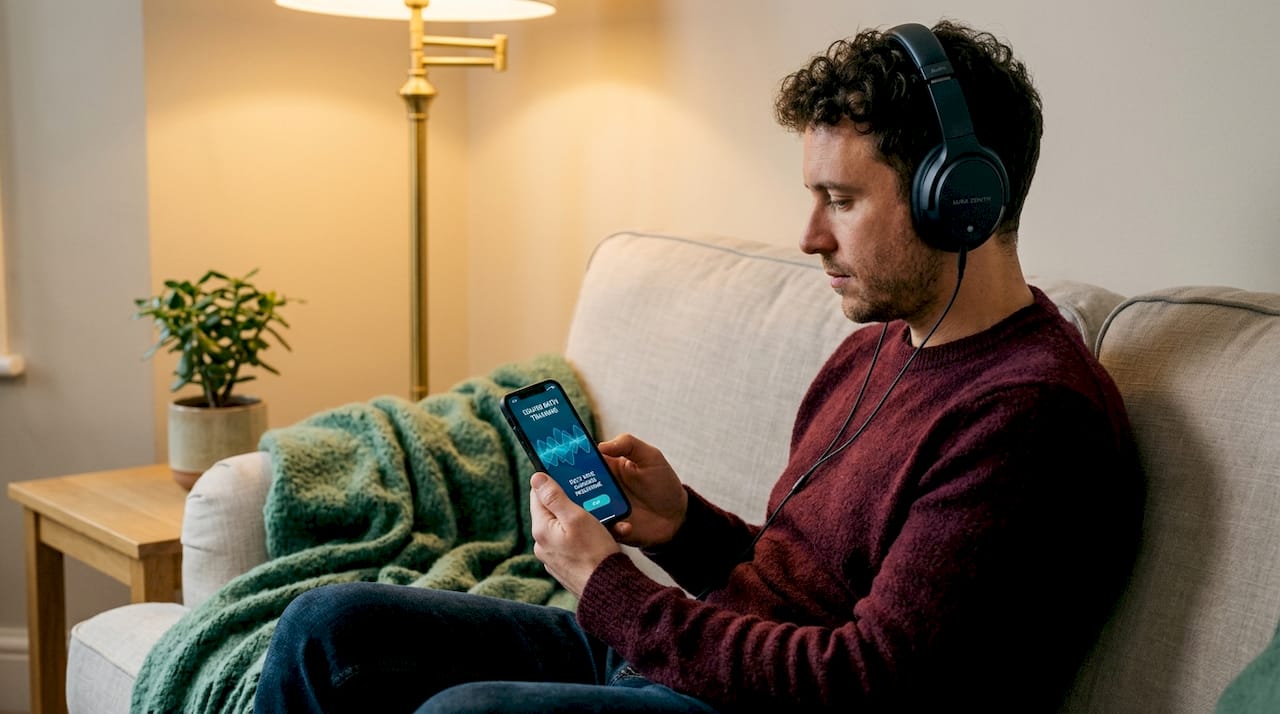
Binaural beats are an auditory illusion created when two slightly different tones are played separately into each ear. The brain perceives a third tone equal to the difference between the two. If your left ear hears 200 Hz and your right ear hears 240 Hz, your brain generates a 40 Hz beat internally. This process is thought to encourage brainwave entrainment, where neural oscillations shift towards the perceived frequency.
A 2026 study published in Current Psychology found that 40 Hz binaural beats significantly improved reading comprehension accuracy and cognitive attention. This is a meaningful finding because it suggests frequency-specific effects rather than a generalised placebo response. The same study found that 7 Hz binaural beats produced no significant mood effects, which underlines the importance of matching frequency to intended outcome.
Common binaural beat frequency types and their associations:
- Delta (0.5 to 4 Hz): Associated with deep sleep and physical recovery
- Theta (4 to 8 Hz): Linked to meditation, creativity, and light sleep
- Alpha (8 to 13 Hz): Connected to relaxed alertness and stress reduction
- Beta (13 to 30 Hz): Associated with active focus and problem-solving
- Gamma (30 to 100 Hz): Includes the well-studied 40 Hz range for cognitive performance
Binaural beat effects are outcome-specific, which means selecting the wrong frequency for your goal produces little benefit. This is a critical point that many online guides overlook entirely.
Pro Tip: Always use stereo headphones for binaural beats. Speakers mix the two tones before they reach your ears, which eliminates the binaural effect entirely and renders the session ineffective.
4. Pitch-tuned music: 432 Hz and Solfeggio frequencies
Pitch-tuned music refers to recordings deliberately tuned to specific frequencies rather than the standard concert pitch of 440 Hz. The most discussed examples are 432 Hz tuning and the Solfeggio frequency set. These are the types of sound frequencies most commonly encountered on streaming platforms and in wellness spaces.
432 Hz tuning produces music that is slightly lower in pitch than standard 440 Hz recordings. Small studies have found modest relaxation-related physiological changes in listeners, but researchers caution that these effects may reflect subjective preference rather than any unique property of the frequency itself. The psychological and expectancy effects of believing you are listening to a healing frequency are real and should not be dismissed, but they are distinct from a direct physiological mechanism.
Solfeggio frequencies are a set of tones traditionally associated with chakras and spiritual healing. Common examples include 396 Hz (linked to releasing fear), 528 Hz (associated with DNA repair in popular claims), and 741 Hz (connected to expression and problem-solving). Scientific support for these specific associations is absent, though the music itself can be genuinely relaxing.
| Frequency | Traditional claim | Scientific status |
|---|---|---|
| 432 Hz | Natural tuning, calming | Small relaxation studies; limited evidence |
| 528 Hz | DNA repair, transformation | No clinical evidence |
| 396 Hz | Releasing guilt and fear | No clinical evidence |
| 741 Hz | Clarity and expression | No clinical evidence |
| 40 Hz (VAT/binaural) | Cognitive and pain support | Moderate clinical evidence |
Personal perception strongly influences the benefits people experience from pitch-tuned music. Approaching these frequencies with an open mind and tempered expectations produces the most honest and sustainable relationship with the practice.
5. How to choose the right healing sound vibrations for your goal
Selecting the right sound frequency healing method starts with identifying your primary intention. Relaxation, pain relief, improved focus, and deeper meditation each point towards different frequency types and delivery methods. Treating all healing sound vibrations as equivalent is the most common mistake beginners make.
Practical guidance for choosing frequencies:
- For pain relief or physical relaxation: Vibroacoustic therapy at 40 Hz, delivered through a VAT mat or chair, offers the strongest evidence base
- For cognitive focus or study support: 40 Hz binaural beats via stereo headphones, in sessions of 20 to 30 minutes
- For sleep preparation: Delta range binaural beats (0.5 to 4 Hz) or theta range (4 to 8 Hz) in a darkened, quiet room
- For meditative depth: Solfeggio-tuned music or 432 Hz recordings work well as ambient support, particularly when combined with breathwork or body scanning
- For stress reduction: Frequency therapy combining alpha binaural beats with relaxed listening environments shows consistent self-reported benefit
Session environment matters as much as frequency choice. A well-designed sound healing space with minimal acoustic interference, comfortable temperature, and low lighting significantly improves the depth of response. Frequency work done in a noisy or uncomfortable setting rarely produces the outcomes people expect.
Pro Tip: Keep a simple log of each session: frequency used, duration, environment, and how you felt before and after. After four to six sessions, patterns emerge that tell you far more than any online frequency chart.
6. How different sound frequency healing methods compare
Understanding how the three main categories differ helps you combine them intelligently or choose the most appropriate single method for a given session.
| Method | Mechanism | Frequency range | Evidence strength | Best use case |
|---|---|---|---|---|
| Vibroacoustic therapy | Physical vibration via body contact | 30 to 120 Hz | Moderate to strong | Pain, physical relaxation, neurological support |
| Binaural beats | Auditory illusion, brainwave entrainment | 0.5 to 100 Hz (perceived) | Moderate (frequency-specific) | Focus, sleep, meditation |
| Pitch-tuned music | Musical pitch, emotional and perceptual response | 432 Hz, Solfeggio sets | Limited | Ambient relaxation, meditative atmosphere |
VAT is the only method that physically contacts the body, making it the most direct of the three. Binaural beats require headphones and a quiet environment to function at all. Pitch-tuned music is the most accessible, requiring nothing more than a speaker and a playlist, but it also carries the least clinical support.
Combined use is worth considering. A session that opens with 432 Hz ambient music, transitions into alpha binaural beats during meditation, and closes with a short VAT session addresses physical, cognitive, and emotional dimensions simultaneously. Sound healing practitioners who understand contraindications and individual variation are best placed to design these layered sessions safely and effectively.
Key takeaways
Sound healing frequencies produce their most reliable benefits when the method, frequency, and intended outcome are matched deliberately rather than chosen at random.
| Point | Details |
|---|---|
| Three distinct categories | VAT, binaural beats, and pitch-tuned music each work through different mechanisms and should not be used interchangeably. |
| 40 Hz is the most evidenced | Both VAT and binaural beat research consistently support 40 Hz for cognitive and physical outcomes. |
| Pitch-tuned music relies on perception | 432 Hz and Solfeggio tones produce relaxation effects, but these are likely perceptual rather than frequency-specific. |
| Match frequency to outcome | Select delta beats for sleep, 40 Hz for focus or pain, and pitch-tuned music for meditative atmosphere. |
| Environment shapes results | Session setting, duration, and consistency matter as much as frequency choice for reliable outcomes. |
Why I think most people approach sound frequencies back to front
I have worked with sound healing in various forms for years, and the pattern I see most often is this: people discover a specific frequency online, usually 528 Hz or 432 Hz, and build their entire practice around it before they have ever tried a sound bath, a VAT session, or even a properly set-up binaural beat recording. The frequency becomes the destination rather than one tool among many.
The honest truth is that vibroacoustic therapy at 40 Hz, delivered correctly, produces more consistent and measurable responses than any Solfeggio playlist. That is not a dismissal of pitch-tuned music. It is a call to build your practice on the methods with the clearest evidence first, then layer in the more experiential approaches once you understand what your body and mind actually respond to.
What I find most interesting is that the people who report the deepest benefits from 432 Hz or Solfeggio tones are almost always those who have already developed a consistent meditation or breathwork practice. The frequency is not doing all the work. The context, the stillness, and the intention are doing most of it. That is not a reason to avoid pitch-tuned music. It is a reason to invest in the whole practice, not just the playlist.
Start with what has evidence. Explore what resonates. Keep your expectations honest and your curiosity open.
— Sarah
Deepen your practice with accredited sound healing training
If exploring the types of sound healing frequencies in this article has sparked a genuine interest in practising or teaching sound healing, structured training makes an enormous difference to both confidence and technique.
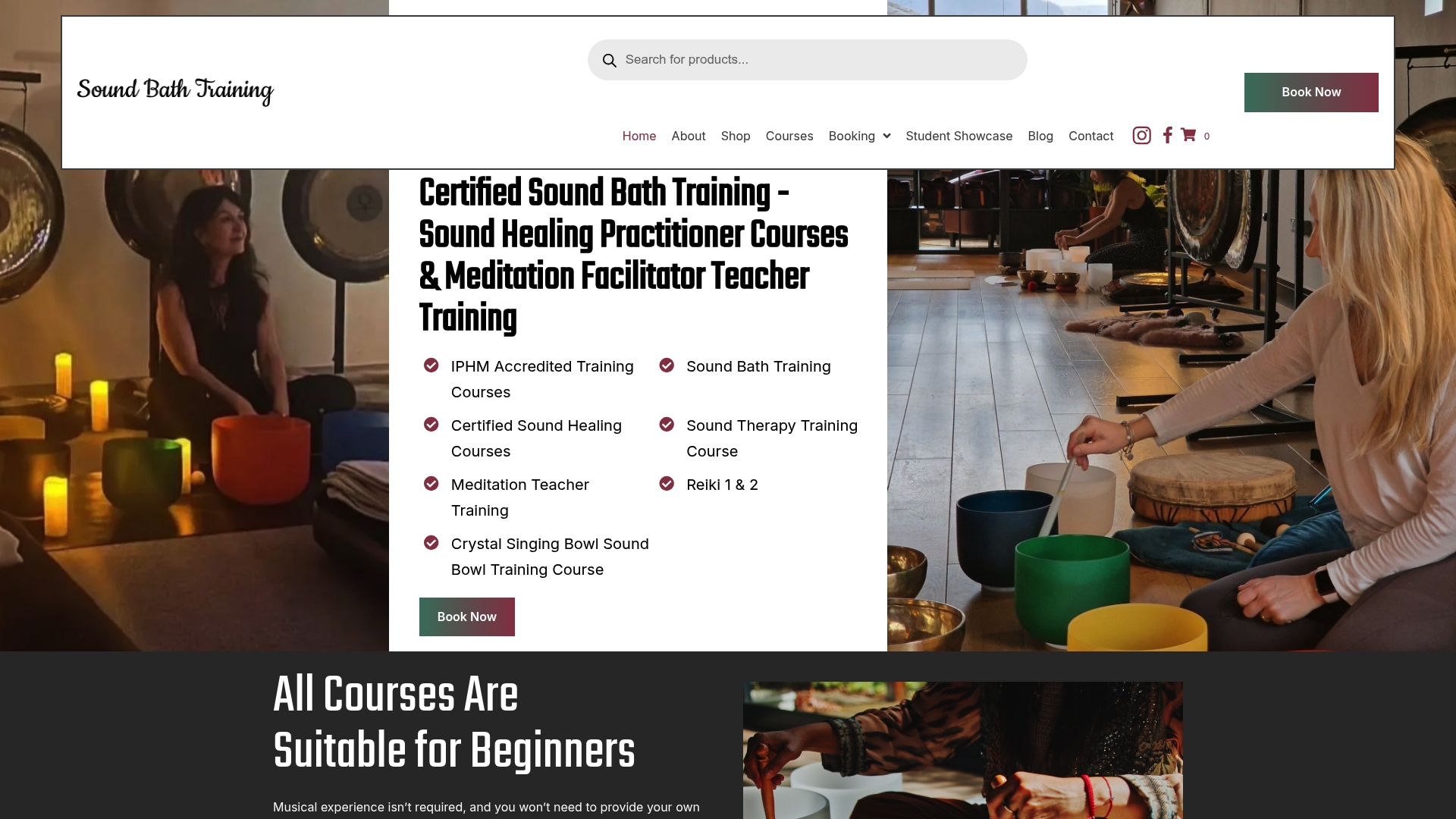
Soundbathtraining offers accredited practitioner courses covering a full range of instruments and modalities, including hands-on frequency work, with no prior musical background required. The small group format and personalised 1:1 sessions mean you receive direct guidance rather than generic instruction. Whether you want to deepen your personal practice or build a professional offering, you can browse all available courses to find the right starting point.
FAQ
What are the main types of sound healing frequencies?
The three main types are vibroacoustic therapy frequencies (30 to 120 Hz delivered physically), binaural beats (auditory illusions perceived by the brain), and pitch-tuned music such as 432 Hz and Solfeggio tones. Each works through a different mechanism and suits different wellness goals.
How do sound frequencies heal the body?
Sound frequencies influence the body through physical vibration, brainwave entrainment, or emotional and perceptual responses depending on the method used. Vibroacoustic therapy is the most physically direct, stimulating mechanoreceptors and the nervous system through contact with low-frequency vibrations.
Is there scientific evidence for healing sound vibrations?
Evidence varies by method. VAT and 40 Hz binaural beats have moderate clinical support for specific outcomes such as pain relief and cognitive focus. Solfeggio frequencies and 432 Hz tuning have very limited scientific backing, with benefits likely linked to relaxation and personal perception rather than unique frequency properties.
What frequency is best for meditation?
Theta range binaural beats (4 to 8 Hz) are most commonly associated with meditative states and light sleep. Alpha range beats (8 to 13 Hz) suit relaxed alertness and are a practical starting point for those new to binaural beat meditation.
Are there any risks to using sound healing frequencies?
Most sound frequency methods are low-risk for healthy adults, but certain conditions require caution. Individuals with epilepsy, pacemakers, or pregnancy should consult a healthcare professional before using vibroacoustic therapy or binaural beats. Reviewing sound healing contraindications before beginning any regular practice is strongly advised.