
Sub-Total: $0.00
Sound healing contraindications explained clearly
Sound healing contraindications explained clearly
Sound healing is widely regarded as gentle and universally accessible, but that assumption deserves a closer look. With sound baths, vibroacoustic therapy, and binaural beat programmes becoming increasingly popular in wellness circles, understanding sound healing contraindications explained properly is no longer optional. It matters whether you are a curious beginner, someone managing a health condition, or a practitioner building a responsible practice. Some contraindications call for complete avoidance; many more simply require thoughtful modification. This article cuts through the vagueness and gives you the specific knowledge you need to engage with sound healing safely and confidently.
Table of Contents
- Key takeaways
- Sound healing contraindications explained: what they mean
- Specific medical contraindications for sound therapy
- Managing sound intensity and session variables
- Practical guidance for safe participation
- Contraindications as context, not prohibition
- My honest take on contraindications in practice
- Take your practice further with accredited training
- FAQ
Key takeaways
| Point | Details |
|---|---|
| Contraindications rarely mean total avoidance | Most conditions require session modification, not a blanket ban on sound healing participation. |
| Delivery method changes the risk | Direct vibroacoustic contact carries significantly higher risk than ambient sound listening for most contraindications. |
| Disclosure protects you | Sharing your full health history with a facilitator before a session is the single most effective safety step you can take. |
| Volume and pacing are safety tools | Gradual intensity build-up and participant autonomy during sessions reduce the likelihood of adverse responses. |
| Sound healing is complementary | It supports wellbeing but does not replace medical advice or treatment for any diagnosed condition. |
Sound healing contraindications explained: what they mean
Before diving into specific conditions, it helps to understand what a contraindication actually is. In clinical practice, a contraindication is any factor that makes a particular treatment inadvisable. In sound healing, the term works the same way, though the context is more nuanced than in conventional medicine.
Sound healing covers a broad spectrum of modalities:
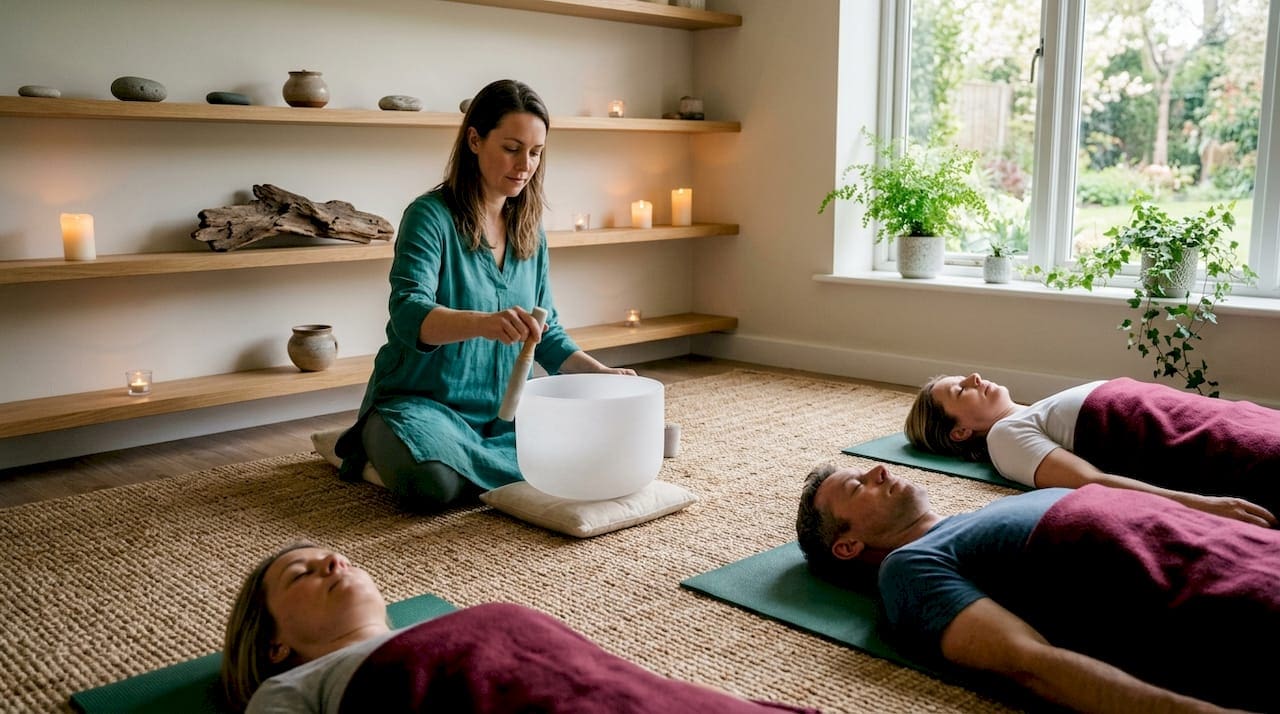
- Sound baths: Participants lie or sit while a facilitator plays instruments such as Tibetan singing bowls, gongs, or crystal bowls, creating an immersive ambient sound environment.
- Binaural beats: Two slightly different frequencies played separately into each ear, designed to encourage specific brainwave states.
- Vibroacoustic therapy: Instruments or speakers placed directly on or very close to the body, transmitting vibration through physical contact.
The delivery method matters enormously when assessing sound therapy risks. Ambient listening, where sound travels through air to your ears, carries far lower risk than direct vibroacoustic contact, where vibration passes through tissue and bone. A person who cannot safely receive a singing bowl placed on their sternum may still benefit greatly from lying across the room during a sound bath. Sound therapy practices are generally low risk when volume stays within safe listening levels, but that reassurance applies primarily to ambient exposure, not direct contact.
The guiding principle for responsible facilitators is screening and modification, not blanket bans. Understanding this distinction empowers both practitioners and participants to make genuinely informed choices.
Specific medical contraindications for sound therapy
This is where sound healing precautions become most consequential. Several medical conditions require either careful modification or, in some cases, avoidance of specific delivery methods.
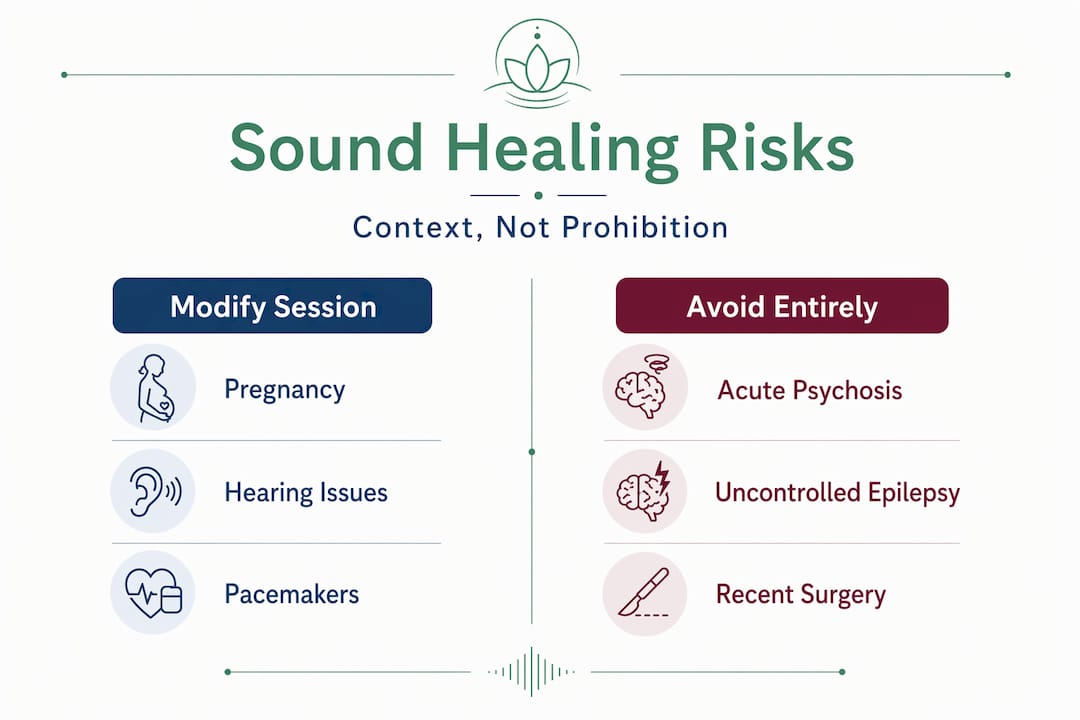
- Epilepsy and seizure disorders: Rhythmic auditory stimulation can trigger seizures in susceptible individuals. Large gongs and repetitive rhythmic patterns are the primary concern. This does not mean all sound healing is off limits, but it does require medical guidance and careful instrument selection.
- Pacemakers and implanted cardiac devices: Direct vibroacoustic contact on the chest is contraindicated. If someone with a pacemaker wishes to attend a sound bath, medical approval is required and intensity must be carefully managed throughout.
- Pregnancy: High-intensity vibroacoustic therapy on the abdomen should be avoided, particularly during the first trimester. Gentle ambient music exposure is generally considered safer and better tolerated.
- Recent surgery or head trauma: Avoid placing instruments near surgical sites or the head for 6 to 8 weeks post-injury. Distant sound work targeting other areas of the body may still be appropriate.
- Tinnitus and hyperacusis: Large singing bowls near the ear can temporarily worsen tinnitus. Positioning adjustments and volume reduction are the primary management tools here.
- Acute mental health conditions: Sound can activate the nervous system rather than settle it during periods of acute instability. Acute mental health episodes may be destabilised by sound healing, making trauma-informed facilitation and deferral until a person is stable absolutely necessary.
- Metal implants and chemotherapy: Vibration near metal implants warrants caution. Those undergoing chemotherapy may have heightened sensory sensitivity and fatigue, requiring shorter, gentler sessions.
Pro Tip: If you have any of the above conditions, contact the facilitator before booking rather than disclosing on the day. This gives them time to prepare appropriate modifications or advise whether the specific session format is suitable for you.
Managing sound intensity and session variables
Even when no formal contraindication exists, poorly managed sessions can produce unwanted sound healing side effects. Headaches, dizziness, emotional overwhelm, and heightened anxiety are among the most commonly reported adverse responses, and most are linked to excessive volume, duration, or ignoring physiological cues rather than sound healing itself.
Responsible session management involves several key practices:
- Gradual intensity build-up: Starting softly and increasing volume slowly allows the nervous system to adjust. Sudden loud sounds, particularly from gongs, can startle participants and trigger a stress response rather than relaxation.
- Monitoring participant responses: Facilitators should watch for signs of discomfort, including restlessness, rapid breathing, facial tension, or attempts to sit up. These are signals to reduce intensity or pause.
- Participant autonomy: Good practice involves allowing breaks, enabling position changes, and respecting volume preferences. Participants should always feel they can signal discomfort without disrupting the group.
- Instrument choice: Tuning forks and gentle crystal bowls produce focused, relatively predictable frequencies. Large gongs produce complex, high-intensity sound waves that can be overwhelming for sensitive individuals, particularly at close range.
The distinction between ambient listening and direct vibroacoustic contact is worth repeating here. A facilitator who understands how delivery mode affects risk can offer meaningful alternatives rather than simply turning people away.
Understanding how sound affects the nervous system is genuinely useful background knowledge for anyone attending or facilitating sessions regularly.

Pro Tip: Ask any facilitator before your session how they manage volume and whether participants can request adjustments mid-session. A well-trained practitioner will have a clear answer. Hesitation here is worth noting.
Practical guidance for safe participation
Whether you are attending your first sound bath or managing an existing health condition, these steps will help you engage with sound healing more safely.
- Disclose your full health history. Professional sound healers always ask about medical history before sessions. If yours does not, volunteer the information anyway. This includes medications that affect consciousness or sensory processing, as these can amplify the effects of sound exposure.
- Ask about delivery methods before booking. Find out whether instruments will be placed on the body, how close facilitators come to participants, and what the loudest instruments in the session will be. This is not an unusual question; it is a reasonable one.
- Start with lower-intensity formats. If you have sound sensitivity, begin with shorter sessions, lower volume, and instruments positioned at a distance. Crystal bowls played gently across the room are very different from a gong struck at full force beside your head.
- Know your warning signs. Pause or leave a session if you experience ringing in the ears that worsens, dizziness, nausea, heart palpitations, or significant emotional distress that feels unmanageable. These are signals worth taking seriously.
- Seek medical advice when in doubt. If you have a diagnosed condition affecting your heart, brain, or sensory processing, speak to your GP before attending a vibroacoustic session. Ambient sound baths are a lower bar, but it is always worth checking.
- Be mindful of timing. Avoid sound healing sessions immediately after surgery, during acute illness, or when severely sleep deprived. The nervous system is less resilient in these states and more likely to respond unpredictably.
- Expect a health screening from responsible instructors. A trained facilitator will ask questions, offer modifications, and create a predictable, calm environment. This is a mark of professionalism, not excessive caution.
Contraindications as context, not prohibition
One of the most useful reframes in understanding sound healing concerns is this: a contraindication is context, not a verdict. The word sounds alarming, but in practice it usually means “proceed differently” rather than “do not proceed at all.”
“The question is rarely whether sound healing is safe in the abstract. The question is whether this specific delivery method, at this intensity, suits this particular person on this particular day.”
Sound healing does not have strong scientific support as a medical cure, and responsible practitioners are honest about that. It works best as a complementary practice that supports relaxation, stress reduction, and emotional processing alongside conventional care.
The relationship between practitioner and participant is central here. Ongoing communication, not a one-time intake form, is what keeps sessions genuinely safe. Conditions change, medications change, and what felt manageable last month may feel very different today. Both parties carry responsibility for keeping that dialogue open.
Being proactive and informed is not about becoming anxious around sound healing. It is about getting the most from it.
My honest take on contraindications in practice
I have worked with many people who arrived at sound healing sessions without disclosing significant health information, not because they were being careless, but because they genuinely did not think it was relevant. “It’s just sound,” is a phrase I have heard more than once.
What I have learned is that the harm in sound healing rarely comes from sound itself. It comes from a mismatch between what the nervous system is ready to receive and what the session delivers. I have seen participants with undiagnosed anxiety become overwhelmed by a gong bath that others found deeply restful. I have seen someone with tinnitus leave a session in tears because no one thought to ask about their hearing history beforehand.
The screening conversation is not bureaucratic box-ticking. It is where the real therapeutic relationship begins. When a facilitator asks about your health history and adjusts accordingly, that act of attentiveness is itself part of the healing.
What surprises many people is that contraindications often open a more personalised conversation about what someone actually needs. Someone who cannot receive direct vibration might benefit more from a carefully curated distant sound session than a standard group format. That specificity is where sound healing becomes genuinely powerful.
My view is that the field becomes more credible, not less, when practitioners take contraindications seriously. Seek out trained facilitators who ask good questions. Your safety and your experience are better for it.
— Sarah
Take your practice further with accredited training
If understanding contraindications has sparked a deeper interest in practising sound healing responsibly, the next step is formal training that covers these foundations properly.
Soundbathtraining offers accredited courses designed for all levels, including complete beginners with no musical background. Safety, health screening, and contraindication awareness are woven throughout the curriculum, not treated as an afterthought. The 4-day practitioner training covers instruments, session structure, and client care in depth, while the 3-day practitioner course offers a focused introduction to professional facilitation. Both programmes are taught in small groups with a high instructor-to-trainee ratio, so you receive genuine guidance rather than generic instruction. Browse the full course catalogue to find the format that suits your goals.
FAQ
Who should avoid sound healing entirely?
Very few people need to avoid sound healing completely. Those with active seizure disorders, unmanaged acute mental health conditions, or certain implanted cardiac devices should seek medical guidance before attending any session involving direct vibroacoustic contact.
Is sound therapy safe during pregnancy?
Ambient sound exposure is generally considered lower risk during pregnancy, but high-intensity vibroacoustic therapy on the abdomen should be avoided, particularly in the first trimester. Always consult your midwife or GP before attending.
Can sound healing make tinnitus worse?
It can, temporarily. Instruments placed close to the ear at high volume are the primary risk. Informing your facilitator beforehand allows them to adjust positioning and volume so the session remains comfortable.
What are the most common sound healing side effects?
Headaches, dizziness, emotional overwhelm, and temporary fatigue are the most frequently reported responses. Most arise from excessive volume or session length rather than sound healing itself, and resolve quickly with rest.
How do I know if a facilitator is managing contraindications properly?
A responsible facilitator will conduct a health screening before your session, explain how they manage volume and intensity, and offer modifications if you have specific conditions. Proper training includes understanding contraindications, anatomy, and risk management as core competencies.
Recommended
- Courses Archive | Sound Bath Training
- Accredited Sound Healing Practitioner Training Course (all instruments) With Sound Therapy 1:1 – 4 Days | Sound Bath Training
- Accredited Sound Healing Practitioner Training Course (all instruments) – 3 Days | Sound Bath Training
- Sound, Silence, and the Nervous System | Sound Bath Training